

News
-

MIDA 500A Liquid-Cooled DC Cable Analysis
Quick Answer The MIDA 500A Liquid-Cooled DC Charging Cable represents the pinnacle of EV charging technology, supporting ultra-fast charging up to 800kW. By circulating a specialized coolant through the cable, MIDA achieves massive current delivery through a lightweight, flexible form factor that...Read more -

2026 Buyer’s Guide: American Standard DC Charging Cables
Quick Answer Purchasing American Standard DC charging cables in 2026 requires balancing future-proof standards with current infrastructure needs. Key factors include current capacity (up to 500A), thermal management (liquid cooling), and rigorous certifications (UL/CE). For North American operato...Read more -

NACS vs CCS1 DC Charging Cable Comparison
Quick Answer In the North American EV infrastructure landscape, the choice between NACS (North American Charging Standard) and CCS1 (Combined Charging System 1) is critical for operators. NACS, originally Tesla’s proprietary connector, offers a more compact, lightweight design with superior...Read more -
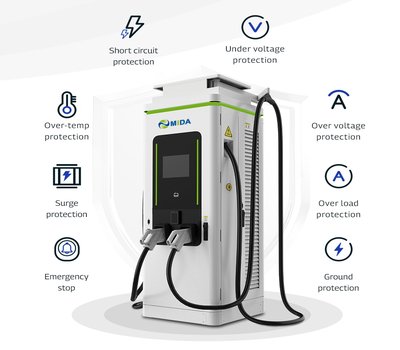
The Future of Charging: Outlook on Megawatt Charging System
The transition to MCS will require a complete rethink of grid architecture. A single MCS station with four stalls would require a grid connection equivalent to a small factory or a large office building. To mitigate this, MCS sites will likely be the first to adopt multi-megawatt-hour BESS units....Read more -
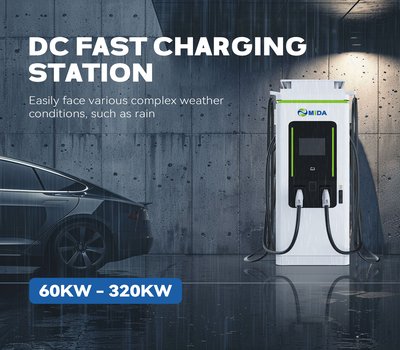
Extending DC Charger Lifespan: Site Maintenance in Practice
The internal electronics of a DC charger (the power modules and controllers) are sensitive to heat and moisture. In coastal areas, salt-mist corrosion is a major threat; here, regular external cleaning and internal desiccant checks are vital. For modular units, “Rotation Logic” is a ...Read more -
Smart Charging Management: Decoding the OCPP Protocol
Without OCPP, a charger is just a “dumb” plug. In the 2026 market, OCPP 2.0.1 is becoming the standard for high-end networks because it supports enhanced security (TLS encryption) and advanced Plug & Charge (ISO 15118) features. For the operator, the “J” in 1.6J stand...Read more -
DC Fast Charging Safety: IP Ratings and Compliance
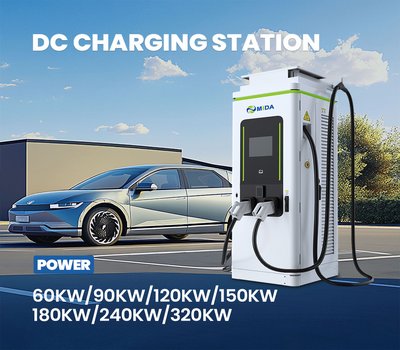
A DC charging station is a high-voltage industrial appliance. It handles up to 1000V and 500A, meaning any component failure can be catastrophic. Operators must verify that their suppliers provide certified “Type B” RCDs, which are specifically designed to detect DC leakage currents. ...Read more -
Public Charging Location Selection: Data-Driven Profitability
The “Build it and they will come” strategy no longer works. Successful operators now use software to overlay EV registration maps with current grid capacity maps. A prime location is often found at the intersection of a highway exit and a high-traffic retail corridor. Furthermore, se...Read more -
Solar-Storage-Charging Integration: Solving Grid Expansion Challenges
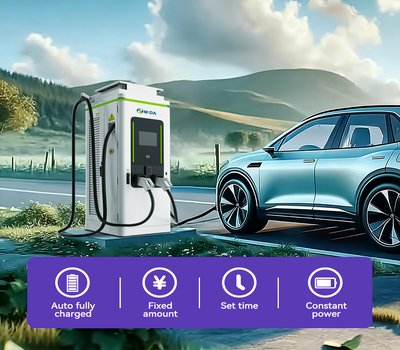
Implementing an SSC station requires a sophisticated Energy Management System (EMS). The EMS must balance three variables: the current PV output, the battery’s state-of-charge, and the charging demand from vehicles. In 2026, many B2B operators are using SSC to avoid the “Transformer T...Read more -
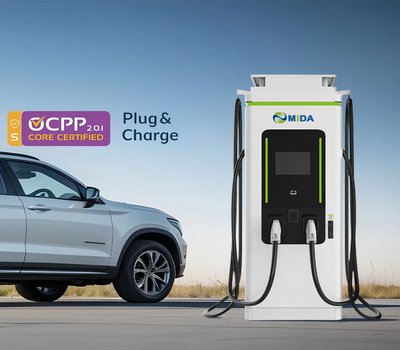
Global Deployment Guide for CCS2 and NACS Standards
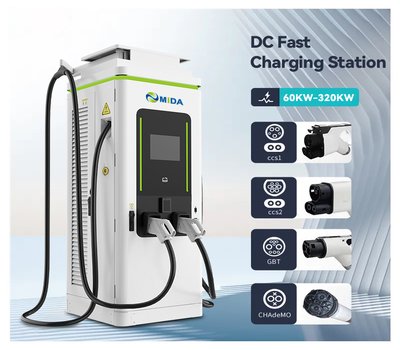
The charging standard “war” has largely settled into regional dominance. In Europe, the CCS2 standard is mandated by the AFIR regulations, ensuring a unified network. In the US, the transition to NACS is accelerating, with many public networks now retrofitting Magic Docks or adding NA...Read more -
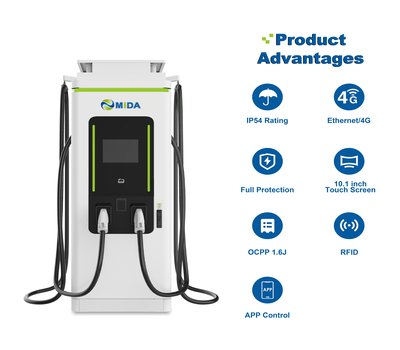
Modular DC Chargers: Achieving High Operational Efficiency
The shift from “stack” architectures to modular power blocks has revolutionized the EVSE industry. For a charging hub operator, modularity means lower spare-parts inventory and simplified maintenance. Instead of requiring a specialized engineer to diagnose complex board-level failures...Read more -
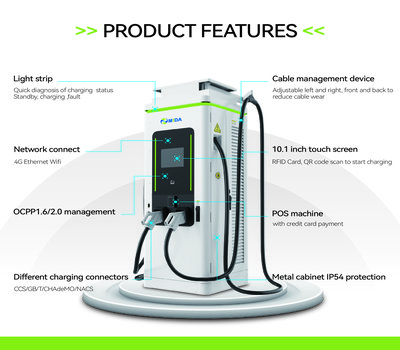
DC Charging ROI Analysis: Strategies to Shorten Payback Period
Investing in DC fast charging requires more than just purchasing hardware. The capital expenditure (CAPEX) includes grid upgrades, civil works, and the chargers themselves. To improve the ROI, operators are shifting towards “Future-Proofing” sites. This involves installing modular DC...Read more