


Quick Answer
Fleet charging should be selected from duty cycles rather than vehicle count alone. MIDA’s published range includes 60kW, 90kW, 120kW, 180kW, and 240kW configurations, with 150–1000V DC output described for the relevant product family. A 60kW unit may suit overnight or employee charging; 120kW and 180kW can support scheduled mid-shift replenishment; 240kW may fit a high-throughput depot with stronger grid infrastructure. The correct decision depends on route length, return time, battery size, shift overlap, charger redundancy, and vehicle charging acceptance. A fleet operator should model a full day of dispatch data before buying the highest available power class.
Key Takeaways
- Start with duty cycle, not the maximum battery size.
- Use lower power for long dwell windows and higher power for short return windows.
- Include redundancy because a fleet depot cannot depend on one charger.
- Use OCPP data to align charging with tariffs and dispatch schedules.
- Confirm connector standard and current rating for the fleet vehicles.
Convert Fleet Schedules into Power Requirements
Overnight Charging
If vehicles return for many hours, a lower power station may provide enough energy while reducing demand peaks. The operator can spread sessions across the night and use OCPP scheduling where supported. This model values reliability, access, and low operational complexity more than maximum charging speed.
Mid-Shift Replenishment
Delivery fleets, buses, and service vehicles may need a shorter charging window between routes. In that case, 120kW or 180kW may provide more useful energy within the available dwell period. A 240kW system becomes relevant when several vehicles need high-power replenishment at once.
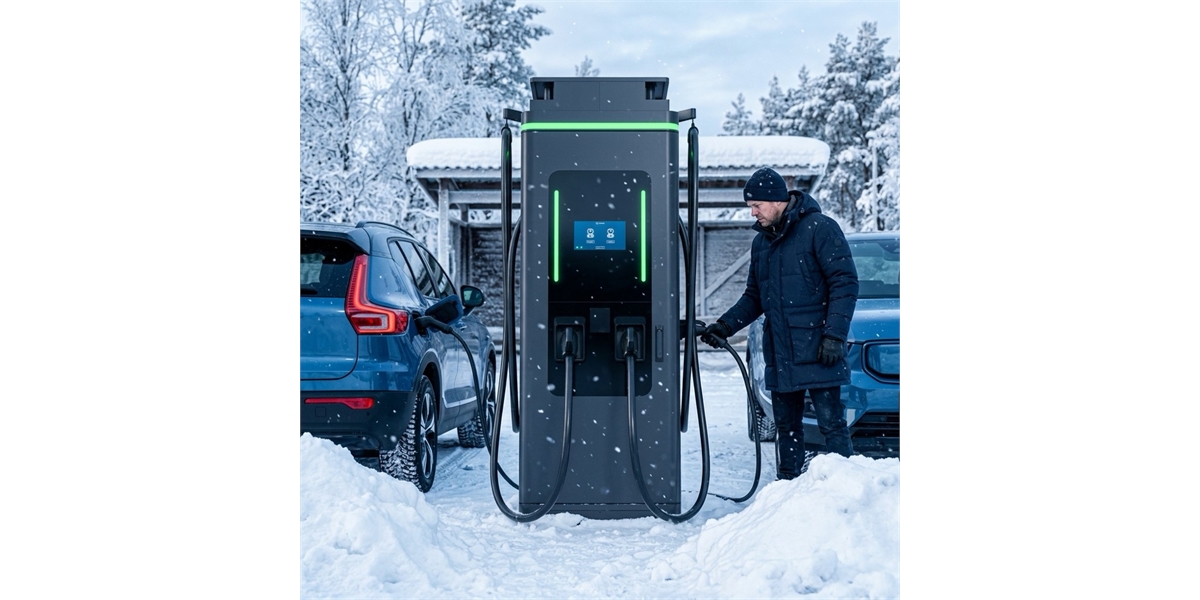
MIDA’s 60kW smart dual-CCS2 charger with dynamic load balance is a product-family reference for smart depot operation. The 60kW dual-gun ISO 15118-ready station and 40kW/60kW dual-port commercial station provide additional official examples for fleet-oriented planning.
Fleet Selection Table
| Fleet condition | Starting power class | Main reason |
|---|---|---|
| Long overnight dwell | 60kW | Simple, controlled energy delivery |
| Two shift windows | 120kW | More energy during scheduled returns |
| Short mid-shift return | 180kW | Faster replenishment and higher turnover |
| Overlapping high-demand dispatch | 240kW | Multi-vehicle throughput |
Software and Reliability
Schedule Around Dispatch
A charger should be considered part of the fleet operating system. The backend should show session energy, faults, authorization, and status. OCPP 1.6J is identified in the published product data, while OCPP 2.0.1 is supported or optional on selected configurations. The fleet software provider must confirm compatibility before deployment.
Design for Failure Recovery
A depot should have spare capacity, clear cable inspection procedures, and a response plan for a failed module or connector. A smaller group of redundant chargers may offer more operational resilience than one oversized unit.
Seven FAQs
- Is 60kW enough for delivery vans? It can be enough when vehicles have long dwell periods; validate the route schedule.
- When should a fleet select 240kW? When several vehicles need substantial energy within a short return window.
- Does a larger charger always reduce fleet costs? No. It may increase CAPEX and demand charges if underused.
- Can power be scheduled remotely? OCPP-enabled systems can support remote management, subject to backend compatibility.
- What connector should a fleet choose? Match the vehicle fleet and local standard; CCS2, CCS1, GBT, and NACS are not interchangeable.
- How should redundancy be calculated? Model the required vehicles per shift and the effect of one unavailable charger.
- What data should be collected before purchase? Arrival time, departure time, energy need, SoC, route mileage, and charger utilization.
Post time: Sep-01-2026