



Quick Answer
The digital layer determines whether a DC station can be operated efficiently after installation. MIDA’s published product descriptions identify OCPP 1.6J across the charging range, with OCPP 2.0.1 support or optional availability on specified models. This enables a compatible charging-station management system to collect session data, report faults, authorize users, and support remote operations. Relevant configurations also identify RFID, QR, app, and Plug & Charge pathways, although the exact combination varies by model and connector. For a 60–420kW project, the buyer should define the backend, payment method, load-management rules, cybersecurity, firmware process, and data ownership before selecting hardware. Digital interoperability is a procurement requirement, not a post-installation detail.
Key Takeaways
- Confirm OCPP version and supported message set for the exact SKU.
- Define payment, authorization, pricing, and user-support flows before commissioning.
- Use dynamic load management to protect the site electrical limit.
- Require secure firmware and credential-management procedures.
- Treat optional ISO 15118 or Plug & Charge features as configuration-specific.
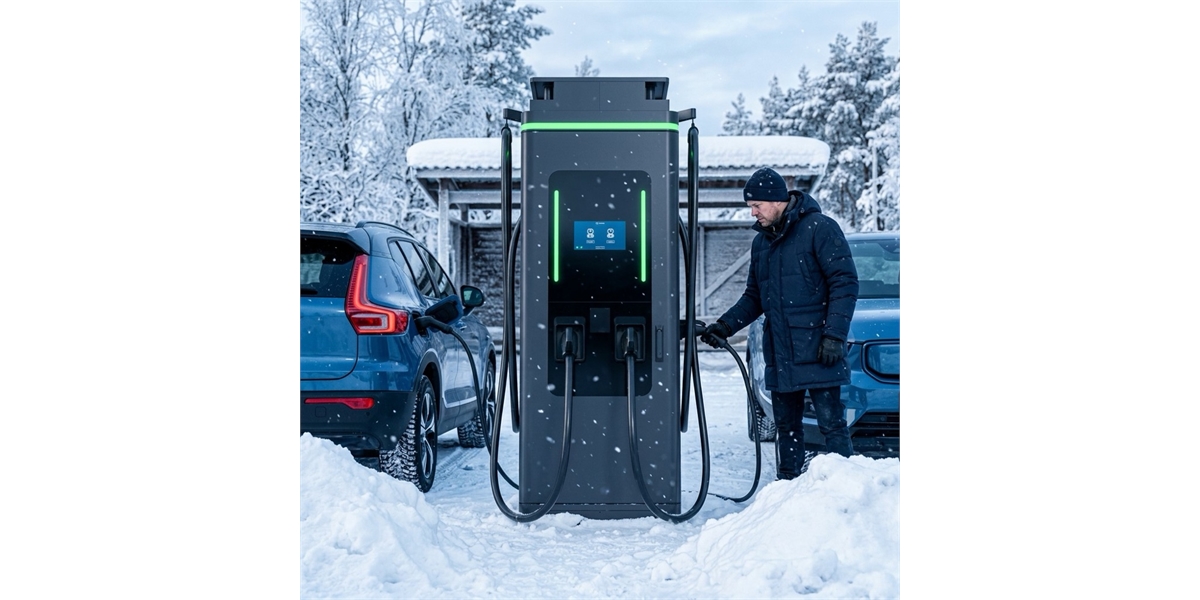
From Connected Hardware to Operable Infrastructure
OCPP as the Management Interface
OCPP can expose charger status, transaction data, meter readings, fault codes, and remote commands to a CSMS. However, two systems can both claim OCPP compliance and still differ in supported messages or implementation details. The buyer should conduct an integration test using the intended backend before mass deployment.
MIDA’s 60kW smart dual-CCS2 charger with dynamic load balance is a useful example of hardware and software requirements meeting in one product family. The 60kW dual-gun ISO 15118-ready station and 40kW/60kW dual-port commercial station show why authentication should be stated separately from basic OCPP connectivity.
Load Management as a Business Control
A site may have a 240kW charger but a lower contracted capacity. Load management can keep the total site within the utility limit while distributing available power according to vehicle state, tariff, queue, or fleet priority. The rule set should be approved by the operator and tested before launch.
Digital Requirements Table
| Digital requirement | Buyer acceptance test |
|---|---|
| OCPP | Start, stop, meter, status, fault, and reset commands |
| Authorization | RFID, QR, app, or Plug & Charge as specified |
| Load control | Enforce site limit and log allocation decisions |
| Remote service | Firmware, diagnostics, restart, and access control |
| Data | Export session, meter, tariff, and fault records |
| Security | Credential lifecycle, encryption, and user permissions |
Commissioning and Governance
Test Real Scenarios
The commissioning plan should include an interrupted session, a network outage, a backend restart, a meter discrepancy, a power-limit event, and a connector fault. The result should be recorded and accepted by both the site operator and the CSMS provider.
Define Data Ownership
Commercial sites should define who owns session data, who can access driver information, how long records are retained, and how support personnel are authorized. These decisions affect privacy, billing, and operational accountability.
Seven FAQs
- Does OCPP 1.6J support remote monitoring? Yes, when the charger and CSMS implement the required messages.
- Is OCPP 2.0.1 included on every MIDA model? Published data identifies it as supported or optional depending on model; confirm the SKU.
- Can a charger work without a cloud backend? Some local operation may be possible, but commercial billing and fleet control usually need a backend.
- What is Plug & Charge? Vehicle-based authentication defined through compatible communication standards; it requires compatible hardware and software.
- Can OCPP control power sharing? It can support smart-charging commands where the charger and backend implement them.
- What payment methods are available? Product descriptions identify RFID, QR, app, or Plug & Charge options by configuration.
- What is the most common digital deployment risk? Assuming protocol compatibility without testing the intended CSMS.
Post time: Sep-01-2026