


Quick Answer
A multi-power hub combines different charger ratings to match different user journeys: lower-power units for longer stays, mid-power stations for commercial turnover, and high-power HPC for highway or fleet demand. MIDA’s confirmed public product families span 60–240kW configurations, while official URLs also exist for 300–420kW products whose detailed specifications must be confirmed. A strong hub design should avoid treating every bay identically. Instead, allocate power by dwell time, vehicle class, queue probability, grid capacity, and service redundancy. OCPP connectivity, dynamic load control, clear bay design, and a documented maintenance plan are as important as the cabinet rating. The objective is dependable energy delivery across the entire site, not a single impressive peak number.
Key Takeaways
- Combine power classes according to dwell time and traffic pattern.
- Use 60–120kW for destination and commercial bays where appropriate.
- Use 180–240kW for higher-throughput public or fleet bays.
- Treat 300–420kW configurations as datasheet-dependent HPC options.
- Build uptime through redundancy, monitoring, service access, and clear user flow.
Assign Each Bay a Job
Destination and Commercial Bays
A 60kW or 120kW bay can serve shoppers, hotel guests, office users, or visitors who remain on site. These users value predictable access, safe parking, and a clear payment process. A lower-power bay may be more cost-effective if the vehicle naturally remains parked for one or two hours.
Transit and Fleet Bays
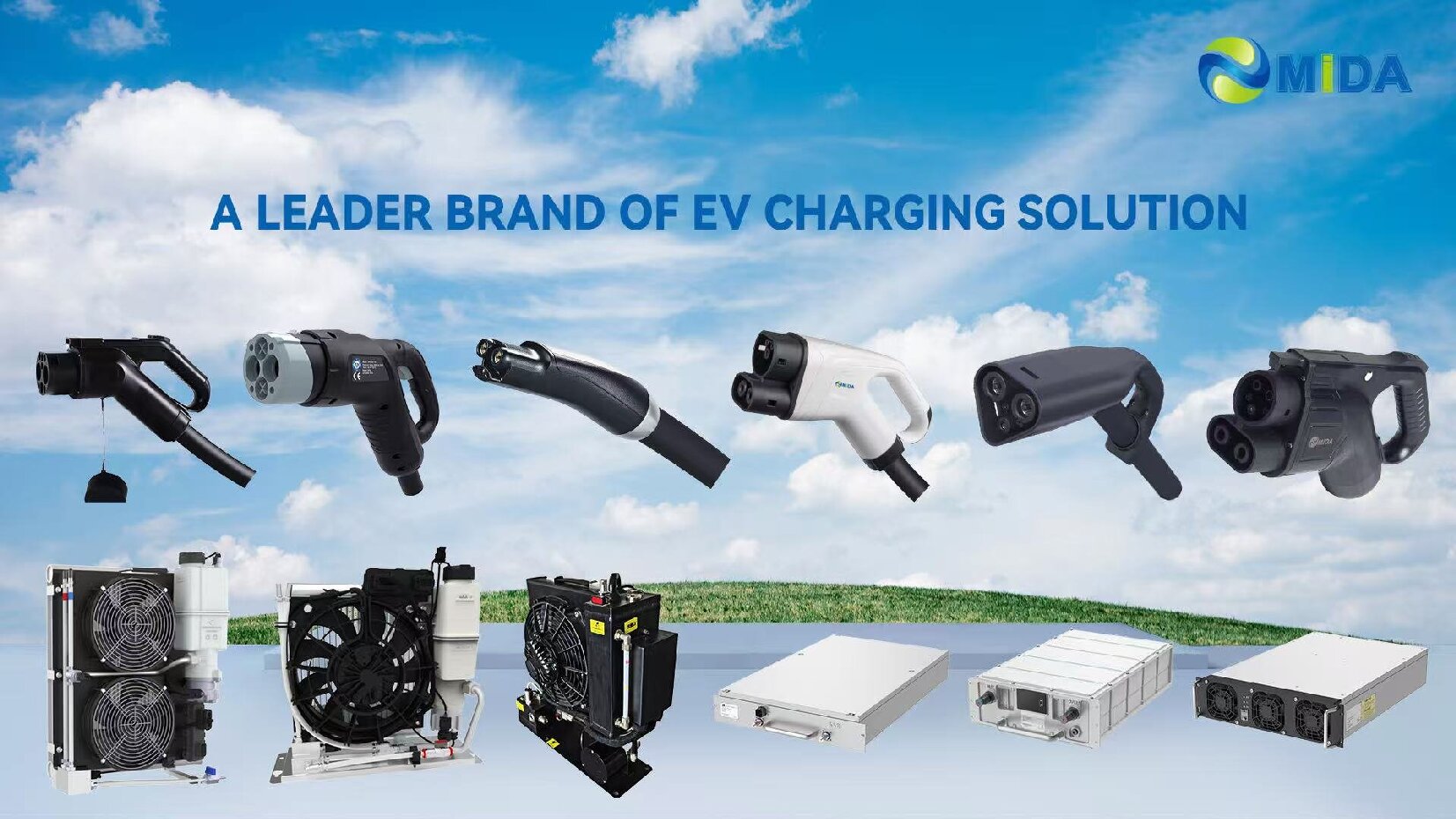
Higher-power bays support users who need to leave quickly or return to a dispatch schedule. MIDA’s 60kW–240kW commercial charging family can be considered alongside the official 240/300/360/420kW family page and the 60kW dual-gun fleet charger. For the 300–420kW family, the project should not proceed to final design without a model-specific specification pack.
Hub Architecture Table
| Hub zone | Possible power class | Operating purpose |
|---|---|---|
| Destination | 60kW | Longer dwell, lower grid intensity |
| Commercial turnover | 90–120kW | Retail and mixed-use access |
| Public fast hub | 180–240kW | Higher throughput and queue reduction |
| Highway/fleet HPC | 300–420kW | Short dwell; exact model data required |
Design for Availability
Redundancy and Monitoring
A hub should maintain useful service when one connector, module, or cabinet is unavailable. The operator needs real-time status, fault alerts, remote restart where safe, and a clear process for taking a bay offline. OCPP can connect this information to a CSMS, but message-level compatibility must be tested.
User Experience and Safety
Place lighting, signs, payment instructions, emergency-stop information, and cable holders where drivers can see them. Prevent cable crossings and ensure accessible bays comply with local rules. A technically capable charger can still create operational risk if the site layout is confusing.
Seven FAQs
- Should every hub use 420kW? No. Match power to traffic, dwell time, grid, and budget.
- Can 60kW and 240kW units share one backend? They can if the models and CSMS support compatible OCPP functions.
- What is dynamic load management for? It keeps total site demand within the planned electrical limit.
- How do I reduce queues? Combine suitable power classes, provide live availability, and monitor peak demand.
- What does high uptime require? Redundancy, preventive service, spares, remote monitoring, and trained technicians.
- Are 300–420kW specifications confirmed? Their official pages are confirmed, but detailed ratings are not in the current evidence set.
- What should be measured after commissioning? Utilization, delivered kWh, session duration, faults, queue time, and energy cost.
Post time: Sep-01-2026