

MIDA 60kW Dual CCS2 DC Fast Charging Pile
Floor-Standing Smart EVSE Station with CE/TUV Certification
Quick Answer
The MIDA 60kW Dual CCS2 DC Fast Charging Pile is a floor-standing, OCPP-compliant Level 3 (DC) charging station engineered for commercial operators who need dependable high-power throughput in a compact, serviceable footprint. It delivers 60 kW of continuous DC power across an ultra-wide 150V–1000V output band at ≥95.5% conversion efficiency, charging two electric vehicles simultaneously through twin CCS2 connectors with intelligent dynamic power sharing. Rated IP54 against dust and water ingress and IK10 against vandalism, and certified to CE, TUV, ISO 9001, and ISO 14001, the station is built for years of unattended outdoor operation. RFID, mobile App, WiFi, and 4G connectivity — combined with native OCPP 1.6J/2.0.1 support — let operators plug the pile into any major charging management platform for remote monitoring, pricing, and diagnostics. For fleet depots, retail destinations, hotels, and highway corridors across Europe, the MIDA 60kW converts grid capacity into reliable charging revenue with predictable uptime and a total cost of ownership tuned for mid-size deployments.
Key Takeaways
- 60 kW continuous DC output with dual CCS2 connectors and dynamic power sharing — two vehicles served from a single grid connection.
- Ultra-wide 150V–1000V output voltage supports both 400V and next-generation 800V EV architectures.
- Efficiency ≥95.5% reduces wasted energy and cuts operating costs over the charger’s full lifecycle.
- IP54 and IK10 enclosures, plus CE, TUV, ISO 9001, and ISO 14001 certifications, enable safe, legal, unattended outdoor deployment across the EU.
- Native OCPP 1.6J/2.0.1, RFID, App, WiFi, and 4G connectivity integrate with virtually any charging management platform.
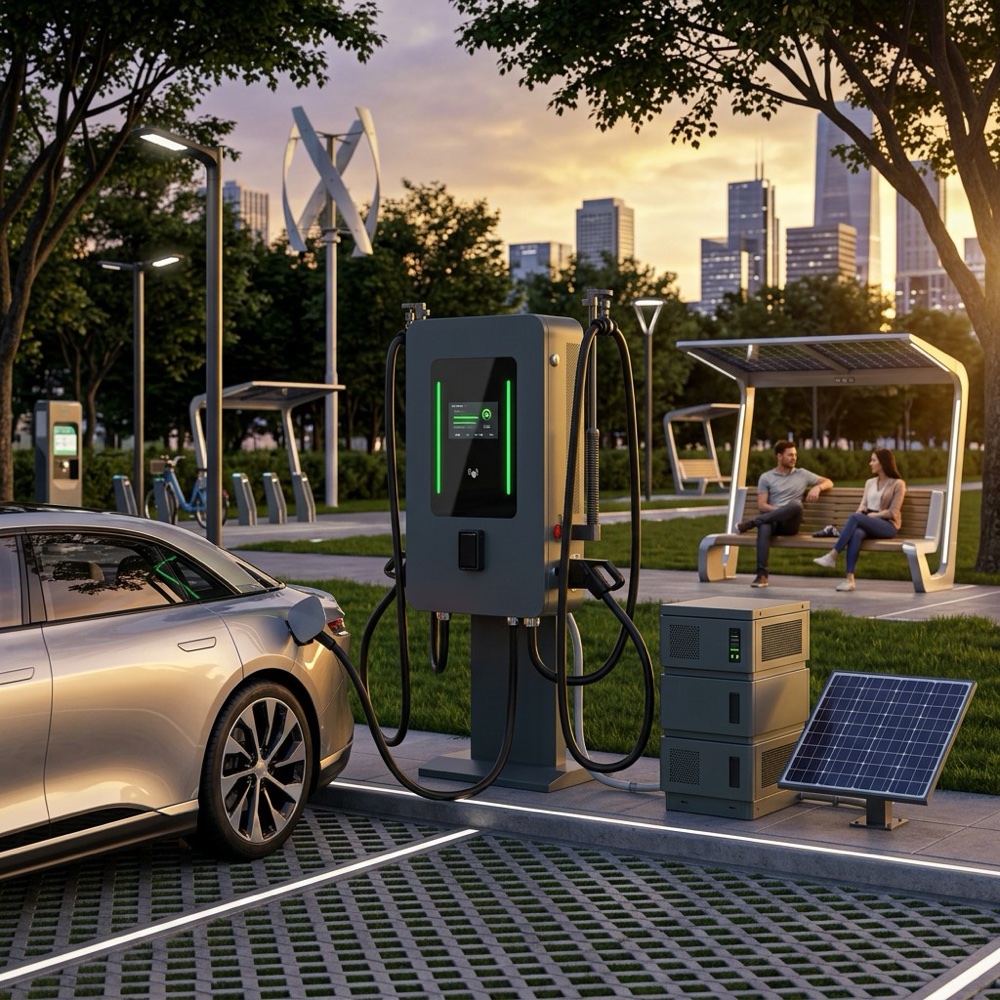
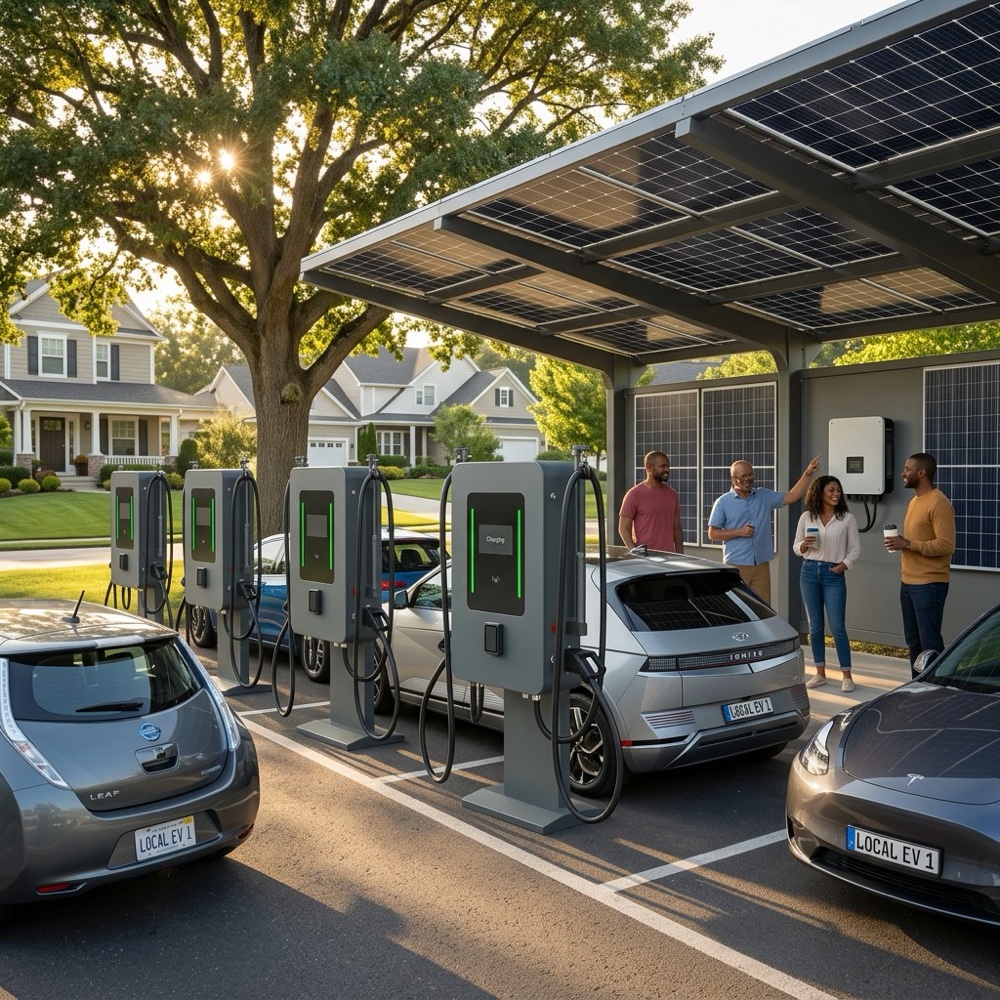
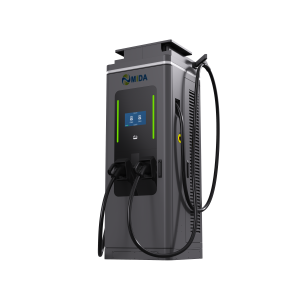
| <!– Insert: MIDA 60kW floor-standing dual CCS2 charger, front three-quarter view in a commercial parking environment, daylight –> | 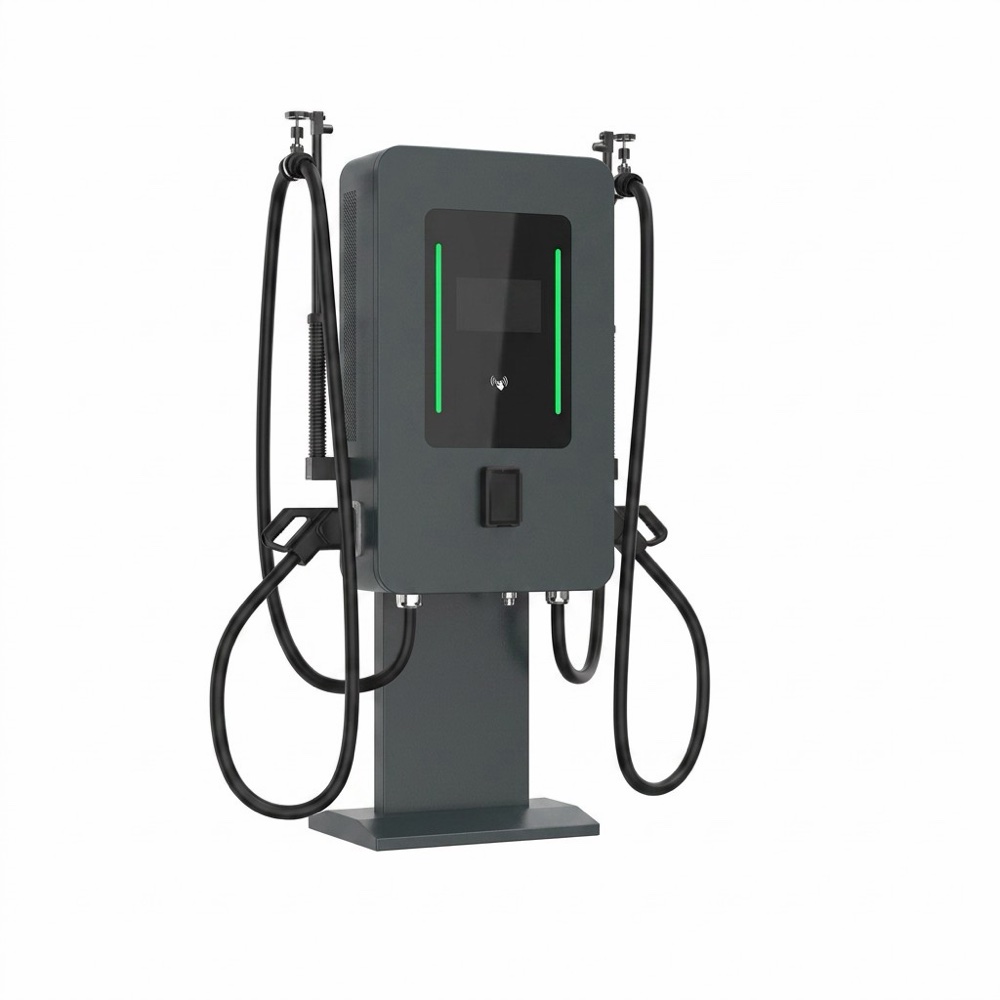 |
Why 2026 Operators Are Standardizing on 60 kW DC Infrastructure
The European charging market has crossed an inflection point. Fleet operators are electrifying depot runs under CO₂ compliance deadlines, hotels and retailers are installing chargers to defend occupancy and footfall, and municipalities are densifying urban charging networks. At the same time, every charger installed today must still be profitable five years from now. That combination of compliance pressure and commercial discipline is why the 60 kW power class has become the default building block of professional DC charging networks in 2026.
The Throughput Problem in Commercial EV Charging
The economics of EV charging are simple in theory and brutal in practice: revenue equals delivered kilowatt-hours times price, minus the cost of energy, site, and equipment. The constraint is throughput — how many kilowatt-hours a single grid connection can push into vehicle batteries per day. An AC charger typically delivers 7–22 kW per connector, which means a vehicle sits on a bay for hours. A 60 kW DC charger, by contrast, can add 150–300 km of range in roughly 30 minutes, turning each parking bay into a high-velocity energy dispenser. When bays are scarce, land is expensive, and grid connection fees are measured in tens of thousands of euros, the difference between AC trickle and DC throughput determines whether a site breaks even in two years or never.
The 60 kW Sweet Spot for Revenue and Utilization
Why 60 kW and not 30 kW or 120 kW? Because 60 kW sits at the sweet spot of three variables that dominate operator decision-making: utilization, grid cost, and vehicle compatibility. A 30 kW charger struggles to deliver a meaningful charge in the 20–40 minute dwell time typical of retail and fleet stops. A 120 kW charger dramatically increases grid connection cost, transformer sizing, and cable capital expenditure — and most vehicles on European roads today still charge at peak rates below 60 kW for large portions of their charge curve. The MIDA 60kW captures the practical majority of sessions: fast enough to turn bays over quickly, affordable enough to deploy at multiple locations, and future-proof enough to serve the 800V vehicles that are rapidly entering the European fleet.
MIDA WY Series Engineering: Modular, Serviceable, Future-Ready
The MIDA 60kW belongs to the WY Series, MIDA Power’s professional DC charging range spanning 40–80 kW. Every WY Series unit shares the same design DNA: modular power conversion, wide-voltage output, industrial-grade protection, and connectivity that speaks the language of modern charging management platforms. What changes across the range is power rating and form factor — allowing operators to standardize on one hardware family from a single trusted supplier while right-sizing each site.
Wide-Voltage Output from 150V to 1000V
The single most important technical feature of the MIDA 60kW is its 150V–1000V output window. European EVs are migrating from 400V to 800V architectures at speed; by 2026, most new premium and mid-range models charge on 800V systems. A charger locked to a narrow voltage band either cannot serve these vehicles at all or throttles them to a fraction of their capability. The MIDA 60kW covers the entire band in one unit — legacy 400V sedans, delivery vans, commercial vehicles, and the latest 800V fast-charging platforms all connect and charge at their optimum. This single-station universality is what makes the WY Series a genuinely future-proof infrastructure investment.
Peak Efficiency Above 95.5%
Every kilowatt-hour lost to heat inside the charger is a kilowatt-hour you paid for but cannot sell. The MIDA 60kW achieves a full-load conversion efficiency of ≥95.5%, a figure validated across the operating envelope rather than only at a single laboratory point. At 60 kW output and, say, 300 sessions per month, a one-percentage-point efficiency difference can represent several hundred kilowatt-hours of avoidable loss annually per unit — real, recurring money on the profit-and-loss statement of any charging business. High efficiency also means less heat to reject, which in turn supports the charger’s compact enclosure and extended component life.
Modular Power Architecture and Serviceability
The WY Series is built around a modular power architecture. Power modules are designed for field-swappable replacement, which keeps mean time to repair short and eliminates the classic failure mode of “one broken board, whole charger down.” For a commercial operator, this design choice translates directly into uptime: if a module degrades, it can be exchanged in minutes by a trained technician rather than requiring a full unit return. Combined with remote diagnostics over OCPP and 4G, the architecture gives operators a service model normally associated with much more expensive hardware.
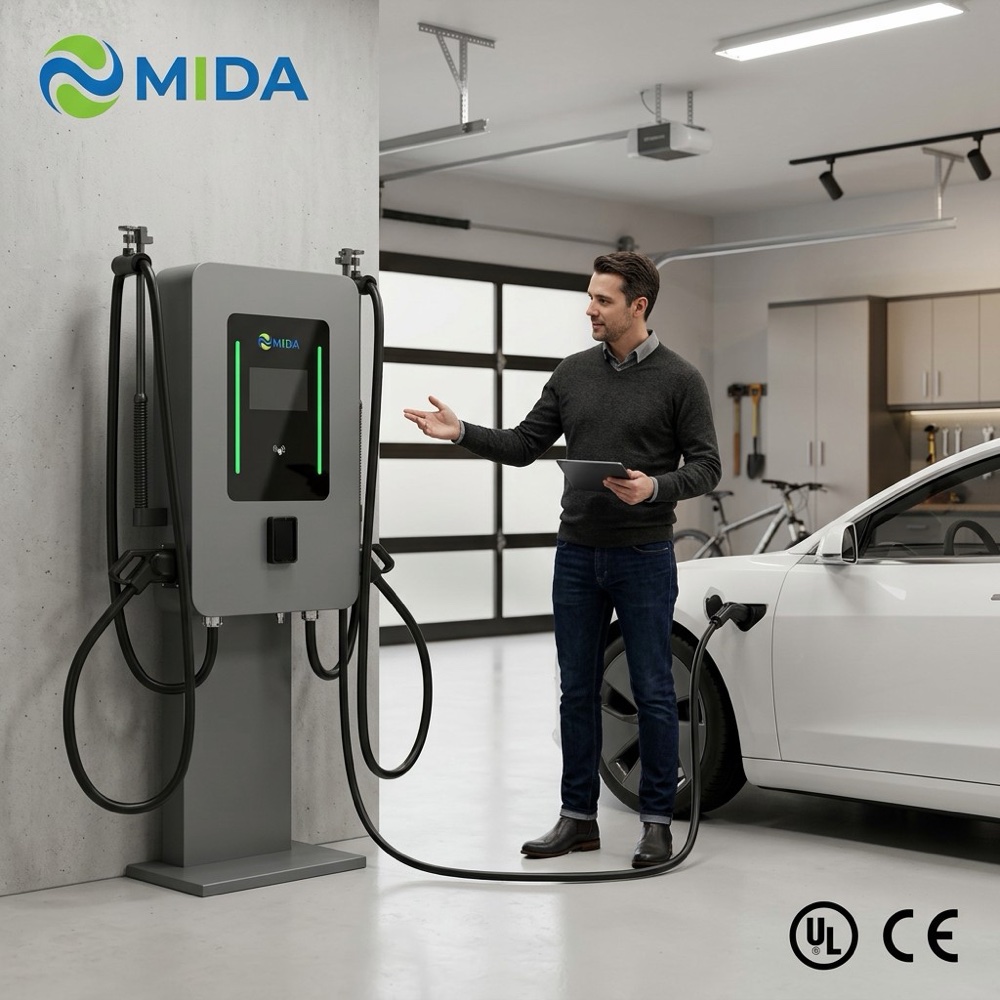
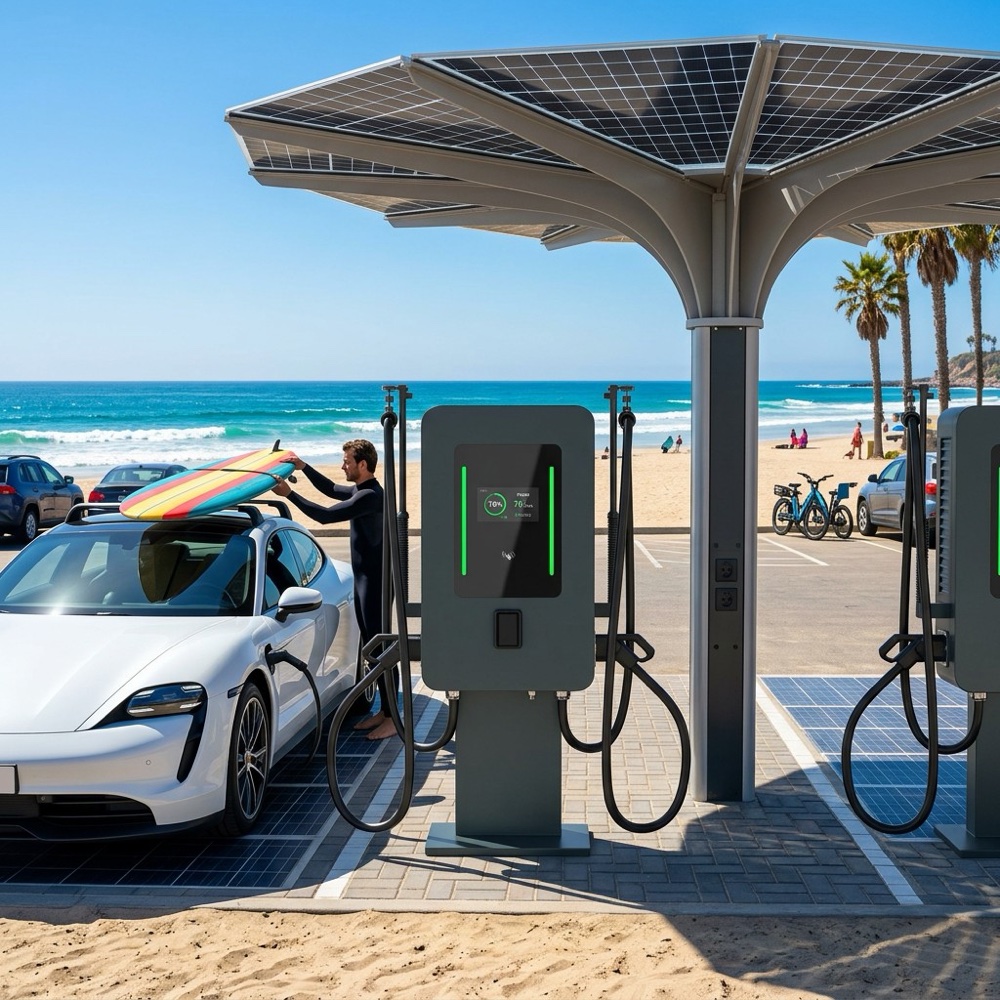
| <!– Insert: MIDA 60kW charger internal view or side profile showing dual CCS2 cables and connector holsters –> | 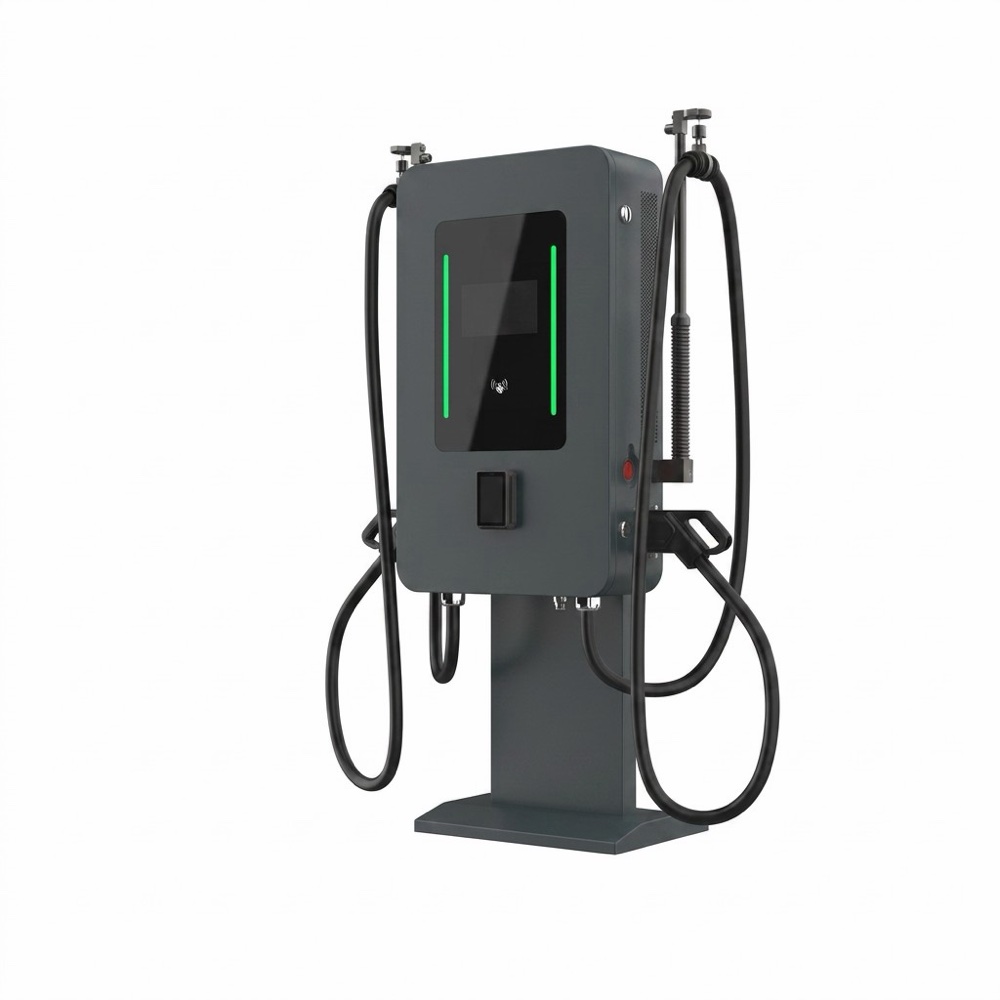 |
Dual CCS2 Ports: Two Vehicles, Intelligent Power Sharing
Simultaneous Charging Without Infrastructure Multiplication
The MIDA 60kW carries two CCS2 (Combo 2) connectors — the European standard DC interface — on a single floor-standing pedestal. Two connectors on one unit mean a single grid connection, a single site permit, a single mounting foundation, and a single maintenance asset can serve two parking bays. For locations where space is tight or electrical supply is limited, this is the difference between being able to build a charging site and not.
Dynamic Power Allocation for Maximum Efficiency
The two ports are managed by a dynamic power-sharing controller. When one vehicle is connected, it receives the full 60 kW. When a second vehicle plugs in, the controller allocates power intelligently based on each vehicle’s state of charge, battery voltage, and charge acceptance rate — prioritizing, for example, the vehicle that arrived first or the one that can actually absorb more power. This ensures that the aggregate throughput of the site is maximized rather than simply halved. Two modest vehicles splitting 60 kW both finish comfortably within a typical dwell window; one urgent vehicle still gets high power while the other tops off.
CCS2: The Connector That Unifies Europe
CCS2 is the dominant DC charging standard across the European Union, mandatory on new vehicle models and installed across the overwhelming majority of fast-charging networks. By shipping dual CCS2, the MIDA 60kW eliminates adapter risk, cable compatibility issues, and charger-to-vehicle negotiation failures that still plague multi-standard installations. Every CCS2-equipped EV — from compact city cars to delivery vans and heavy commercial prototypes — connects natively.
Technical Specifications at a Glance
| Parameter | Specification |
|---|---|
| Model | MIDA WY-60K (60 kW Dual CCS2) |
| Product Type | Floor-standing DC Fast Charger (Level 3 EVSE) |
| Rated Output Power | 60 kW |
| Output Voltage Range | 150V – 1000V DC |
| Output Current | Up to 200A (power-derated per charging curve) |
| Number of Connectors | 2 × CCS2 (Combo 2) |
| Conversion Efficiency | ≥ 95.5% |
| Communication Protocols | OCPP 1.6J / 2.0.1 |
| Connectivity | WiFi, 4G (Ethernet optional) |
| User Authentication | RFID card, Mobile App / QR code, optional Plug & Charge |
| Enclosure Protection | IP54 (dust-tight, water-jet protected) |
| Impact Protection | IK10 (vandal-resistant) |
| Certifications | CE, TUV; ISO 9001 (quality), ISO 14001 (environmental) |
| Mounting | Floor-standing pedestal with anchor-bolt foundation |
| Cooling | Intelligent forced-air cooling with temperature-adaptive fan control |
| User Interface | High-brightness touchscreen display with status LEDs |
| Operating Temperature | -20°C to +50°C |
| Operating Humidity | 5% – 95% RH (non-condensing) |
| Safety Protection | Overvoltage, overcurrent, over-temperature, ground-fault, surge protection, emergency stop |
Specifications are representative of the WY-60K configuration; final values may vary by market configuration and should be confirmed at quotation.
Always-On Connectivity: OCPP, RFID, App, WiFi/4G
A DC fast charger is only as valuable as the platform that operates it. The MIDA 60kW is built to be a first-class citizen of modern charging management ecosystems.
OCPP 1.6J and 2.0.1 Compliance
The station natively speaks OCPP 1.6J and OCPP 2.0.1, the open charging communication protocols used by virtually every major charging management platform (CMP) in Europe. This means the MIDA 60kW is not locked into a proprietary ecosystem: operators can onboard it to their existing backend, set tariffs, run remote start/stop, push firmware updates over the air, and pull transaction data into billing systems. OCPP 2.0.1 additionally brings enhanced security features — including signed messages and secure firmware updates — that satisfy the stricter cybersecurity expectations emerging in EU markets. For operators who need to report to regulators, energy suppliers, or CFOs, the MIDA 60kW delivers clean, auditable transaction records out of the box.
Multi-Method Authentication: RFID, App, and Plug-and-Charge
User access is frictionless and flexible. Each station ships with RFID card readers for closed user groups and fleets, plus QR-code/App authentication for public sessions. Operators can mix models per site: RFID for depot staff, App for walk-up customers. This multi-method approach maximizes accessibility while giving the operator fine-grained control over pricing, access schedules, and user authorization — all manageable remotely through the charging platform.
Telemetry, Remote Diagnostics, and Load Management
Over WiFi or 4G, the charger continuously streams telemetry — power output, session status, connector state, temperature, and error codes — to the operator’s platform. Issues are surfaced before they become failures, and many faults can be diagnosed remotely before a truck is dispatched. The station also supports load-management signaling, allowing site-level controllers to cap aggregate draw during peak tariffs or grid constraints — a growing requirement as distribution grids tighten across Europe.
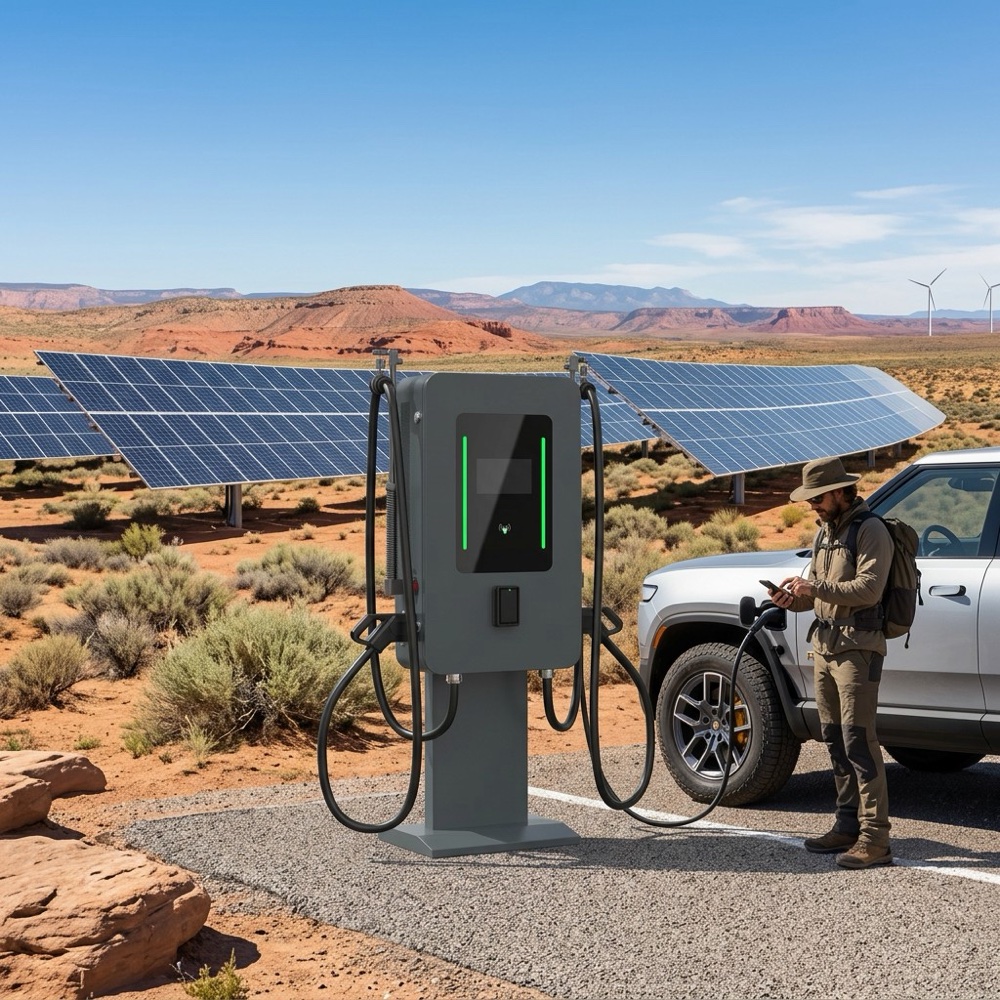
| <!– Insert: Close-up of the MIDA 60kW connector holsters, RFID pad, and touchscreen interface –> | 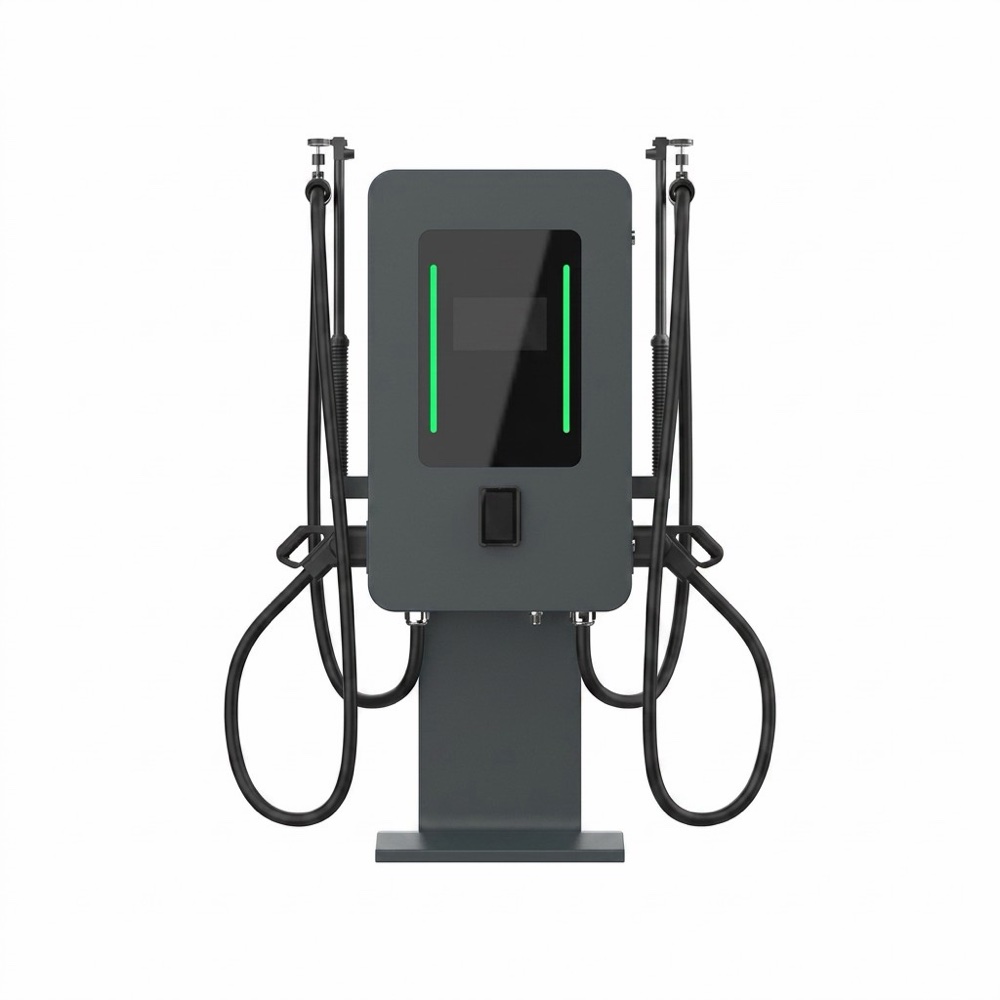 |
Built for Unprotected Outdoor Deployment: IP54 + IK10
Commercial chargers live outdoors, unprotected, in rain, snow, dust, and — regrettably — in the path of careless drivers and opportunistic vandals. The MIDA 60kW is engineered for that reality.
Ingress Protection: IP54
The IP54 rating confirms protection against dust ingress that could impair operation and against water splashing from any direction. Rain, road spray, pressure-washed forecourts, and coastal humidity are all within the station’s normal operating envelope. Sealed cable entries, gasketed doors, and corrosion-resistant hardware mean the charger does not require a canopy or shelter — a significant saving on site construction.
Impact Resistance: IK10
The IK10 impact rating — the highest in the standard scale — means the enclosure withstands a 5-joule impact, the energy of a deliberate blow from a heavy object, without compromising safety or function. Holsters and housings are designed so that connectors are protected when parked, and the overall construction resists the bumps and scrapes of busy sites. For operators, IK10 translates into lower damage claims and fewer nuisance outages.
Thermal and Climatic Resilience
The unit operates across -20°C to +50°C, spanning Nordic winters and Southern European summer peaks. Temperature-adaptive fan control keeps power electronics inside their safe operating window, extends component life, and minimizes acoustic noise during low-load periods — an increasingly important factor for residential-adjacent installations.
Certification You Can Stand Behind: CE, TUV, ISO 9001, ISO 14001
Compliance is not a checkbox — it is the license to operate. The MIDA 60kW carries CE marking for the European Economic Area, covering the applicable Low Voltage, EMC, and Machinery directives, and is TUV-certified, providing independent third-party verification of electrical safety and performance. MIDA Power’s manufacturing operations are certified to ISO 9001 (quality management) and ISO 14001 (environmental management), giving buyers confidence in consistent production quality, traceability, and responsible manufacturing. For operators seeking financing, insurance, or grid-connection approval, this certification stack removes a long list of due-diligence objections.
Floor-Standing Form Factor: Site Planning, Installation, and Serviceability
Site Planning and Layout
The floor-standing design anchors the charger on a bolted pedestal foundation, requiring no wall or structure to mount against. This frees site planners to place the unit exactly where the traffic is — at the end of a parking row, beside an entry lane, or in a dedicated charging bay — rather than where a wall happens to be. Front access to all serviceable components means the unit can be positioned close to curbs and barriers without sacrificing maintainability.
Grid and Electrical Requirements
A 60 kW DC charger requires a three-phase AC supply with appropriate upstream protection and earth bonding — standard engineering practice for commercial sites. The integrated input protection reduces the need for expensive external protection engineering, and the station’s high power factor keeps demand charges in check. MIDA’s technical team supports customers with pre-sales site surveys and installation guidance, reducing the risk of costly first-time misconfigurations.
Serviceability
Modular power stages, front access, and remote diagnostics combine to keep the station out of the workshop and on the forecourt. Spare modules are standardized across the WY Series, so a mixed 40–80 kW deployment can be supported from a single sparse inventory.
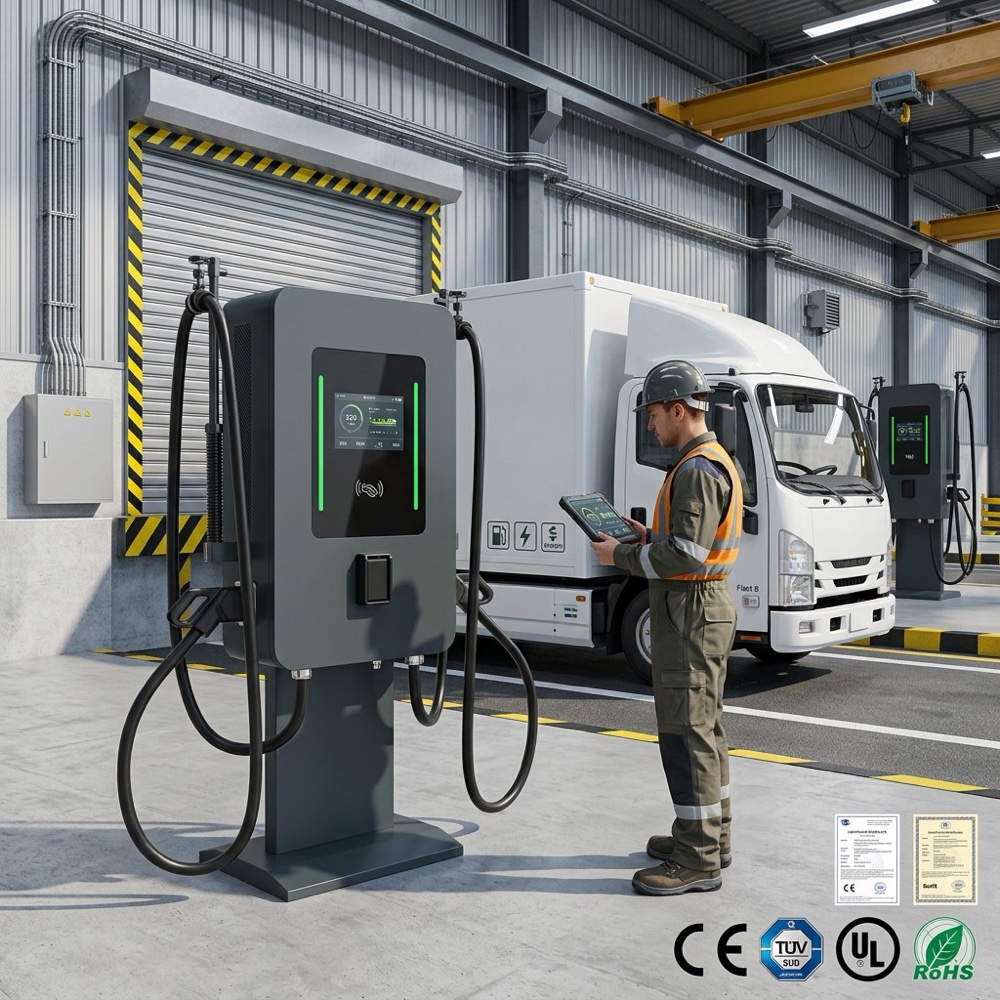
| <!– Insert: MIDA 60kW installed in a fleet depot or retail forecourt with an EV connected and charging –> | 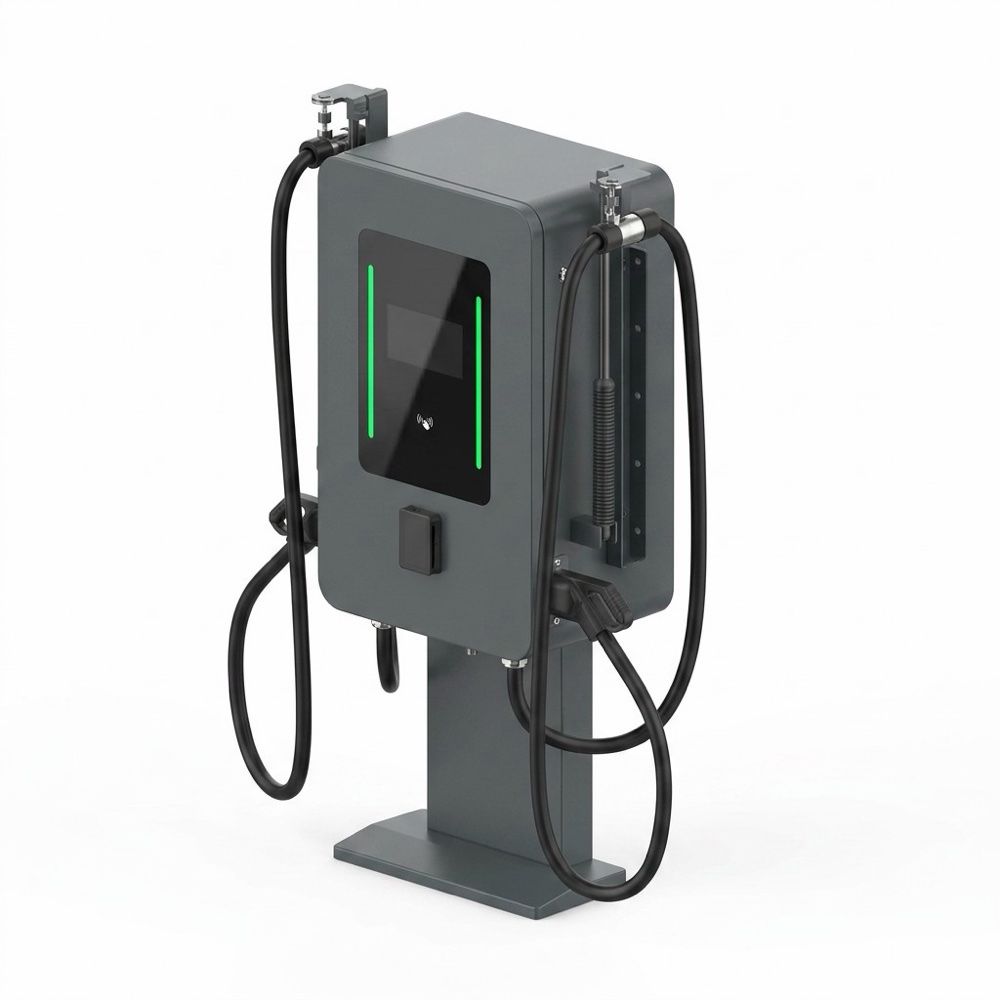 |
The Business Case: Payback, Uptime, and Total Cost of Ownership
For operators building a business case, three numbers matter: capital cost per installed kilowatt, uptime percentage, and lifetime operating cost. The MIDA 60kW is engineered to win on all three.
| Financial Driver | How the MIDA 60kW Delivers |
|---|---|
| Capital Efficiency | Two revenue-generating connectors from one grid connection, one foundation, one asset |
| Throughput | 60 kW per session, up to two sessions concurrently — high kWh throughput per bay |
| Energy Cost | ≥95.5% efficiency + high power factor minimize wasted energy and demand charges |
| Opex | Field-swappable modules, remote diagnostics, no proprietary service lock-in |
| Uptime | IP54/IK10 ruggedization, OCPP remote management, modular redundancy |
| Compliance Risk | CE, TUV, ISO 9001/14001 reduce permitting, insurance, and financing friction |
An illustrative example: a retail site running 12 sessions per day at an average 25 kWh per session delivers roughly 300 kWh per day. At a conservative gross margin of €0.20 per kWh, that is €60 per day, or roughly €21,900 per year, from a single dual-port unit — before accounting for the footfall and dwell-time value the charger creates for the host business. Payback periods of 2–4 years are realistic under current European tariffs and utilization patterns.
Deployment Scenarios: Where the MIDA 60kW Wins
Fleet Depots and Semi-Public Hubs
Delivery fleets returning to the depot between shifts need predictable, rapid top-ups across many vehicles. Dual-port 60 kW charging lets a depot right-size its infrastructure to its duty cycles, charge multiple vans overnight or between routes, and use RFID to keep the depot private while still serving occasional public sessions.
Retail, Hospitality, and Destination Sites
For supermarkets, hotels, restaurants, and leisure destinations, dwell time is 30–60 minutes — the exact window a 60 kW charger fills best. Guests and shoppers arrive with meaningful state-of-charge deficits and leave with a genuine range gain, while the host earns charging revenue and defends footfall against competitors with chargers.
Urban Hubs and Highway Corridors
Where grid capacity is scarce and space expensive, the MIDA 60kW’s dual-port, single-pedestal design maximizes charging capacity per square meter and per amp. Municipalities and corridor operators can densify networks without re-engineering every substation.
Choosing the Right Power Class: The MIDA WY Series 40–80kW
Standardizing on one hardware family simplifies spares, training, and platform integration. The table below shows how the MIDA 60kW sits within the WY Series.
| Model (WY Series) | Power Class | Connectors | Best Fit |
|---|---|---|---|
| MIDA 40kW Small Pedestal | 40 kW | Dual port | Urban on-street, retail forecourts, space-constrained sites |
| MIDA 60kW Floor-Standing | 60 kW | Dual CCS2 | Fleet depots, destination sites, balanced throughput + capex |
| MIDA 80kW (WY Series) | 80 kW | Dual port | High-traffic corridors, transit hubs, heavy session volumes |
For sites that need a smaller footprint or a lighter grid connection, the companion MIDA 40kW Small Pedestal DC Fast Charger delivers the same WY Series engineering in a compact urban form factor. Operators often deploy the two side by side: 40 kW units in town centers and 60 kW units at anchor locations — all managed from the same platform.
Frequently Asked Questions
1. How many vehicles can the MIDA 60kW charge at the same time?
The station is equipped with two CCS2 connectors and can charge two vehicles simultaneously using dynamic power sharing. A single vehicle receives the full 60 kW; two vehicles share the 60 kW intelligently based on each battery’s state of charge and charge acceptance.
2. Which vehicles are compatible?
Any CCS2-equipped DC-charging EV. The 150V–1000V output window covers legacy 400V models, modern 800V fast-charging platforms, and most electric vans and light commercial vehicles in Europe.
3. What charging management systems does it work with?
The station supports OCPP 1.6J and OCPP 2.0.1, which are the industry-standard protocols used by virtually all major European charging management platforms. Integration is configuration-level, not custom development.
4. Is the charger suitable for outdoor installation?
Yes. The IP54 rating protects against dust and water splashing, and the IK10 impact rating resists vandalism. Operating temperature range is -20°C to +50°C.
5. What certifications does the MIDA 60kW carry?
CE marking for the EEA, TUV certification for electrical safety and performance, and ISO 9001 and ISO 14001 for manufacturing quality and environmental management.
6. How does authentication work for public and private use?
The unit supports RFID cards, mobile App and QR-code authentication, with optional Plug & Charge. Operators can restrict access to closed user groups or open sessions to the public, with tariffs set remotely.
7. Can the charger be serviced without sending the unit back to the factory?
Yes. The modular power architecture is designed for field-swappable module replacement, and OCPP remote diagnostics enable technicians to identify and resolve many faults remotely, minimizing downtime.
Move Forward with MIDA Power
The MIDA 60kW Dual CCS2 DC Fast Charging Pile is a deliberately engineered answer to the questions every serious operator asks: how do I maximize throughput per grid connection, keep uptime high, and control total cost of ownership across a multi-site network — all while staying compliant in a tightening regulatory environment? With 150V–1000V wide-voltage output, ≥95.5% efficiency, dual-port CCS2 charging, IP54/IK10 ruggedization, CE/TUV certification, and open OCPP connectivity, it delivers. Pair it with the MIDA 40kW Small Pedestal DC Fast Charger for urban sites, and one hardware family covers an entire regional rollout. Contact the MIDA Power team for a site-specific quotation, technical datasheet, and installation planning support.
Products categories
-
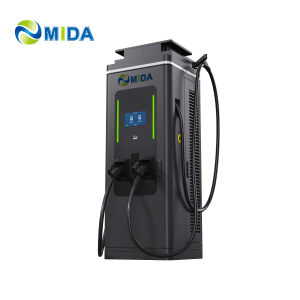
180kw 240kW DC Ultra Fast EV Charger Station OC...
-
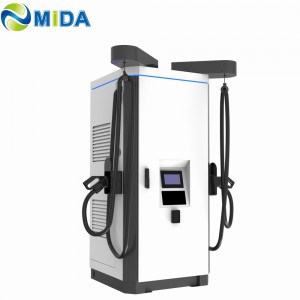
Level 3 EV DC Charger Electric Car Charging Sta...
-
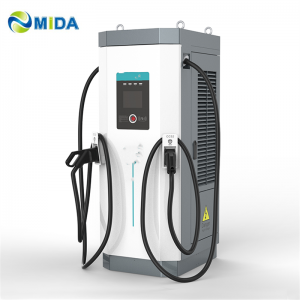
240kw 300kw 360kw 420kW Fast Charging Station F...
-
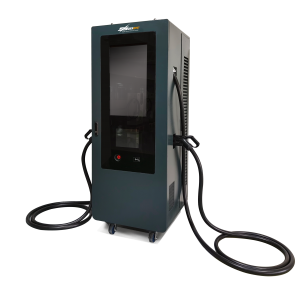
120KW 160KW 180kW 200kw Fast EV Charger Station...
-
420KW CCS2 New energy electric vehicle Charging...
-
360KW New energy electric vehicle Charging station