

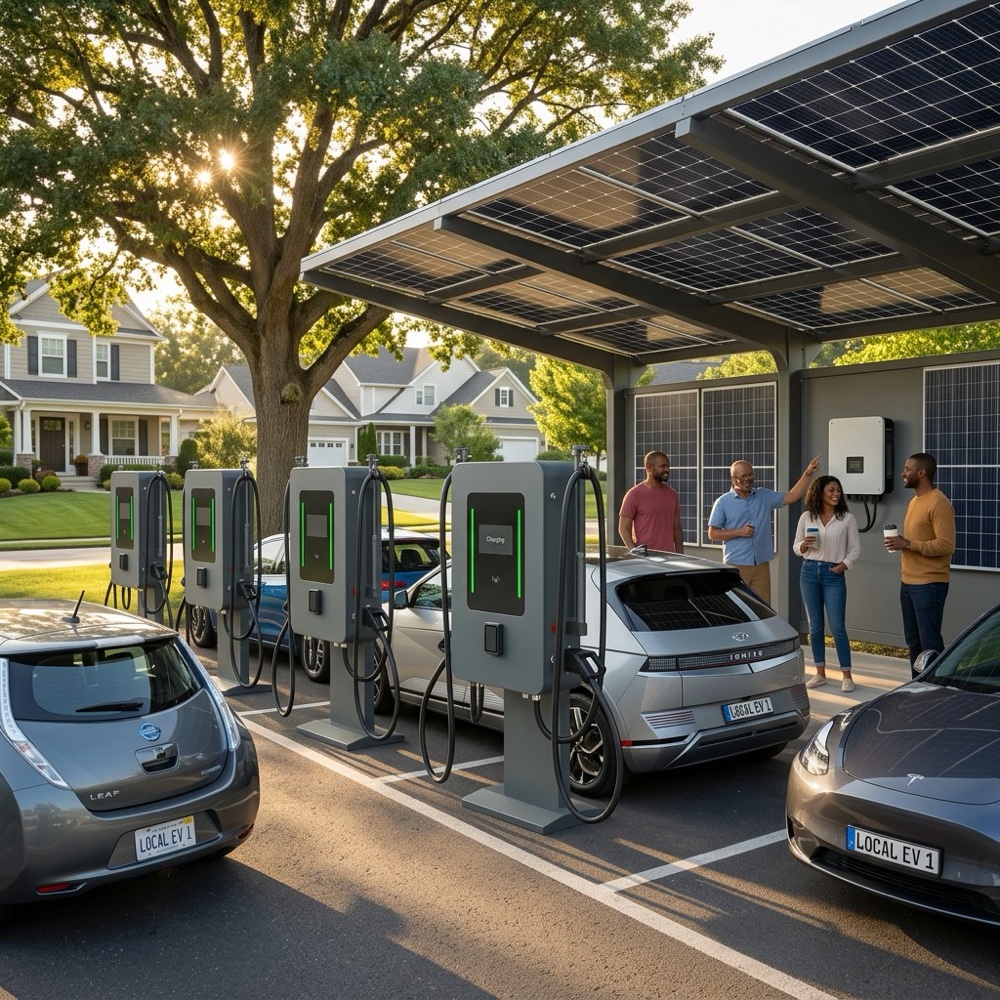
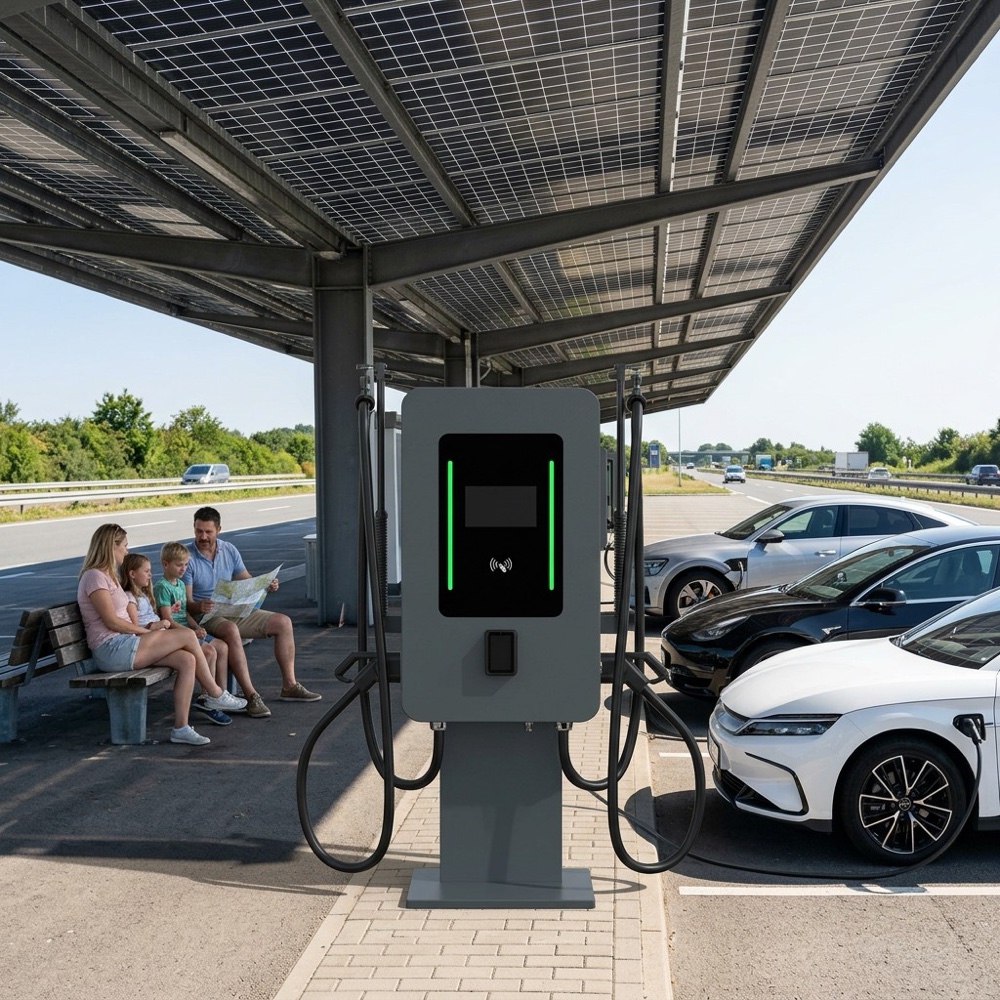
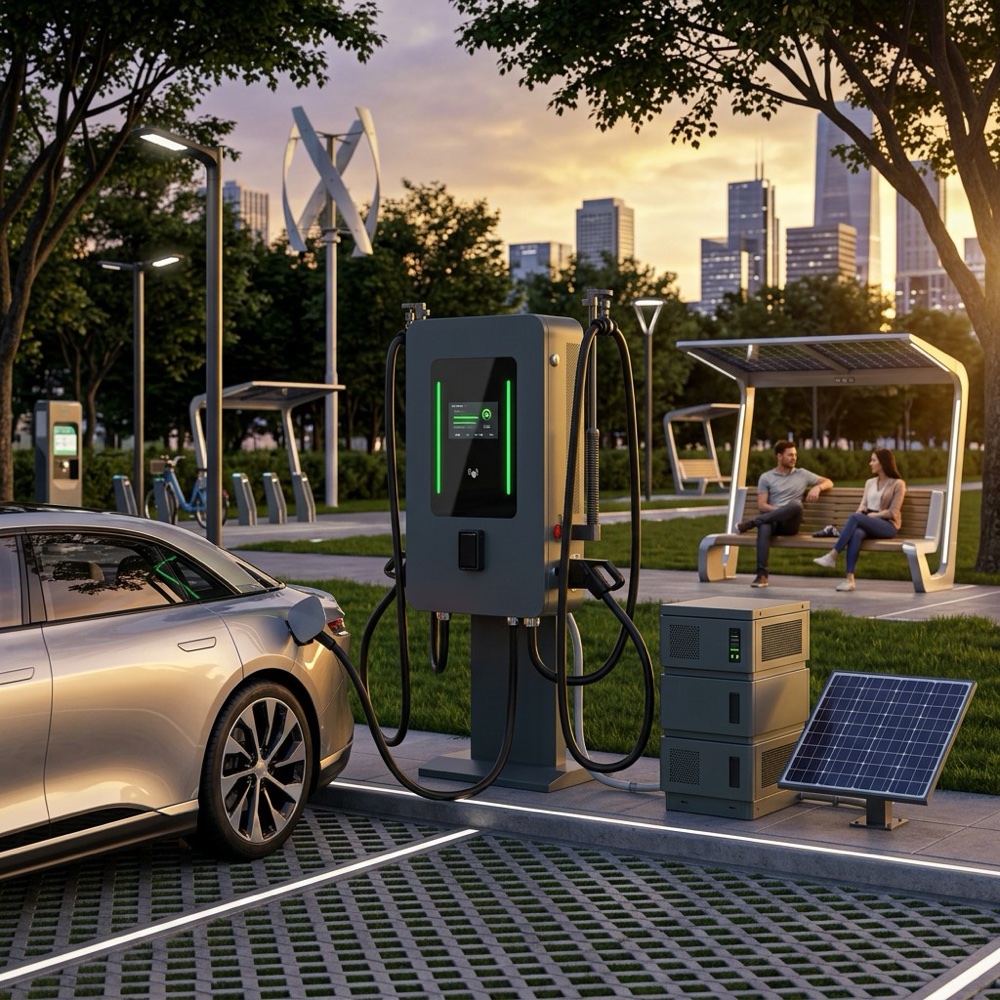
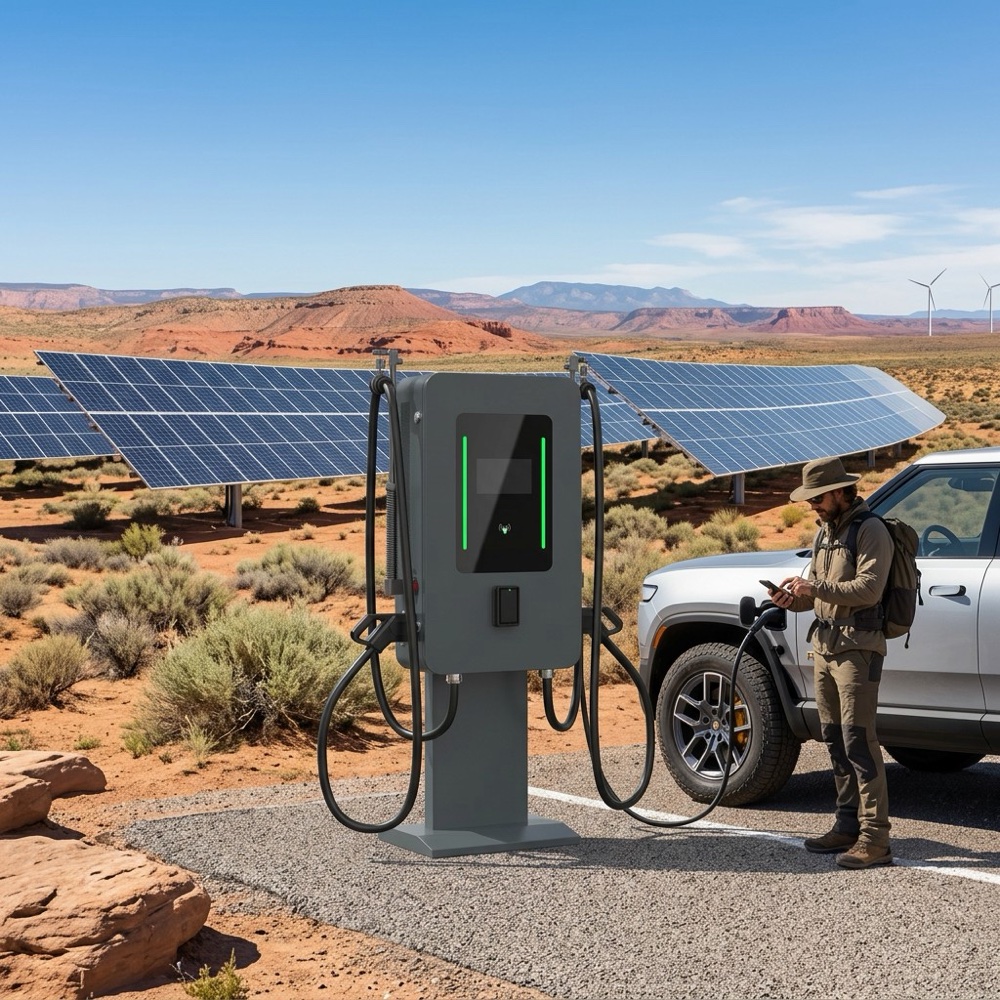
MIDA 40kW Dual Port DC Wallbox with Pedestal, Intelligent Fast EV Charger CCS1/CCS2 for Business
Quick Answer
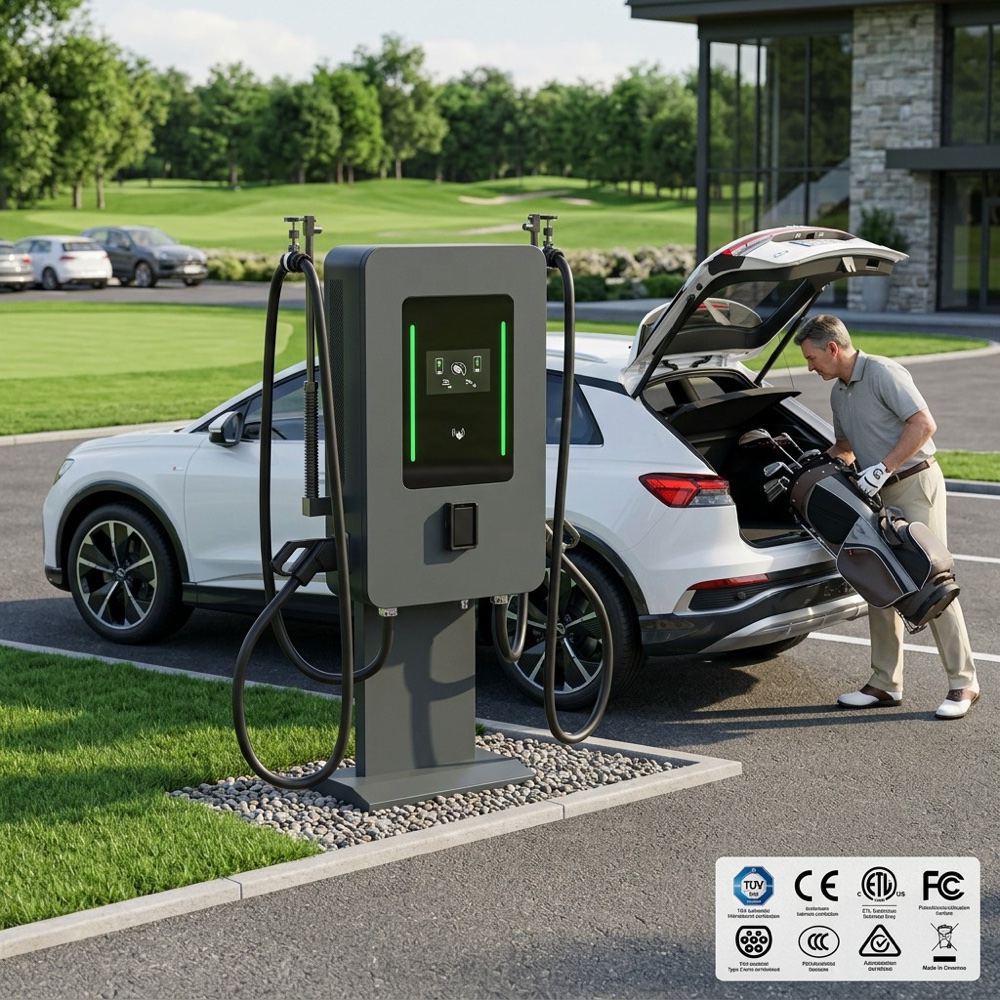
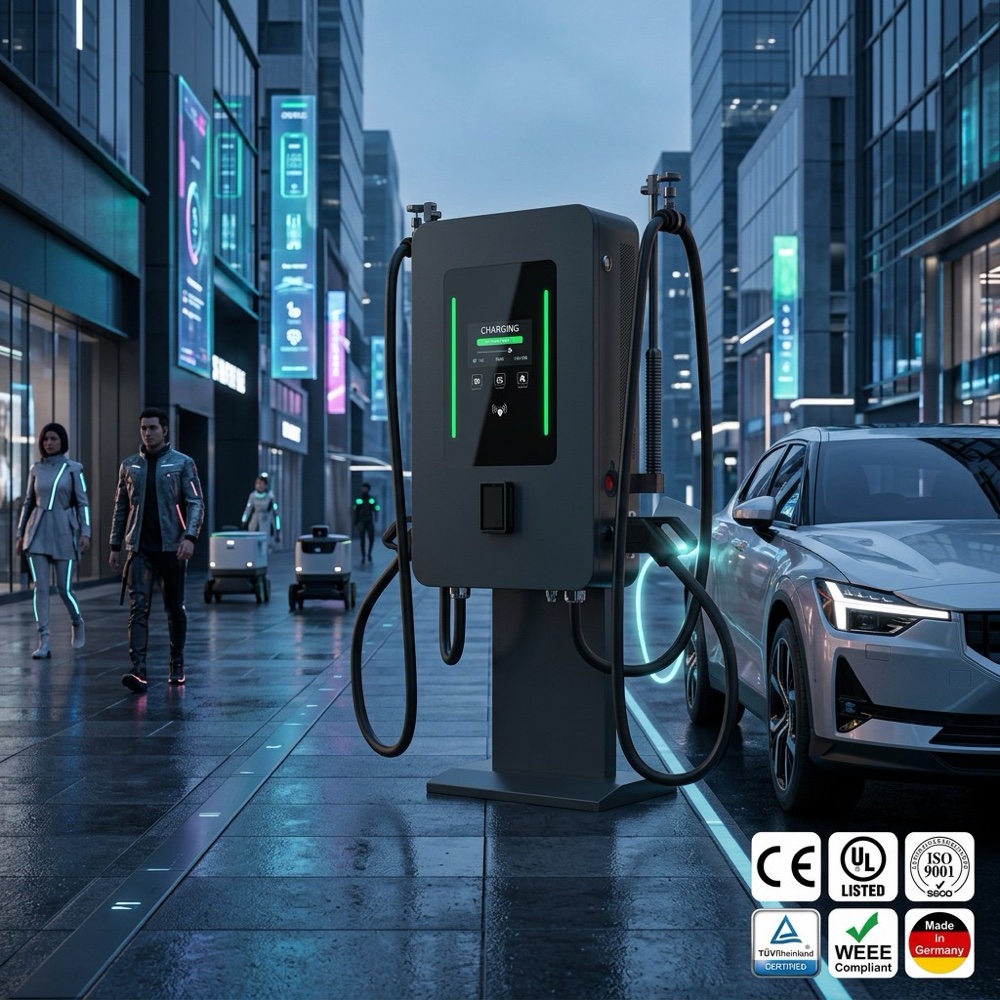
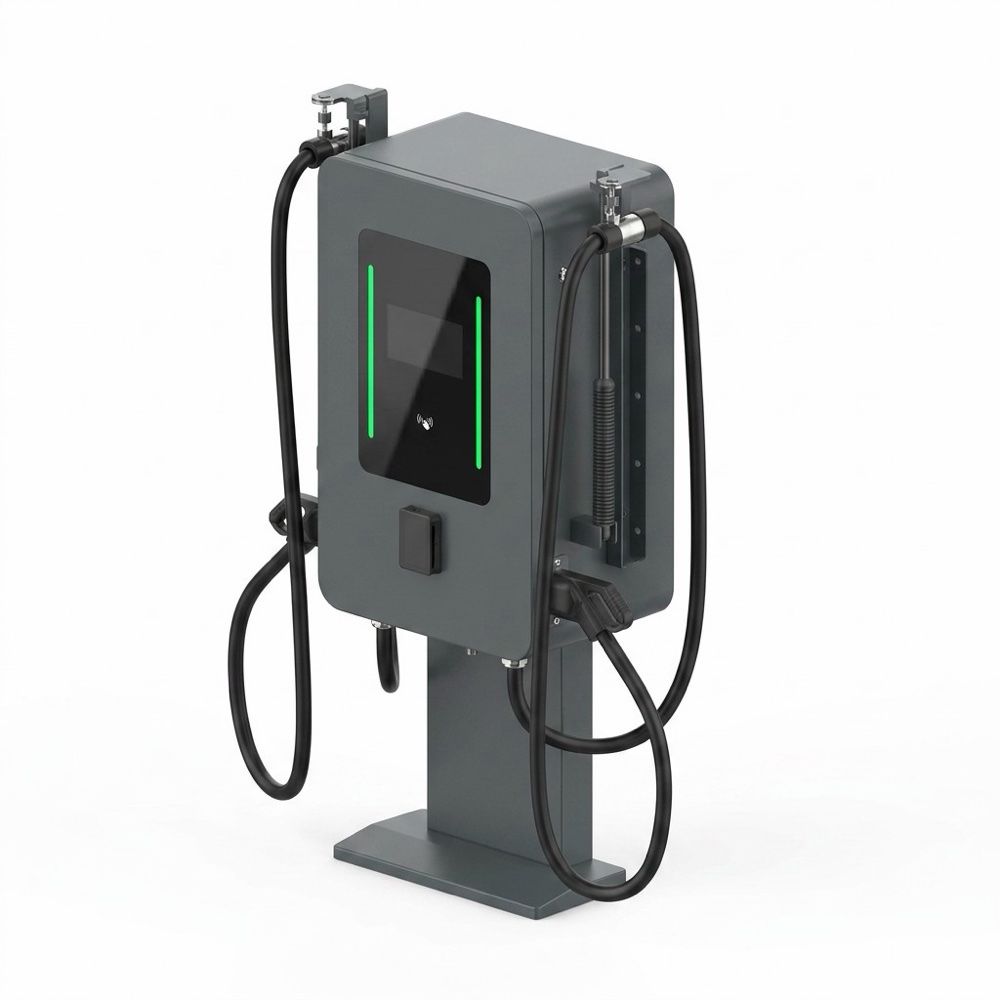
The MIDA 40kW Dual Port DC Wallbox with Pedestal is a compact, intelligent DC fast charger engineered specifically for businesses that need genuine Level 3 charging speed in spaces where a full-size floor-standing station does not fit — or does not make sense. Delivering 40 kW of continuous DC output across a 150V–1000V vehicle voltage range with ≥95.5% efficiency, this wallbox-format unit serves two vehicles simultaneously through its dual-port architecture with dynamic power allocation. It ships with market-matched CCS1 or CCS2 connectors, supports OCPP 1.6J/2.0.1, and offers RFID, mobile app, WiFi, and 4G access control, so any business can run it as a standalone amenity or plug it into a commercial charging network. Housed in an IP54, IK10-rated enclosure with TUV CE, UKCA, and ISO 15118-ready certification, it is the pragmatic choice for hotels, retail forecourts, workplaces, dealerships, and small fleet operators who want the brand value of DC fast charging at a fraction of the footprint, grid demand, and capital cost of larger units.
Key Takeaways
- True DC fast charging in a wallbox footprint: 40 kW output charges a typical EV from 10% to 80% in roughly 60–80 minutes — far faster than any AC wallbox (7–22 kW) and in a package that mounts to a wall or a pedestal.
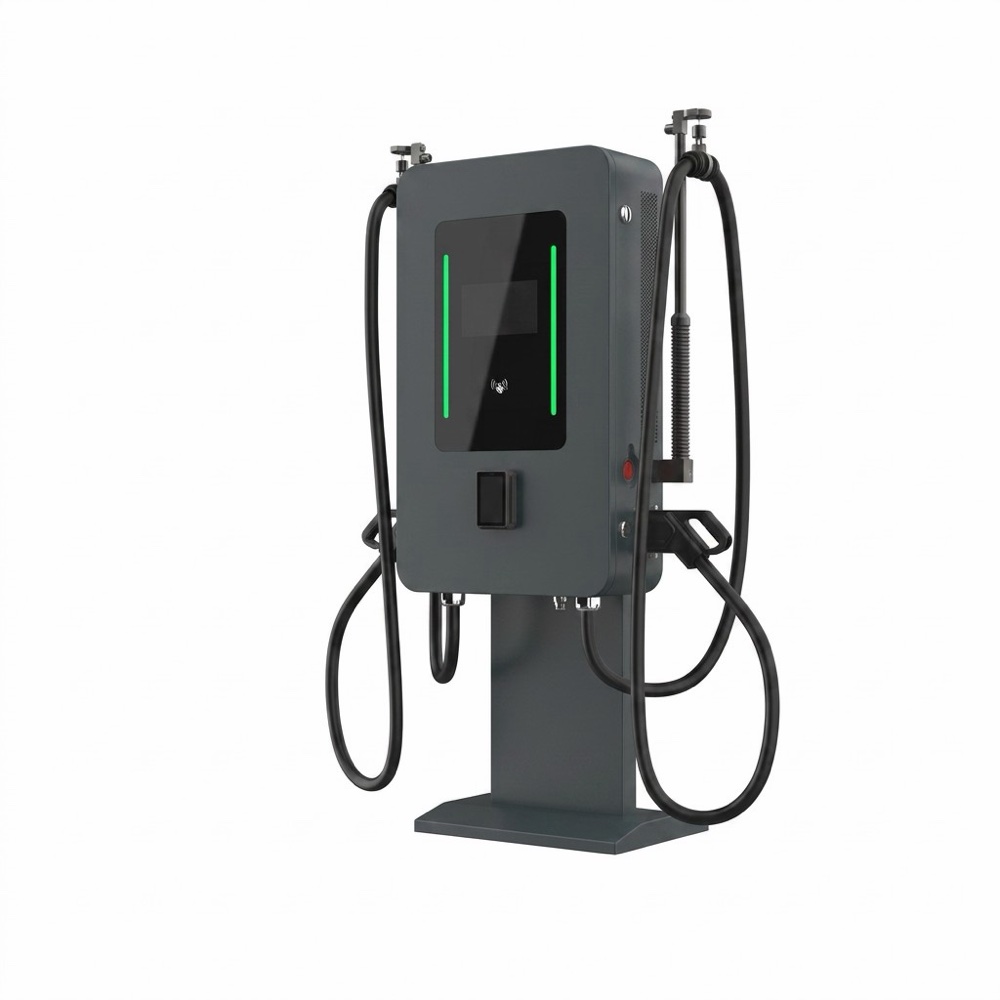
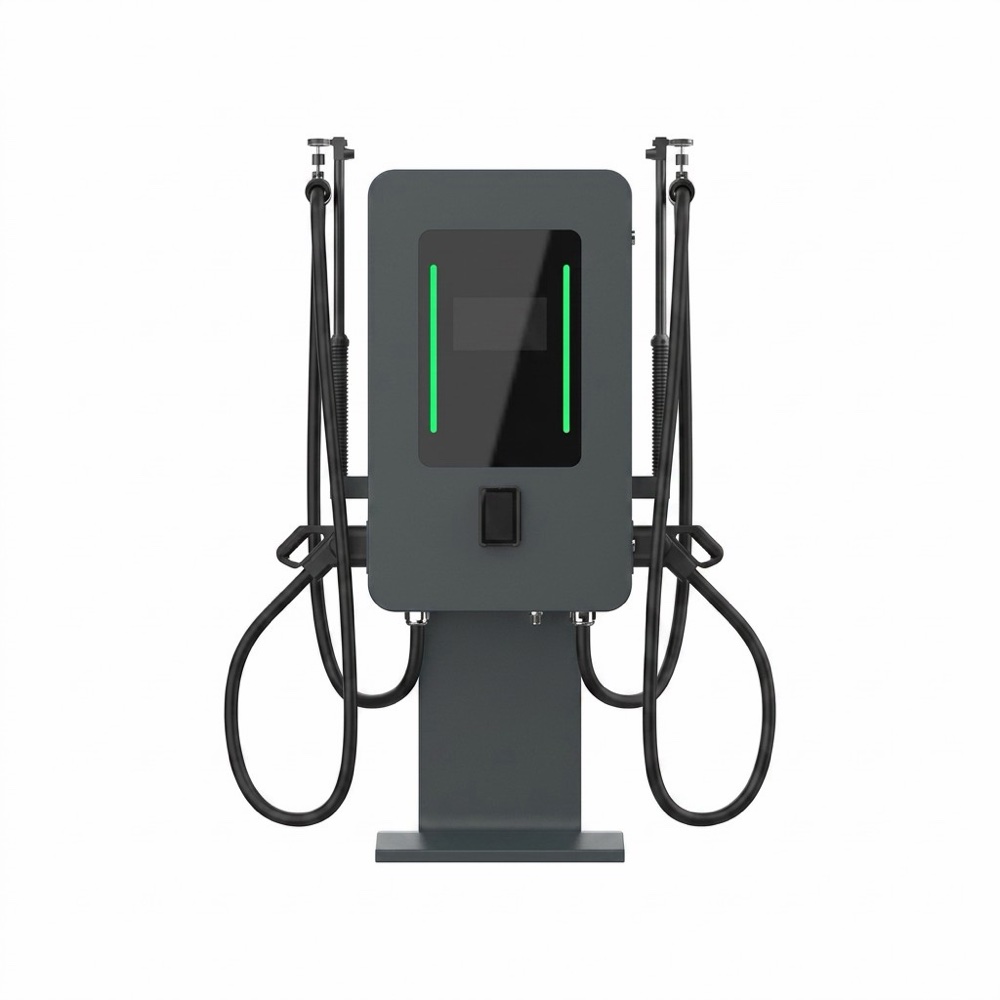
- Dual-port efficiency: Two connectors share one 40 kW pool with dynamic balancing, doubling the vehicles served per parking bay and per grid connection.
- Compact, flexible mounting: Wall-mount for constrained sites, or pedestal-mount for forecourts and open lots — the same unit covers both layouts.
- Open-protocol networking: OCPP 1.6J/2.0.1, RFID, App, WiFi and 4G keep you un-locked from proprietary platforms and ready for any CMS.
- Business-grade durability: IP54 water/dust protection and IK10 impact resistance suit exposed, 24/7 commercial locations.
- Compliance without friction: TUV CE and UKCA certified, ISO 15118 Ready for future Plug & Charge deployment.
H1 → The Business Case for a 40kW DC Wallbox
H2: The Gap Between Slow AC and Heavy DC
Walk the average hotel car park or retail forecourt and you will see the same frustration: 22 kW AC wallboxes that take three hours for a meaningful charge, and no space — or budget — for a 150 kW DC megastation. The MIDA 40kW Dual Port DC Wallbox fills exactly that gap. It is a genuine DC fast charger in a format small enough to hang on a wall, yet powerful enough to deliver a 10%–80% charge in about an hour on a mainstream EV.
For a business, the math is straightforward. An AC wallbox costs less per unit, but it occupies a parking bay for hours per session, delivers little energy per day, and increasingly looks dated to EV-driving customers who expect “fast.” A 40 kW DC unit turns the same bay into a high-turnover asset: four to six meaningful sessions a day instead of two to three limp AC top-ups. And because it is dual-port, a single unit, a single grid feed, and a single enclosure serve two bays at once.
H2: Why Businesses Choose the Wallbox + Pedestal Format
Wallbox-format DC chargers are the fastest-growing segment in commercial EVSE because they respect the physical constraints of existing buildings. Retail stores can mount them on an exterior wall adjacent to accessible parking. Hotels can place them discreetly under a canopy. Offices can integrate them into a structured car park wall without sacrificing pedestrian space.
When a wall is not available — a freestanding lot, a forecourt island, or a car park with no perimeter wall — the same unit converts to pedestal mounting in minutes. The pedestal is a sturdy, powder-coated stand that bolts to a concrete pad, lifting the charger to a comfortable operating height and protecting it from vehicle bumps and standing water. One SKU, two installation profiles: that flexibility is why the MIDA 40kW wallbox+pedestal combination shows up on so many procurement shortlists.
H2: Technical Specifications at a Glance
Final configuration — connector standard, cable length, display, metering, and pedestal variant — should be confirmed with MIDA sales engineering for your market. |
 |
H3: 150–1000V Output — Compatibility Today and Tomorrow
The 40 kW wallbox is not a “short-range city toy.” Its 150–1000 V DC output window covers the full breadth of modern EV platforms: 400 V passenger cars, 800 V premium vehicles, and high-voltage light commercial vans. Whether a customer arrives in a compact city EV or a long-range executive saloon, the charger negotiates the correct voltage automatically and delivers its full rated current within the vehicle’s acceptance limits.
This wide window also future-proofs the asset. As 800 V architecture migrates down-market over the coming years, businesses that installed 500 V-limited chargers will face early replacement; the MIDA 40 kW unit simply keeps working, charging newer vehicles at their native platform voltage without penalty.
H3: Efficiency ≥ 95.5% — Small Box, Big Savings
Efficiency is where engineering discipline shows up on a utility bill. With a peak conversion efficiency of ≥95.5%, the MIDA 40 kW wallbox converts AC to DC with minimal loss. In continuous commercial operation, that efficiency edge versus a 91–92% unit can save several hundred kilowatt-hours per year per charger — and every kilowatt-hour saved is a kilowatt-hour the business does not buy, convert, or dissipate as heat in a compact enclosure.
Compact enclosures amplify thermal stress, so MIDA pairs high efficiency with intelligent thermal management: variable-speed fans operate only as needed, keeping the unit quiet during low-load periods (important for hotel courtyards and residential-adjacent locations) while protecting power semiconductors under sustained full-load sessions.
H2: Dual-Port Architecture — Two Vehicles, One Charger
H3: How the Dual Ports Work TogetherThe MIDA 40kW Dual Port wallbox contains a single 40 kW DC power stage shared between two connectors. The controller allocates power dynamically:
For the business, dual-port operation is the difference between one revenue event per hour and two. For fleet or staff usage, it means two vehicles can charge during a shared break window. For the guest experience, it means a second EV driver is never turned away because the only bay is occupied. |
|
H3: CCS1 and CCS2 — Match the Connector to Your Market
MIDA configures the dual ports to your region:
- CCS1 (SAE J1772 combo) for North America and South Korea.
- CCS2 (IEC 62196 Type 2 combo) for the EU, UK, and most of APAC.
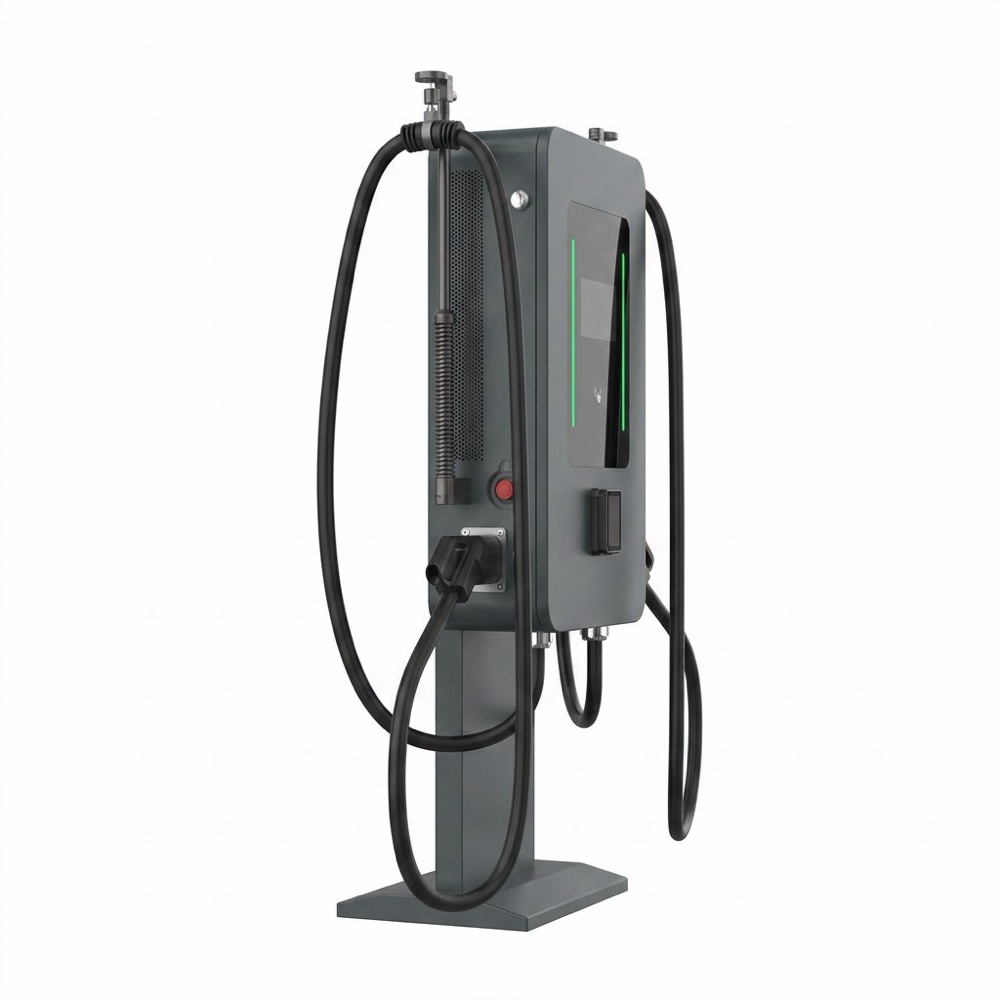
Each port includes cable management that keeps leads tidy and off the ground, and the holsters are built for one-handed, all-weather operation. Because CCS is the dominant fast-charging standard across all new EV models, operators can be confident that nearly every EV on the road — and on the market tomorrow — can plug in without an adapter.
H2: Intelligent Connectivity and Access Control
H3: OCPP 1.6J and 2.0.1 — Your Software FreedomEvery modern commercial charging strategy depends on the central management system (CMS), and every CMS depends on the charger speaking a language it understands. The MIDA 40 kW wallbox speaks OCPP 1.6J natively and supports OCPP 2.0.1, the current generation of the Open Charge Point Protocol with hardened security, encrypted firmware updates, and standards-based device management. Practical consequences for your business:
|
 |
H3: RFID, App, and Remote Control
Access control is a business decision, and the MIDA wallbox gives you a full toolkit:
- RFID cards and fobs — issue cards to staff, fleet drivers, or paying guests; revoke them instantly from the CMS when an employee leaves or a card is lost.
- Mobile app — let drivers start/stop sessions, view live power and energy, and pay through your integrated app or network partner.
- Remote backend authorization — pre-authorize sessions for scheduled fleet slots or telematics-triggered charging.
- Local PIN and E-STOP — a physical emergency stop and optional local PIN provide safety and basic access fallback even if the network is unavailable.
Every transaction is logged locally and upstream, giving you the audit trail needed for billing disputes, expense allocation, and regulatory reporting.
H3: WiFi + 4G with Automatic Failover
Retail back offices, hotel basements, and car park structures are notoriously hostile to network signals. The MIDA 40 kW wallbox includes dual-band WiFi and an integrated 4G LTE modem, with automatic failover between the two. If the site’s WiFi drops, sessions continue, transactions still record, and the unit remains remotely manageable over cellular. An optional Ethernet port covers sites with structured cabling. Remote firmware updates, pricing changes, and diagnostics all travel over the same secure channel, keeping the asset manageable without a site visit.
H2: Engineering for Business Environments
H3: IP54 — Splash-Proof and Dust-ProtectedCommercial chargers face weather that lab equipment never meets: rain, pressure-wash cleaning, snow, road salt spray, and dust. IP54 certification means the enclosure resists dust intrusion to the point that it cannot interfere with operation, and withstands water splashed from any direction. The sealed connector bays, gasketed cable entries, and weatherproofed touchscreen ensure the unit keeps charging through storms and seasonal grime. |
 |
H3: IK10 — Tough Enough for Public Spaces
IK10 is the top impact rating on the standard scale, tested to withstand a 5-joule impact (equivalent to a 5 kg mass dropped from a meter). In a retail car park that means trolley collisions, bicycle impacts, and careless reversing do not translate into service calls. For 24/7 unstaffed sites, vandal resistance is a genuine operating-cost line: an IK10 housing dramatically reduces the probability of enclosure damage and the associated downtime, parts, and labor.
H3: Wide-Temperature Operation
From Scandinavian winters to Gulf summers, the wallbox operates across −30°C to +55°C. Below-freezing performance is supported by the vehicle’s own battery preconditioning and the charger’s robust low-temperature startup. In heat, intelligent fan control and graceful derating keep the unit running rather than tripping — a session may taper slightly at extreme ambient temperatures, but the charger stays online and available.
H2: Certification and Compliance — Made for Market Entry
H3: TUV CE and UKCAThe unit carries TUV-tested CE marking for the European Economic Area and UKCA for the United Kingdom. Certification covers the Low Voltage Directive, the Electromagnetic Compatibility (EMC) Directive, and applicable harmonized standards, verified by third-party testing. For businesses purchasing through EU/UK channels — and for insurers, landlords, and grid operators reviewing your installation — documented, third-party compliance removes friction from procurement and site approval. |
 |
H3: ISO 15118 Ready
ISO 15118 is the standard behind Plug & Charge (PnC), where a vehicle authenticates and bills automatically on connection — no card, no app, no screen interaction. The MIDA 40 kW wallbox is ISO 15118 Ready: the hardware and communication stack are prepared to support PnC through firmware as your network operator and the vehicle ecosystem activate it. For businesses planning to operate chargers for a decade, buying PnC-ready today prevents a costly hardware replacement later.
H2: Ideal Use Cases for the 40kW Dual Port Wallbox
H3: Hotels, Resorts, and HospitalityEV charging is now a deciding factor in accommodation choice. A 40 kW dual-port wallbox lets a hotel offer genuine fast charging — a 60–80 minute top-up while guests check in, dine, or rest — without the footprint or grid demand of a megawatt-scale station. The pedestal option suits driveway and valet zones; the wallbox option suits car park perimeter walls. With OCPP, the property can set tariff rules (free for guests, paid for public use) and cap session times automatically. |
|
H3: Retail and Shopping Destinations
Retailers use charging to extend dwell time and capture EV-driving customers. The wallbox format keeps car parks clean and walkways clear, while dual-port operation serves two shoppers simultaneously during the typical 45–90 minute visit. Revenue-sharing models with CPO partners, dynamic pricing by occupancy, and app-based loyalty integration are all supported through the open protocol stack.
H3: Workplace and Employee Charging
Employers deploying EV charging as an employee benefit need something faster than AC but lighter than a truck-stop megacharger. The 40 kW dual-port wallbox charges two employee EVs during a lunch break or a meeting — and because access is RFID/App-controlled, HR can restrict usage to staff, allocate monthly allowances, and track utilization per user. It is also a strong ESG narrative: visible, branded, intelligent charging infrastructure.
H3: Car Dealerships and Workshops
Dealerships need to prep delivery vehicles, service loaners, and demonstrate EV capability to customers. The 40 kW wallbox fits workshop forecourts where space is tight, charges two vehicles on staggered schedules, and projects a modern technology image. Staff authorization via RFID prevents unauthorized public use while still allowing demo charging for prospective buyers.
H3: Small Fleets and Last-Mile Operators
Cargo bikes, delivery vans, and municipal light vehicles rarely need 150 kW. A small fleet of 40 kW dual-port wallboxes at a depot charges vehicles in the dwell windows between shifts, and the pedestal variant stands up to yard environments. OCPP integration ties each session to a vehicle or driver record, giving fleet managers precise cost allocation per route or vehicle.
H3: Property Developers and Facility Managers
Developers fitting out mixed-use sites and multi-tenancy buildings choose the 40 kW wallbox because it adapts to each phase of construction: wall-mounted during fit-out, pedestal-mounted in final landscaping, and easily relocated if tenant layouts change. The modular, serviceable design keeps facility teams independent of specialist contractors for routine maintenance.
H2: Installation and Lifecycle Considerations
H3: Wall-Mount and Pedestal InstallationWall-mount profile: The charger bolts to a solid wall or structural column via its integrated mounting bracket. Typical requirements are a flat, load-bearing surface at a convenient operating height, clearance for the cable harness, and a weather-protected or externally-rated mounting location. Pedestal profile: The included pedestal mounts to a concrete pad with anchor bolts. The charger then lifts to a comfortable height, keeps electronics clear of standing water, and presents a professional, branded appearance in open forecourts. In both cases, electrical requirements remain modest for a DC fast charger:
MIDA’s engineering support can review your site’s single-line diagram before order and assist with remote commissioning after installation. |
|
H3: Operations Dashboard and Driver Experience
The driver-facing experience is intentionally simple:
- Present an RFID card, scan the QR code, or start via app.
- Connect the CCS connector — the latch engages and charging begins automatically after authorization.
- Live session data (voltage, current, power, energy, cost) appears on the display and in the app.
- The session ends at the target SoC, on the operator’s schedule, or on driver command — with receipts available digitally.
Operator-facing, the CMS shows per-port status, energy, revenue, and alerts in real time. Fault diagnostics use descriptive codes that cut mean-time-to-repair, and firmware updates deploy over the air.
H3: Maintenance and Total Cost of Ownership
The MIDA 40 kW wallbox is built for a long commercial life with modular internals: power modules, communication boards, and control electronics are serviceable by trained technicians without replacing the whole unit. Routine maintenance is light — visual checks, connector inspections, and firmware updates — and the dual-port design means one enclosure, one grid connection, and one controller serve two parking bays, reducing the per-bay cost of infrastructure and maintenance.
| TCO dimension | MIDA 40kW dual-port wallbox (illustrative) |
|---|---|
| Capital cost | Compact DC hardware — lower than floor-standing 60–80 kW units |
| Grid connection | Single ~40–50 kVA feed serves two bays |
| Energy losses | ≥95.5% efficiency; low standby draw |
| Installation | Wall or pedestal — flexible, low-civil-works option |
| Utilization | Dual-port doubles session throughput per bay |
| Software | OCPP portability keeps CMS fees competitive |
| Maintenance | Modular serviceability; remote diagnostics |
Figures are illustrative; validate against local tariffs, utilization forecasts, and site civil works.
H2: Positioning the 40kW Within the MIDA WY Series
Choose the 40 kW dual-port wallbox when space is constrained, dwell times are 30–90 minutes, and the site wants genuine DC speed with the lowest possible footprint and grid impact. When traffic justifies it, the same business can scale up the WY Series without changing software or operational workflows — a coherent growth path from a single supplier. |
|
H2: Frequently Asked Questions
Q1: How fast does the MIDA 40kW wallbox charge a typical EV?
A mainstream EV with a ~60 kWh battery charges from 10% to 80% in roughly 60–80 minutes at 40 kW. A 20–60% top-up typically completes in 30–40 minutes, depending on the vehicle’s charge curve.
Q2: Can both ports charge at full power simultaneously?
No — the two ports share a 40 kW pool. The controller dynamically allocates power (e.g., 20/20 or 30/10 kW) and rebalances instantly as sessions complete. A single vehicle receives the full 40 kW when the other port is idle.
Q3: Which connector do I get — CCS1 or CCS2?
The unit is configurable: CCS1 for North America/South Korea, CCS2 for the EU, UK, and most APAC markets. Confirm your market standard at order time; both ports use the same standard.
Q4: Do I need a charging network to use this wallbox?
No. It operates standalone with RFID and app/local control, or connected to any OCPP 1.6J/2.0.1-compliant central management system for billing, remote monitoring, and dynamic pricing.
Q5: What electrical supply does installation require?
A three-phase AC feed (typically 400 V, 50/60 Hz) sized for roughly 40–50 kVA, with external overcurrent protection and earthing. Wall-mount and pedestal-mount options both use the same electrical connection.
Q6: Can it survive outdoor weather and vandalism?
Yes. IP54 protects against dust and splashing water; IK10 protects against physical impacts. Operating range is −30°C to +55°C with intelligent thermal management and graceful derating in extreme heat.
Q7: Will this charger support Plug & Charge in the future?
The unit is ISO 15118 Ready, so Plug & Charge can be enabled via firmware when your network operator and vehicle OEMs activate it — no hardware replacement required.
Conclusion
The MIDA 40kW Dual Port DC Wallbox with Pedestal compresses the economics and engineering of DC fast charging into a format that fits the real estate most businesses actually have. It delivers true Level 3 speed — about an hour for a full charge cycle — through two intelligent ports that double the throughput of every parking bay and every grid connection it touches. It runs on open OCPP standards with RFID, app, WiFi, and 4G control, so it adapts to any operating model from standalone hotel amenity to full network participation. And it is engineered to survive the outdoors and meet the compliance bar (TUV CE, UKCA, IP54, IK10, ISO 15118 Ready) that professional procurement demands. For businesses that want the brand lift, guest satisfaction, and revenue of fast charging without megawatt-scale infrastructure, the MIDA 40 kW wallbox is the intelligent, compact, and future-proof answer.
Contact the MIDA Power sales engineering team for market-specific configuration (CCS1/CCS2), pedestal options, and a site-specific quotation.
Products categories
-
180kw 240kW DC Ultra Fast EV Charger Station OC...
-
Level 3 EV DC Charger Electric Car Charging Sta...
-
240kw 300kw 360kw 420kW Fast Charging Station F...
-
120KW 160KW 180kW 200kw Fast EV Charger Station...
-
420KW CCS2 New energy electric vehicle Charging...
-
360KW New energy electric vehicle Charging station