

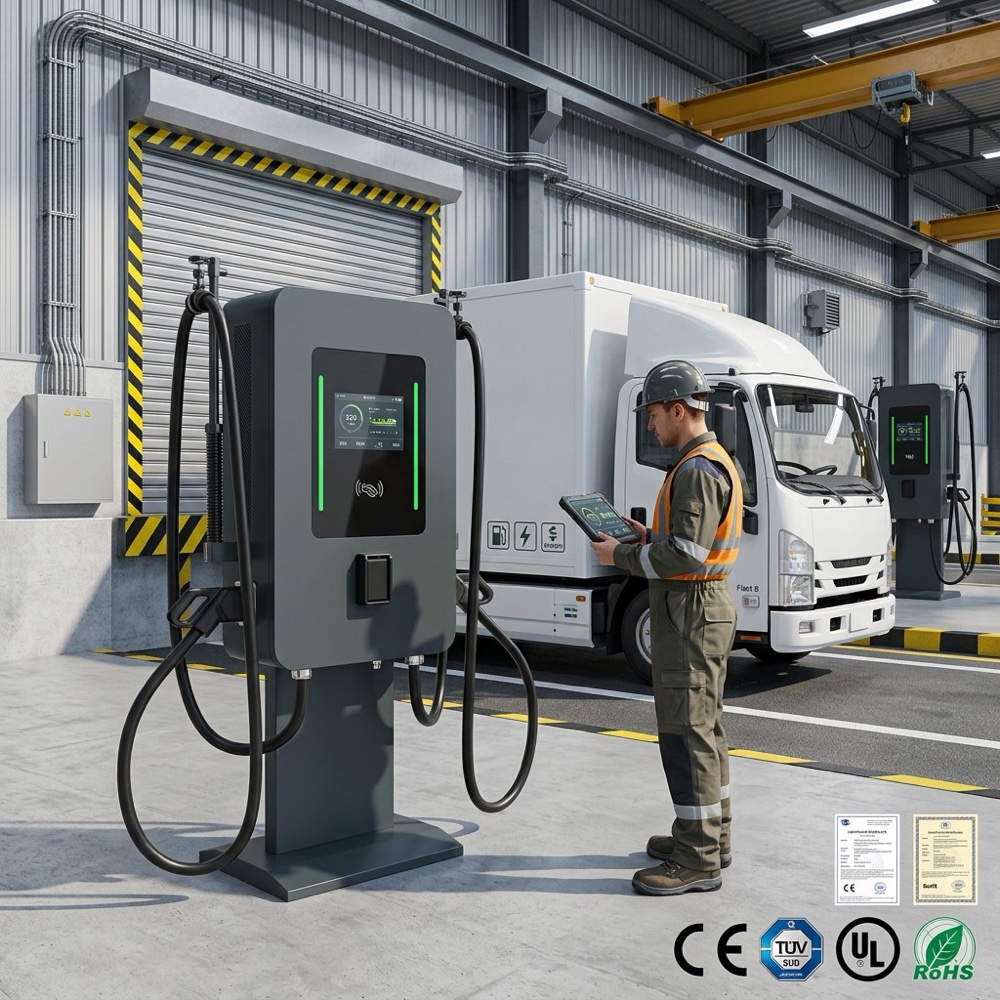
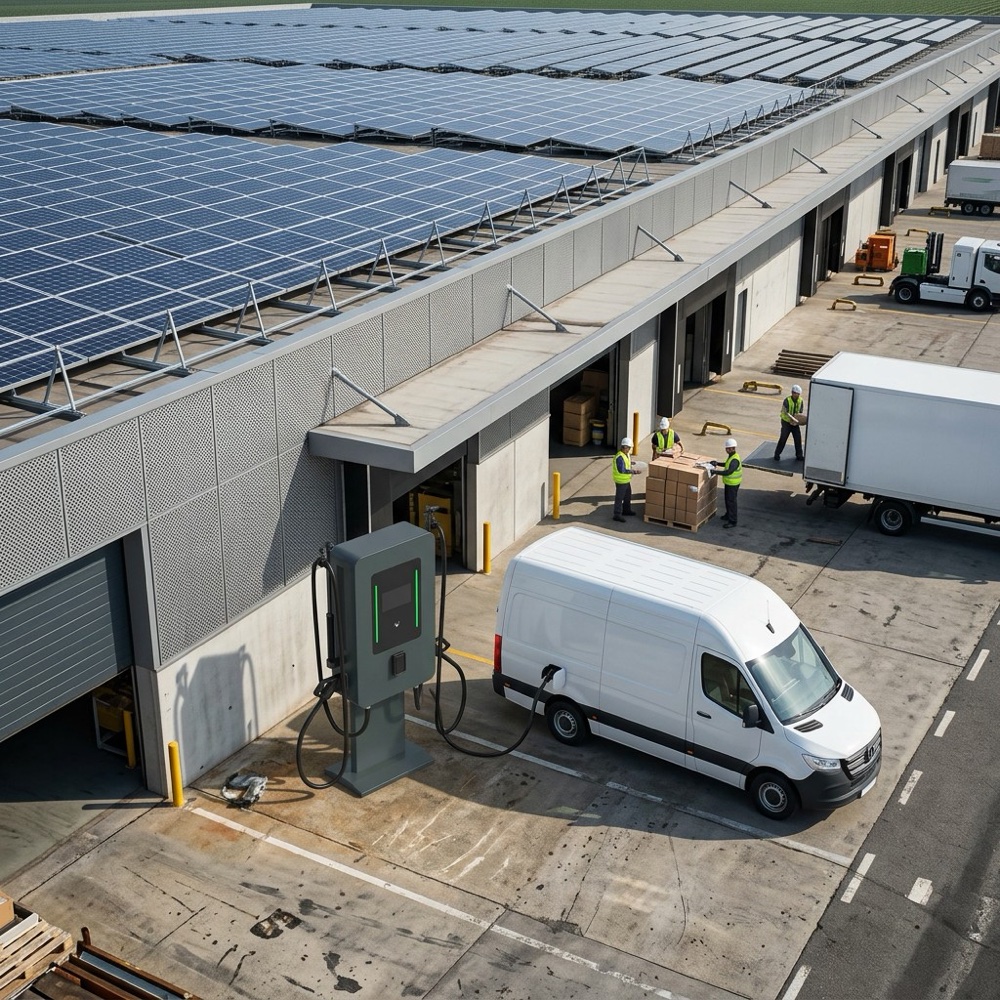
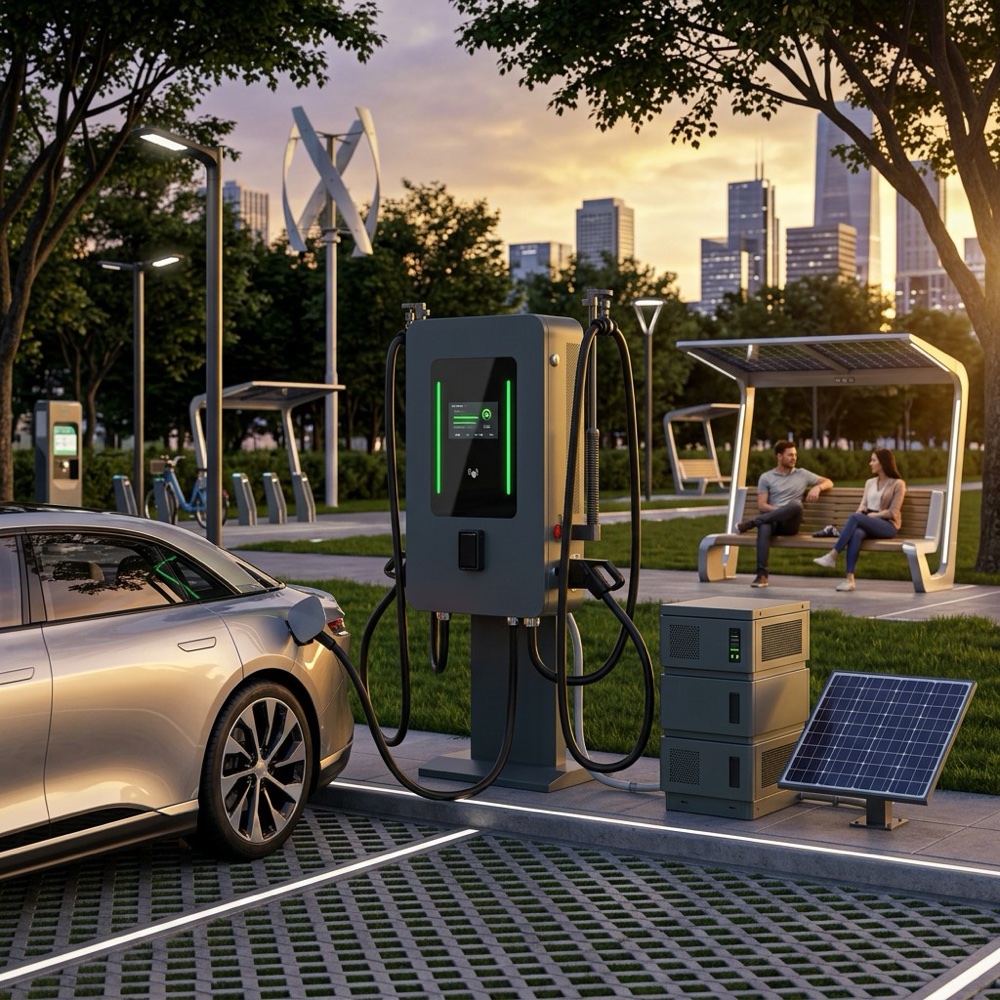
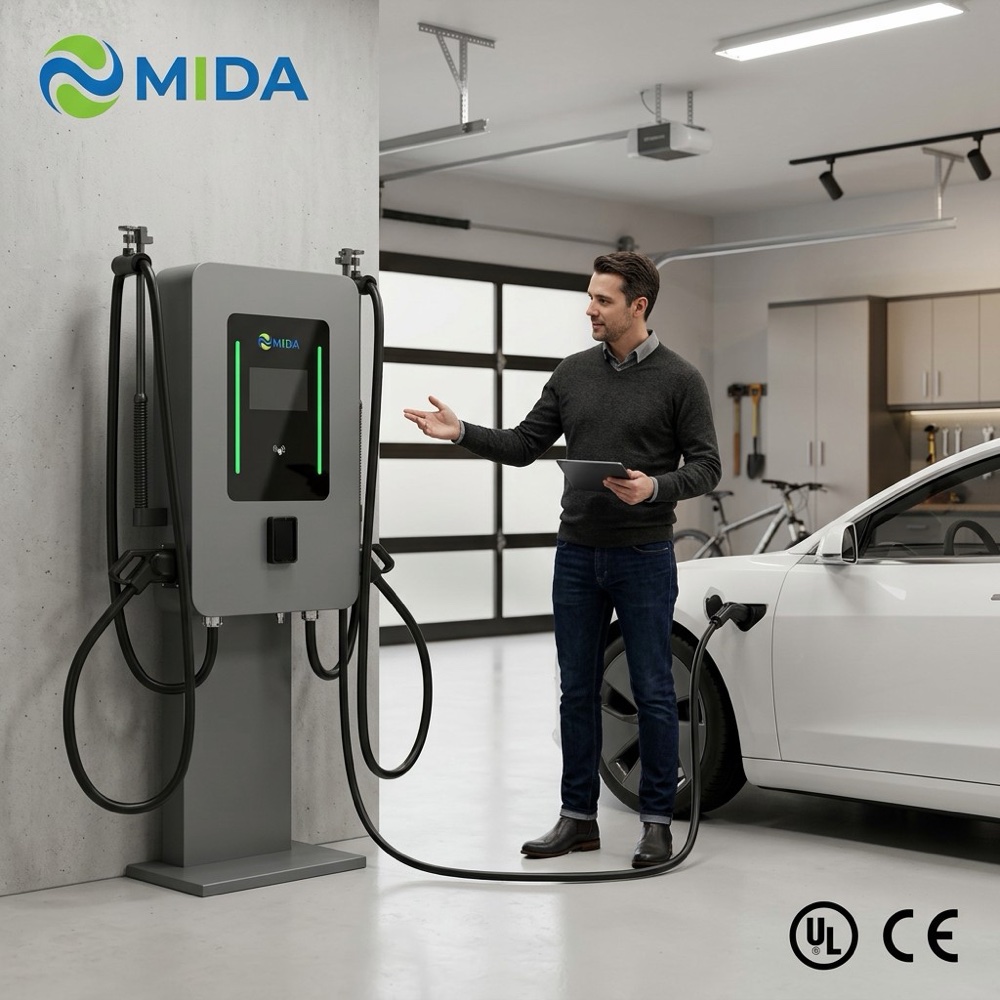
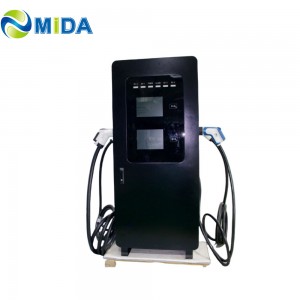
MIDA 40kW Small Pedestal DC Fast Charger
Dual Port Level 3 Charging Solution with 1000V Wide Voltage
Quick Answer
The MIDA 40kW Small Pedestal DC Fast Charger is a compact, dual-port Level 3 charging station engineered for sites where space is at a premium but fast-charging performance cannot be compromised. Delivering 40 kW of true DC power across a 150V–1000V ultra-wide output window at ≥95.5% efficiency, the unit charges two vehicles simultaneously through dual CCS2 connectors with intelligent power sharing — all from a footprint dramatically smaller than conventional floor-standing cabinets. With IP54 weather protection, IK10 impact resistance, CE/TUV certification, and ISO 9001/14001-backed manufacturing, it is built for unattended outdoor operation in urban streetscapes, retail forecourts, hotel car parks, and fleet yards. Native OCPP 1.6J/2.0.1 plus RFID, App, WiFi, and 4G connectivity let operators integrate the charger into any mainstream charging management platform and manage access, tariffs, and diagnostics remotely. For operators building dense urban networks on constrained budgets, the MIDA 40kW delivers genuine DC fast charging economics in a pedestal that fits where bigger cabinets cannot.
Key Takeaways
- Compact small-pedestal form factor with dual ports — up to two vehicles charged from a minimal footprint and a single grid connection.
- 150V–1000V wide-voltage output future-proofs the station for both 400V and 800V EV architectures.
- 40 kW true DC output with ≥95.5% efficiency and dynamic power sharing across both connectors.
- IP54 + IK10 ruggedization and CE, TUV, ISO 9001, ISO 14001 certifications for compliant, unattended outdoor deployment.
- OCPP 1.6J/2.0.1, RFID, mobile App, WiFi, and 4G connectivity for seamless platform integration and remote management.
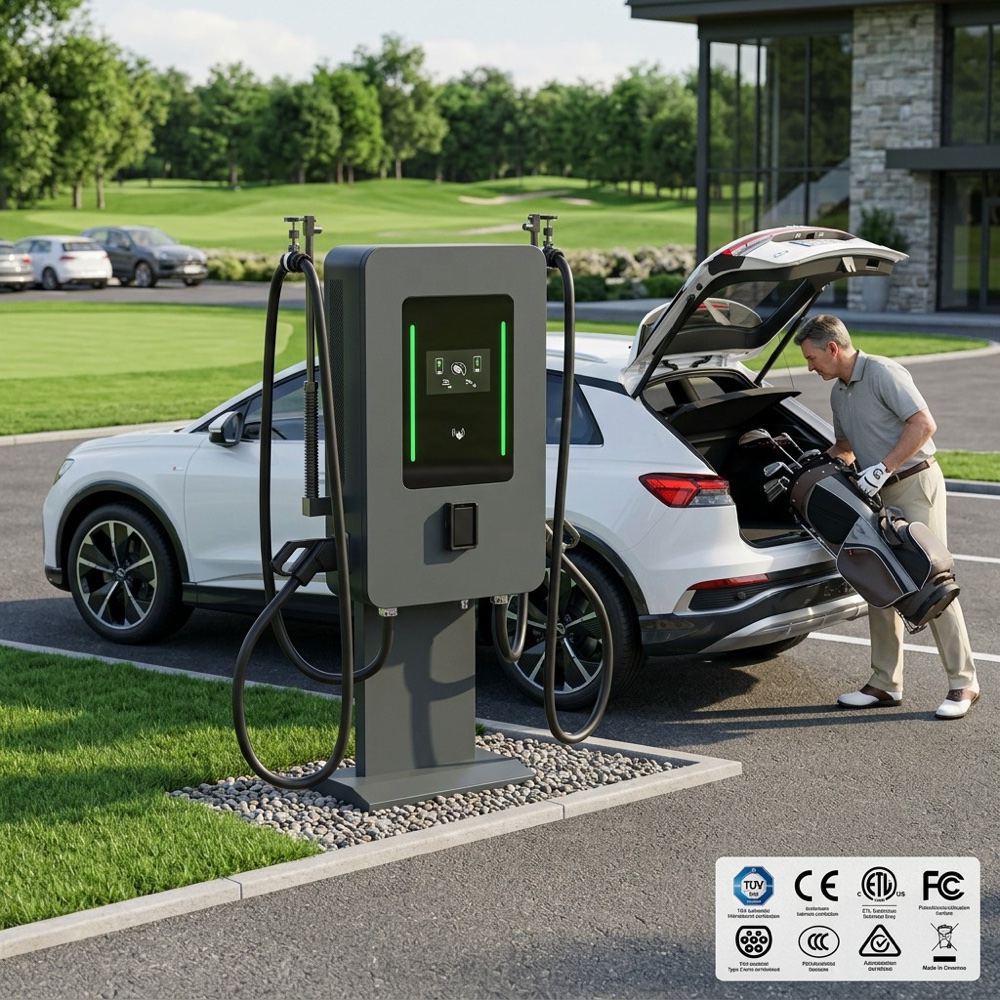
| <!– Insert: MIDA 40kW small pedestal charger installed on an urban street or retail forecourt, showing compact proportions next to a car –> | 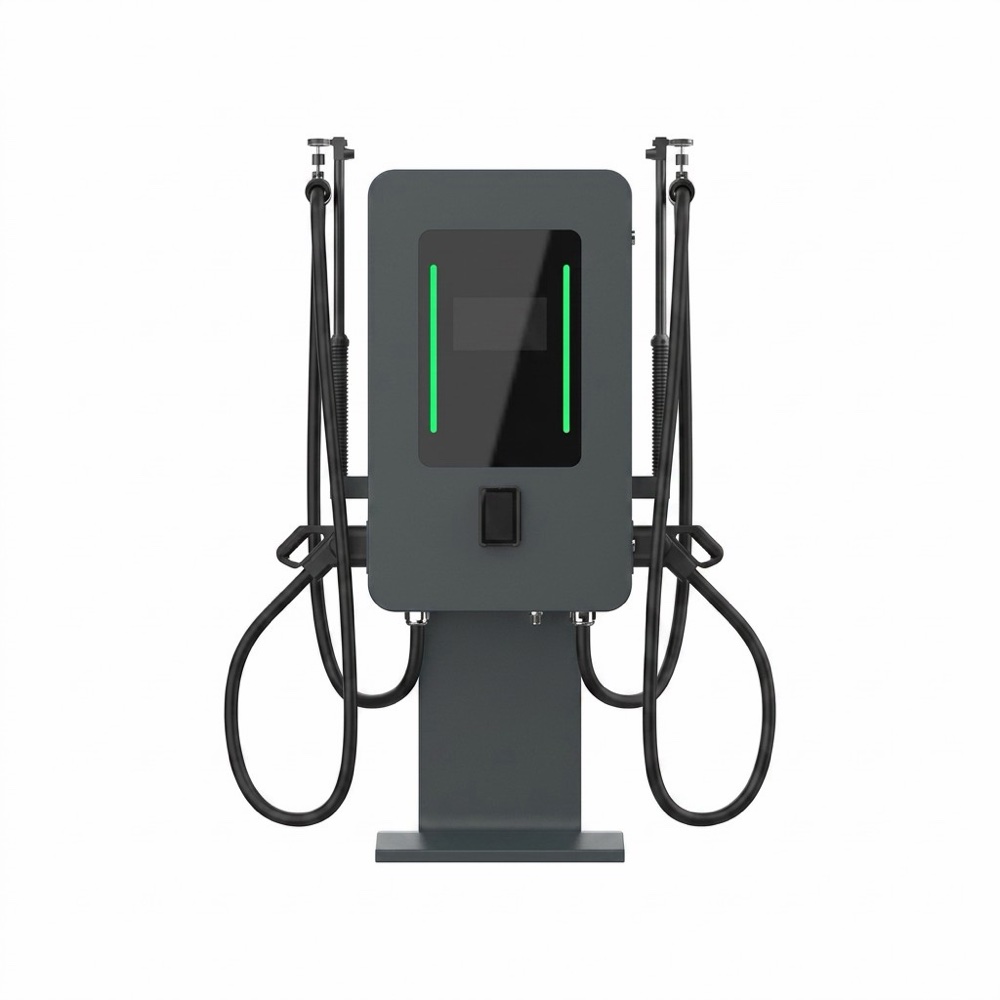 |
The Urban Charging Dilemma: Density Meets Real Estate
European cities are electrifying transport faster than they can rebuild streets. Municipalities are under mandate to install public charging, retailers want forecourt charging to defend footfall, and fleets need depot capability — yet every site competes for the same scarce resources: pavement space, parking bays, and grid capacity. In this environment, the charger’s physical footprint is as important as its electrical output. The MIDA 40kW Small Pedestal is a direct response to that constraint: a genuine DC fast charger, not an oversized cabinet, engineered to slip into locations where conventional 40–60 kW floor-standing units simply will not fit.
Why AC Is No Longer Enough for Public Sites
The first wave of urban charging was overwhelmingly AC. It was cheap and unobtrusive, but its economics have broken under the weight of modern EV battery sizes. An 80 kWh battery at 22 kW AC needs nearly four hours to recharge; at 40 kW DC it needs roughly two hours, and a typical 30–40 minute shopping trip returns 20–27 kWh — 150–250 km of range. In cities where dwell time is short and bays are scarce, AC chargers produce low throughput per bay, which translates directly into poor site economics. The MIDA 40kW changes that arithmetic without requiring the grid connection, transformer sizing, or physical space of a 120 kW installation.
The Pedestal Advantage
A conventional 60–120 kW DC cabinet demands a concrete pad, significant clearance, and often a service lane. The MIDA 40kW small pedestal compresses the same core technology — wide-voltage DC power conversion, dual connectors, smart connectivity — into a slim, visually discreet unit that sits beside a parking bay like a piece of street furniture. For architects, planners, and landlords, that visual and physical footprint is frequently the deciding factor between a permit approved and a project stalled.
WY Series Technology, Compacted: Engineering the 40kW Pedestal
The MIDA 40kW belongs to the same WY Series family as the MIDA 60kW Dual CCS2 DC Fast Charging Pile. That lineage matters: every WY Series unit shares the same modular power architecture, the same wide-voltage output philosophy, the same connectivity stack, and the same certification discipline. Operators can standardize on one hardware family and right-size each site — 40 kW pedestals in dense urban locations, 60–80 kW floor-standing units at anchor sites — without learning a second platform.
Wide Voltage, Wide Compatibility: 150V–1000V
The headline technical specification is the 150V–1000V output window. Most “compact” DC chargers on the market are voltage-limited, often topping out at 500V or 750V, which strands 800V fast-charging vehicles at reduced power or blocks them entirely. The MIDA 40kW covers the entire contemporary vehicle voltage spectrum — from small 400V city EVs and delivery vans to the newest 800V passenger platforms — in a single unit. A charger installed today will still be fully relevant to the vehicle parc of 2030.
Efficiency of ≥95.5% in a Small Enclosure
Achieving ≥95.5% conversion efficiency in a compact enclosure is an engineering challenge, because efficiency is the bridge between electrical performance and thermal management. Higher efficiency means less waste heat inside a smaller volume, which is exactly what allows the pedestal to maintain full 40 kW output in a slim form factor without thermal derating. For the operator, that efficiency is also money: less energy lost to heat, lower demand charges, and a smaller environmental footprint per session.
Modularity and Serviceability at Scale
Like its larger siblings, the 40kW pedestal uses modular power stages and front-access service design. For network operators managing tens or hundreds of sites, this is a decisive operational advantage: a standard spare-parts kit and one trained technician can service an entire mixed WY Series deployment. Remote diagnostics over OCPP catch developing faults early, and field-swappable modules keep mean time to repair in minutes rather than days.
Dual Ports, One Pedestal: Charging Two Vehicles from a Single Connection
Double the Throughput, Half the Infrastructure
The small footprint hides a dual-port capability. Two CCS2 connectors on a single pedestal mean one grid connection, one foundation, one permit, and one maintenance asset can serve two parking bays. In urban environments where every electrical connection requires negotiation with the grid operator, this consolidation is often the single largest cost driver on the project — and the MIDA 40kW attacks it directly.
Intelligent Power Sharing Between Ports
When one vehicle is connected, it receives the full 40 kW. When a second vehicle plugs in, the dynamic power-sharing controller allocates power according to each vehicle’s state of charge and charge acceptance, ensuring the site’s aggregate energy delivery is maximized. A typical pattern: the first vehicle arrives at 10% and absorbs 30 kW while the second, at 80%, finishes its top-up on the remainder — then the first vehicle takes full power once the second departs. The system behaves like a small energy dispatcher, not a static splitter.
Dual CCS2: The Universal European Interface
Both ports are CCS2 (Combo 2), the standard DC interface across the EU and the default on virtually every new electric vehicle sold in Europe. No adapters, no multi-standard confusion, no compatibility rejections. Any CCS2 vehicle — passenger car, taxi, delivery van, light commercial — connects and negotiates natively.
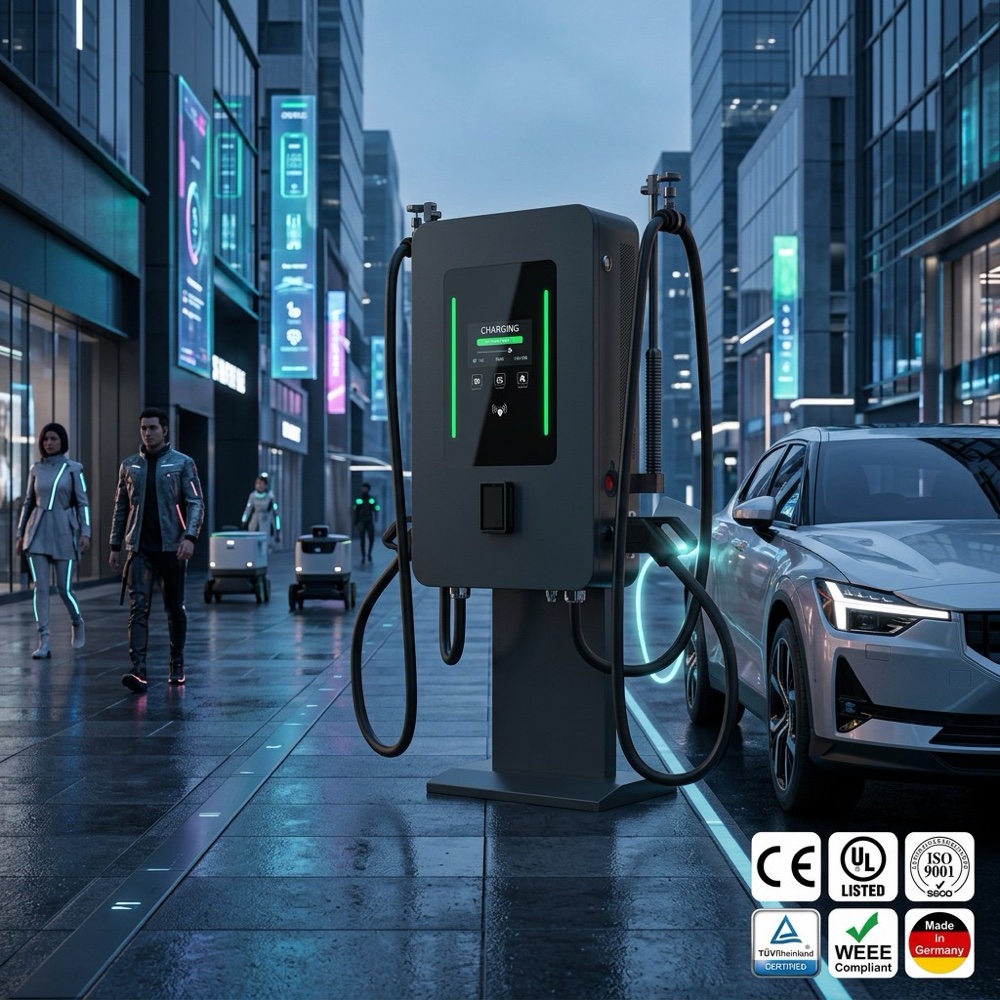
| <!– Insert: Two EVs charging simultaneously at a MIDA 40kW pedestal, urban setting, evening –> | 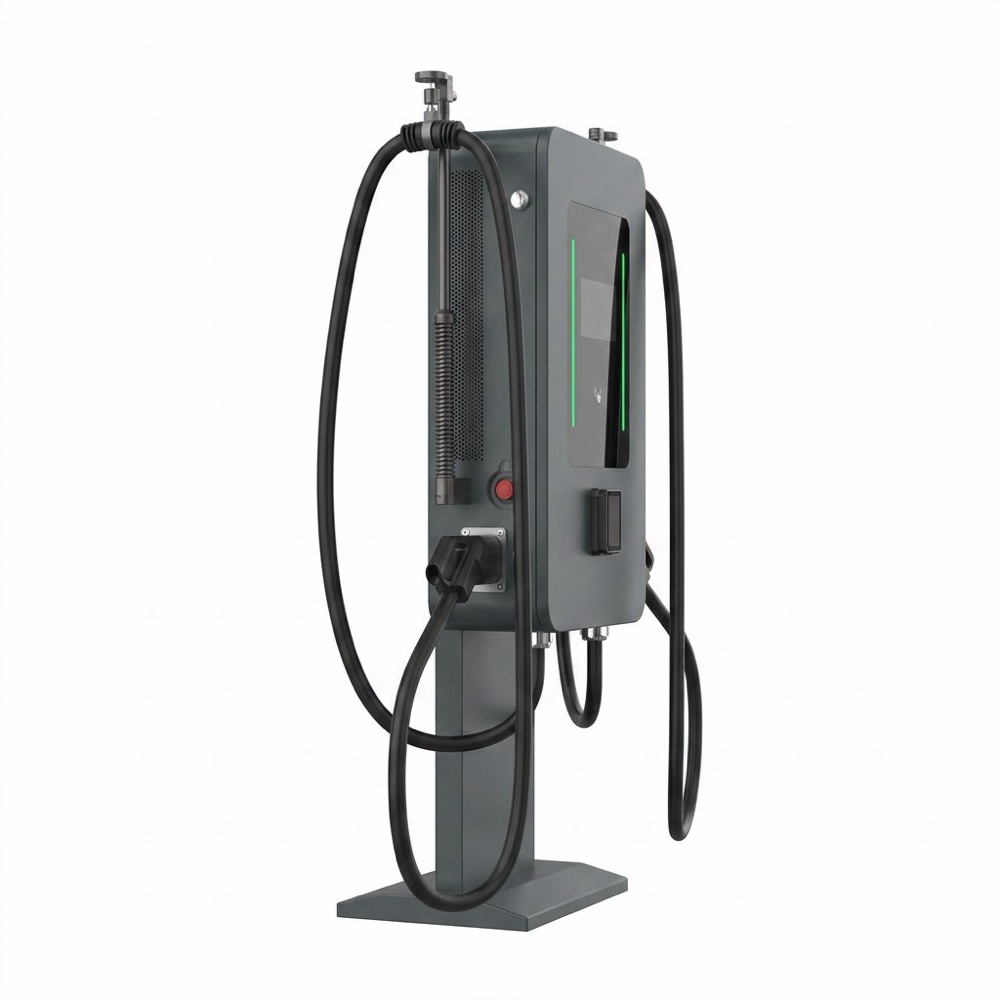 |
Technical Specifications at a Glance
| Parameter | Specification |
|---|---|
| Model | MIDA WY-40K (40 kW Small Pedestal) |
| Product Type | Compact Pedestal DC Fast Charger (Level 3 EVSE) |
| Rated Output Power | 40 kW |
| Output Voltage Range | 150V – 1000V DC |
| Output Current | Up to 133A (power-derated per charging curve) |
| Number of Connectors | 2 × CCS2 (Combo 2) |
| Conversion Efficiency | ≥ 95.5% |
| Communication Protocols | OCPP 1.6J / 2.0.1 |
| Connectivity | WiFi, 4G (Ethernet optional) |
| User Authentication | RFID card, Mobile App / QR code, optional Plug & Charge |
| Enclosure Protection | IP54 (dust-tight, water-jet protected) |
| Impact Protection | IK10 (vandal-resistant) |
| Certifications | CE, TUV; ISO 9001 (quality), ISO 14001 (environmental) |
| Mounting | Small pedestal, ground-mounted with compact foundation |
| Cooling | Intelligent forced-air cooling, low acoustic profile |
| User Interface | Status indicator / touchscreen options, LED guidance |
| Operating Temperature | -20°C to +50°C |
| Operating Humidity | 5% – 95% RH (non-condensing) |
| Safety Protection | Overvoltage, overcurrent, over-temperature, ground-fault, surge protection, emergency stop |
Specifications are representative of the WY-40K configuration; final values may vary by market configuration and should be confirmed at quotation.
Smart by Default: OCPP, RFID, App, WiFi/4G
OCPP 1.6J and 2.0.1: Open, Interoperable, Secure
The MIDA 40kW speaks OCPP 1.6J and OCPP 2.0.1 natively, which means it plugs into the same charging management platforms used by the largest European networks. Operators can onboard the charger to their existing backend in configuration time, not development time; set and change tariffs remotely; run remote start and stop; and receive transaction records formatted for billing, subsidy, and regulatory reporting. OCPP 2.0.1′s enhanced security — signed messaging and secure firmware updates — positions the station for the EU’s tightening cybersecurity expectations for charging infrastructure.
Authentication for Every User Type
The station supports RFID cards, mobile App and QR-code authentication, and optional Plug & Charge. A hotel can issue RFID cards to guests, a fleet can restrict depot access to company badges, and a retailer can open the same unit to walk-up public customers with App-based payment — all configured remotely per time slot, per user group, or per tariff. This flexibility is what allows one hardware asset to serve many business models.
Connectivity Designed for Urban Environments
Urban installations are the hardest environment for connectivity: dense buildings, interference, and underground parking. The MIDA 40kW offers both WiFi and 4G as standard, letting installers choose the link that works best at each site, with Ethernet available for hardwired locations. Robust remote monitoring means a site operator in a central office can see every charger’s health, session history, and alerts across the entire network in real time.
Built for the Street: IP54 and IK10
Weatherproofing for Unprotected Sites
IP54 means the enclosure is protected against dust ingress that could impair operation and against water splashing from any direction — rain, street spray, snow melt, and pressure washing alike. Sealed entries and corrosion-resistant construction allow the pedestal to stand in the open, without canopies or building overhangs, for its full service life.
Vandal Resistance at IK10
Public street furniture attracts abuse: bumps from delivery trolleys, kicks, and deliberate impact. The IK10 rating — the highest impact-protection class in the standard — confirms the enclosure withstands a 5-joule impact without compromising safety or function. Connectors are protected in holsters when not in use, and the overall construction is designed to shrug off the daily knocks of a busy public space.
All-Climate Operation
With an operating range of -20°C to +50°C, the MIDA 40kW is at home from Scandinavian winters to Mediterranean summers. Temperature-adaptive fan control keeps power electronics cool while keeping noise low — a critical courtesy for chargers installed close to homes, hotels, and offices.
Compliance Without Friction: CE, TUV, ISO 9001, ISO 14001
Certification is the quiet backbone of any public charging project. The MIDA 40kW carries CE marking for the European Economic Area, covering applicable Low Voltage, EMC, and Machinery directives, and TUV certification provides independent third-party verification of electrical safety and performance. Manufacturing is certified to ISO 9001 for quality management and ISO 14001 for environmental management. For municipalities and operators, this certification stack accelerates permitting, satisfies insurers, unlocks financing, and simplifies public tenders — because the compliance homework is already done.
| <!– Insert: Detail shots of the MIDA 40kW pedestal — RFID pad, connector holster, and status interface –> | 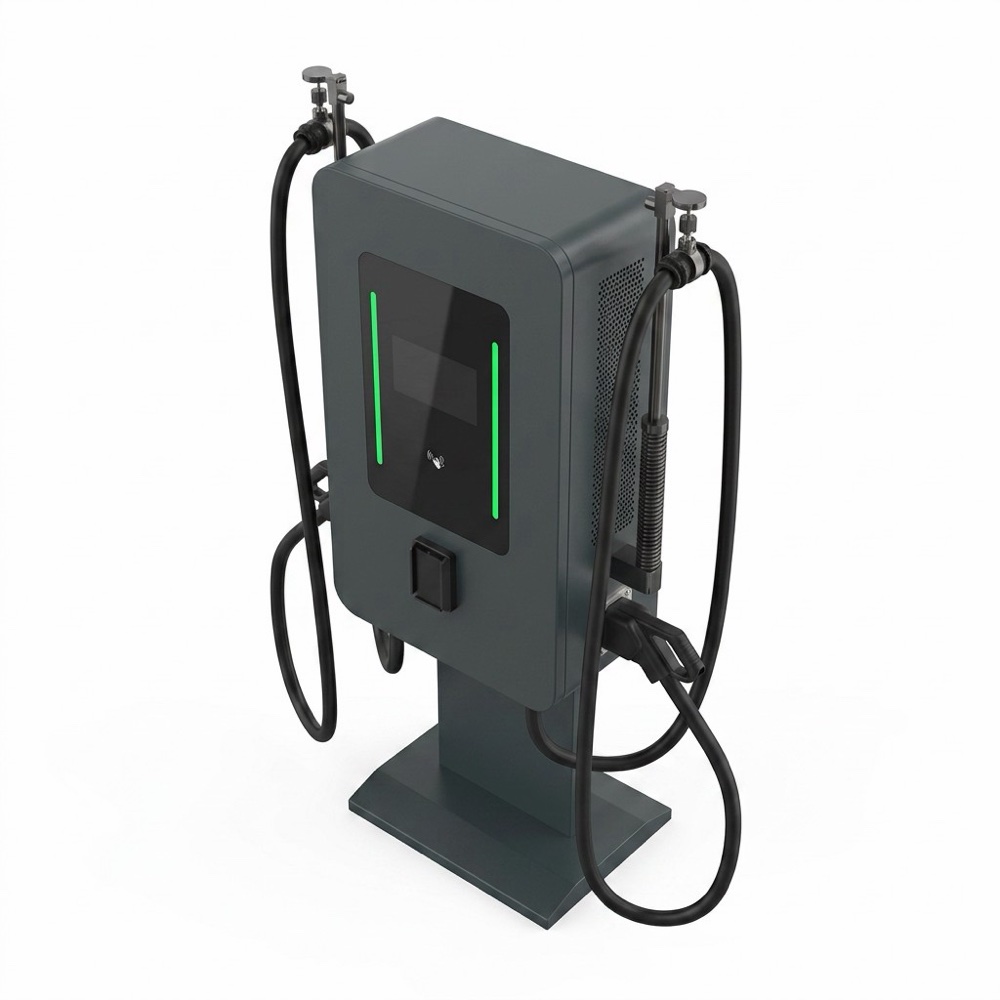 |
The Small Pedestal Advantage: Installation and Site Economics
Fitting Where Big Cabinets Cannot
The defining virtue of the small pedestal is where it can be deployed: narrow sidewalks, heritage-zone streets, hotel porte-cochères, underground car parks with low ceilings, forecourt corners, and bays against building lines. Its compact foundation and modest clearance requirements drastically reduce civil works compared with floor-standing cabinets — less concrete, less fencing, less visual intrusion, and in many cases no planning objection.
Lower Grid Threshold, Faster Deployment
At 40 kW, the station sits below the power thresholds that trigger expensive transformer upgrades and lengthy grid-connection studies at many European distribution operators. That can be the difference between a charger live in weeks versus months. For multi-site rollouts, the faster time-to-live directly accelerates revenue and compliance milestones.
Fleet Economics for Small Depots
Small and mid-size fleets — taxi ranks, last-mile delivery micro-hubs, municipal service vehicles — rarely need 120 kW infrastructure. They need dependable overnight and between-shift charging that fits their yard. A 40kW dual-port pedestal charges two vans simultaneously at a level they can actually absorb, with RFID-controlled access keeping the depot private. Add one or two units as the fleet grows, and the site scales incrementally with demand instead of overbuilding upfront.
The Business Case: Urban Charging Economics That Add Up
| Financial Driver | How the MIDA 40kW Delivers |
|---|---|
| Real Estate Cost | Small footprint + compact foundation minimize site works and land premium |
| Grid Cost | 40 kW class often avoids transformer upgrades and long connection queues |
| Throughput | Dual ports push more kWh per bay than any AC alternative |
| Energy Cost | ≥95.5% efficiency and high power factor reduce waste and demand charges |
| Opex | Modular service design, remote diagnostics, no proprietary lock-in |
| Compliance | CE/TUV/ISO certification shortens permitting and tender cycles |
An illustrative urban example: a two-bay pedestal serving 10 sessions per day at an average 18 kWh per session delivers roughly 180 kWh daily — about €13,000–€16,000 of gross annual revenue at typical urban DC tariffs, before the dwell-time and footfall value for the host site. Against the modest civil works and grid requirements of a 40 kW connection, payback periods of 3–5 years are realistic for well-located sites, with the asset’s useful life typically exceeding a decade.
Deployment Scenarios: Where the MIDA 40kW Shines
Urban On-Street and Public Parking
Municipalities and CPOs densifying city networks choose the MIDA 40kW for its permitting friendliness, low visual impact, and dual-port efficiency. A row of pedestals can serve a whole parking district from a modest grid allocation.
Retail Forecourts and Fuel Stations
Fuel retailers converting forecourt space to EV charging value the pedestal’s compactness — it preserves pump lanes and convenience-store parking while adding genuine fast-charging revenue. Dual ports double the value of each bay.
Hotels, Hospitality, and Destinations
Guests arrive in the evening with depleted batteries and leave in the morning with a full range. Two CCS2 connectors handle the predictable evening peak, RFID keeps the amenity exclusive for guests, and the compact pedestal fits alongside existing landscaping without dominating the entrance.
Fleet Yards and Taxi Ranks
Small depots, taxi ranks, and municipal yards get Level 3 speed with RFID-controlled access, incremental scalability, and service economics sized to their fleet — not to a national highway network.
Comparing the WY Series: One Family, Every Site
| Model (WY Series) | Power Class | Connectors | Form Factor | Best Fit |
|---|---|---|---|---|
| MIDA 40kW Small Pedestal | 40 kW | Dual port | Compact pedestal | Urban on-street, retail, hotels, small fleets |
| MIDA 60kW Floor-Standing | 60 kW | Dual CCS2 | Floor-standing | Fleet depots, destination sites, balanced throughput + capex |
| MIDA 80kW (WY Series) | 80 kW | Dual port | Floor-standing | High-traffic corridors, transit hubs, high session volumes |
Because the entire WY Series shares one connectivity stack, one OCPP implementation, and one modular service philosophy, operators can mix power classes freely within a single network. Many customers standardize on the MIDA 60kW Dual CCS2 DC Fast Charging Pile for anchor locations and deploy 40kW pedestals for density — one platform, one vendor, one service contract.
Frequently Asked Questions
1. Can the MIDA 40kW really charge two cars at once?
Yes. The unit has two CCS2 connectors and charges two vehicles simultaneously via dynamic power sharing. A single vehicle receives the full 40 kW; when two are connected, power is allocated intelligently according to each vehicle’s state of charge and charge acceptance.
2. Does the 1000V output matter for current vehicles?
Yes. While many vehicles on the road today use 400V architectures, 800V fast-charging platforms are now mainstream in new European models. The 150V–1000V window means the station serves both generations at their optimum — and remains relevant as the vehicle parc evolves.
3. Where can this charger be installed?
Virtually anywhere a small pedestal can be anchored: urban sidewalks, retail forecourts, hotel car parks, underground garages, fleet yards, and taxi ranks. Its compact foundation and IP54/IK10 ruggedization suit unprotected outdoor sites without canopies.
4. Which charging management platforms does it support?
Any platform speaking OCPP 1.6J or OCPP 2.0.1 — the industry-standard protocols used by virtually all major European charging networks. Integration is configuration-level, not custom development.
5. What certifications does the MIDA 40kW carry?
CE marking for the European Economic Area, TUV certification for electrical safety and performance, and ISO 9001 and ISO 14001 for manufacturing quality and environmental management.
6. How do users authenticate and pay?
Via RFID card, mobile App/QR code, or optional Plug & Charge. Operators control access groups, tariffs, and schedules remotely through the charging platform, enabling private, semi-public, and public operating models on the same hardware.
7. Is 40 kW “fast enough” compared with higher-power chargers?
For the dwell times, grid capacities, and vehicle charge curves typical of urban, retail, and small-fleet sites, 40 kW is the power class that delivers the best economics. In a 30-minute stop it restores roughly 20 kWh — 150–250 km of range — which comfortably covers the vast majority of real-world charging sessions.
Move Forward with MIDA Power
The MIDA 40kW Small Pedestal DC Fast Charger answers the question at the center of urban EV infrastructure: how to deliver genuine DC fast-charging performance in the spaces, budgets, and grid constraints where big cabinets cannot go. Dual-port CCS2 charging, a 150V–1000V wide-voltage window, ≥95.5% efficiency, IP54/IK10 ruggedization, CE/TUV certification, and open OCPP connectivity make it the natural building block for dense city networks, retail forecourts, hotels, and small fleets — and a perfect complement to the MIDA 60kW Dual CCS2 DC Fast Charging Pile in mixed deployments. Contact the MIDA Power team for site-specific quotations, technical datasheets, and deployment planning support for your next project.
Products categories
-
180kw 240kW DC Ultra Fast EV Charger Station OC...
-
Level 3 EV DC Charger Electric Car Charging Sta...
-
240kw 300kw 360kw 420kW Fast Charging Station F...
-
120KW 160KW 180kW 200kw Fast EV Charger Station...
-
420KW CCS2 New energy electric vehicle Charging...
-
360KW New energy electric vehicle Charging station