

1. Introduction
The connector landscape is the most volatile variable in global EV charging. CCS1 dominates North America, CCS2 dominates Europe and much of Asia-Pacific, CHAdeMO persists in legacy fleets, GB/T governs China, and NACS — the North American Charging Standard adopted by Tesla and a growing coalition of OEMs — is reshaping the US market in real time. An operator that commits to the wrong connector configuration can face expensive retrofits or stranded assets within a few years. The MIDA 60kW-240kW Commercial EVSE with Media Profit Display is built for this uncertainty: it supports CCS1, CCS2, and NACS-standard connectivity across a modular power range of 60kW to 240kW, making it the most future-proof connector platform in the MIDA family.
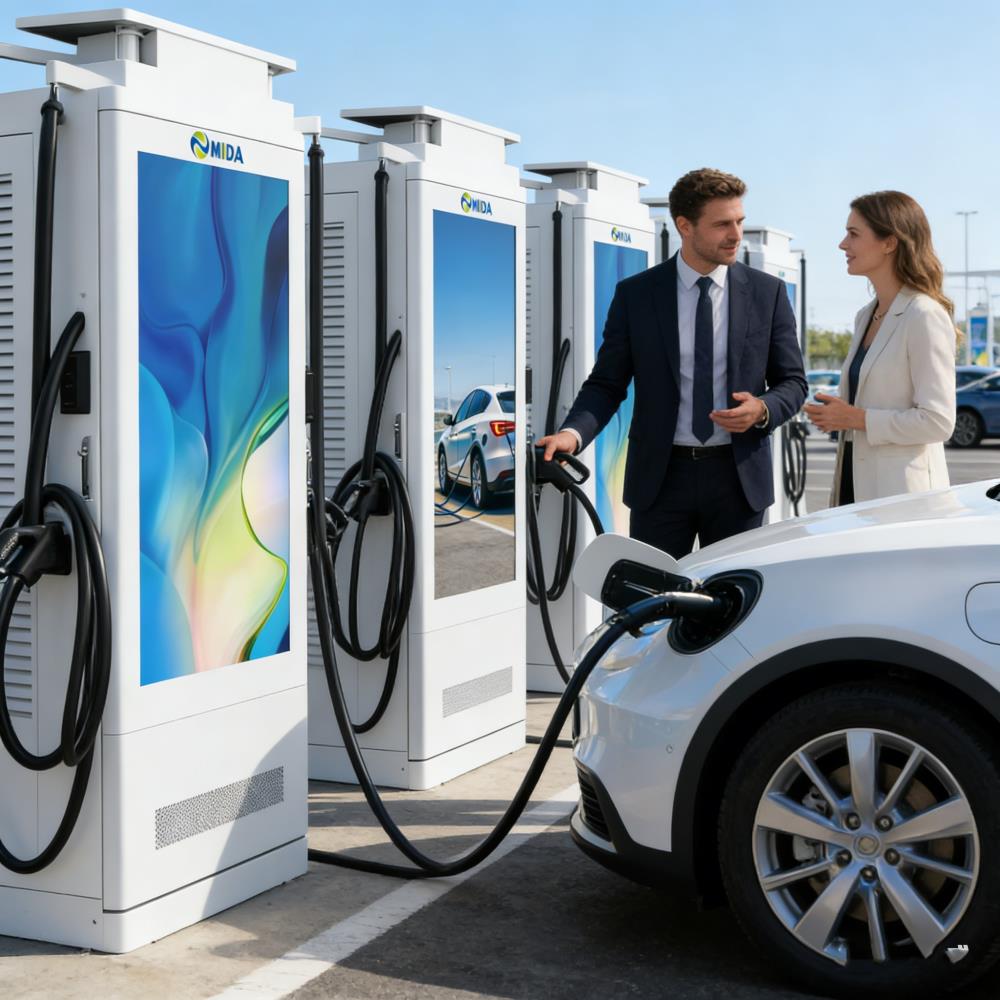
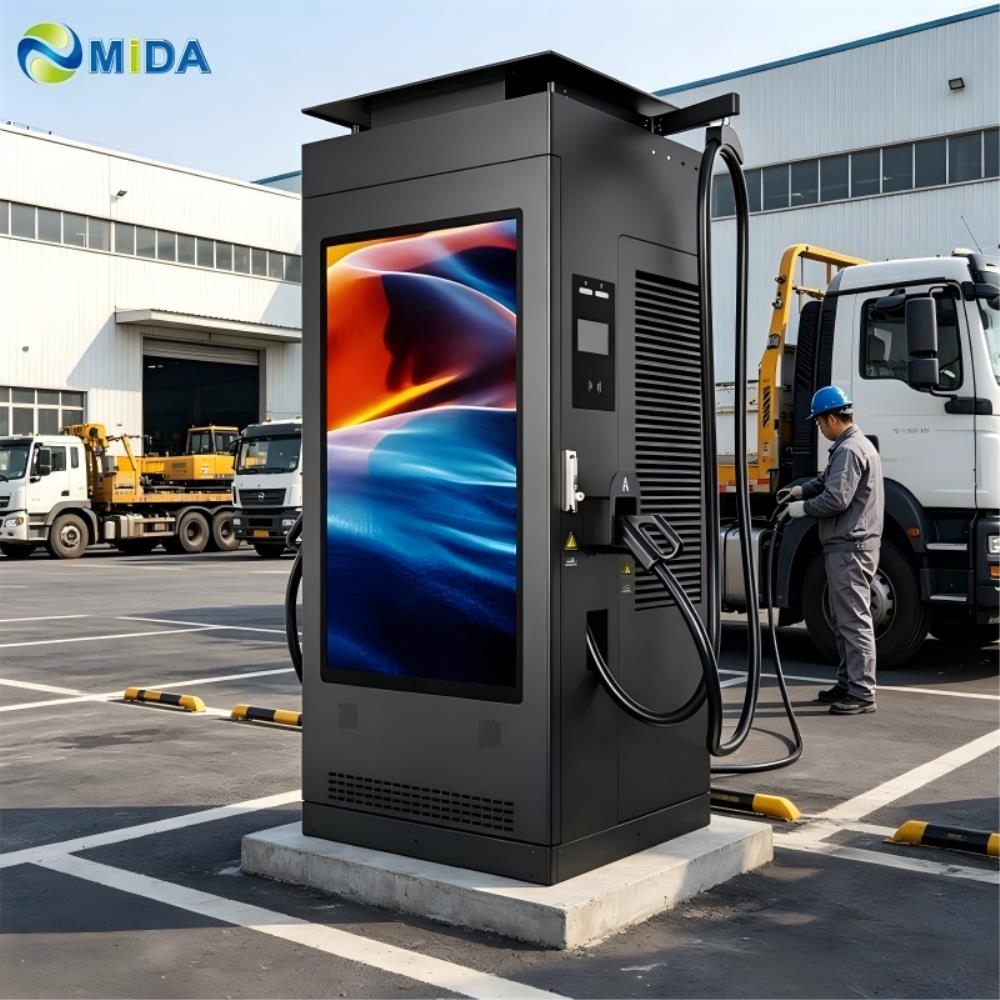
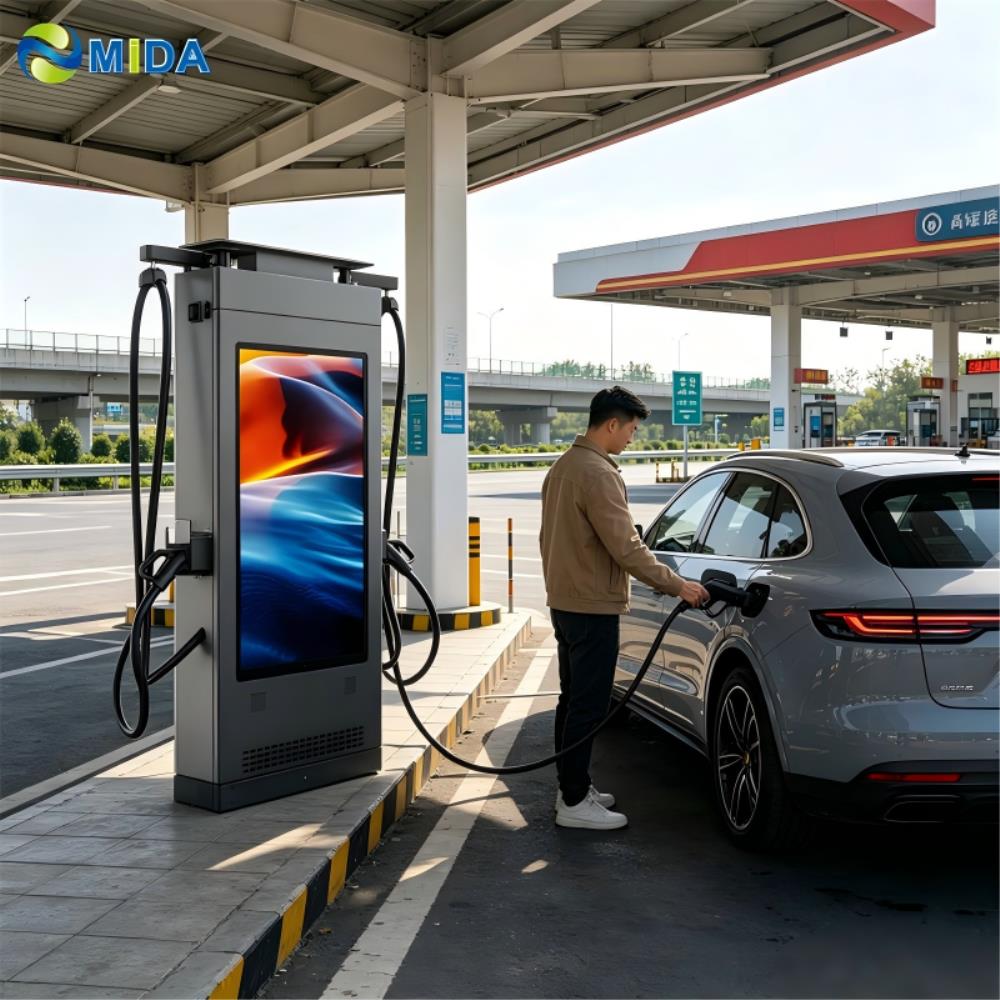
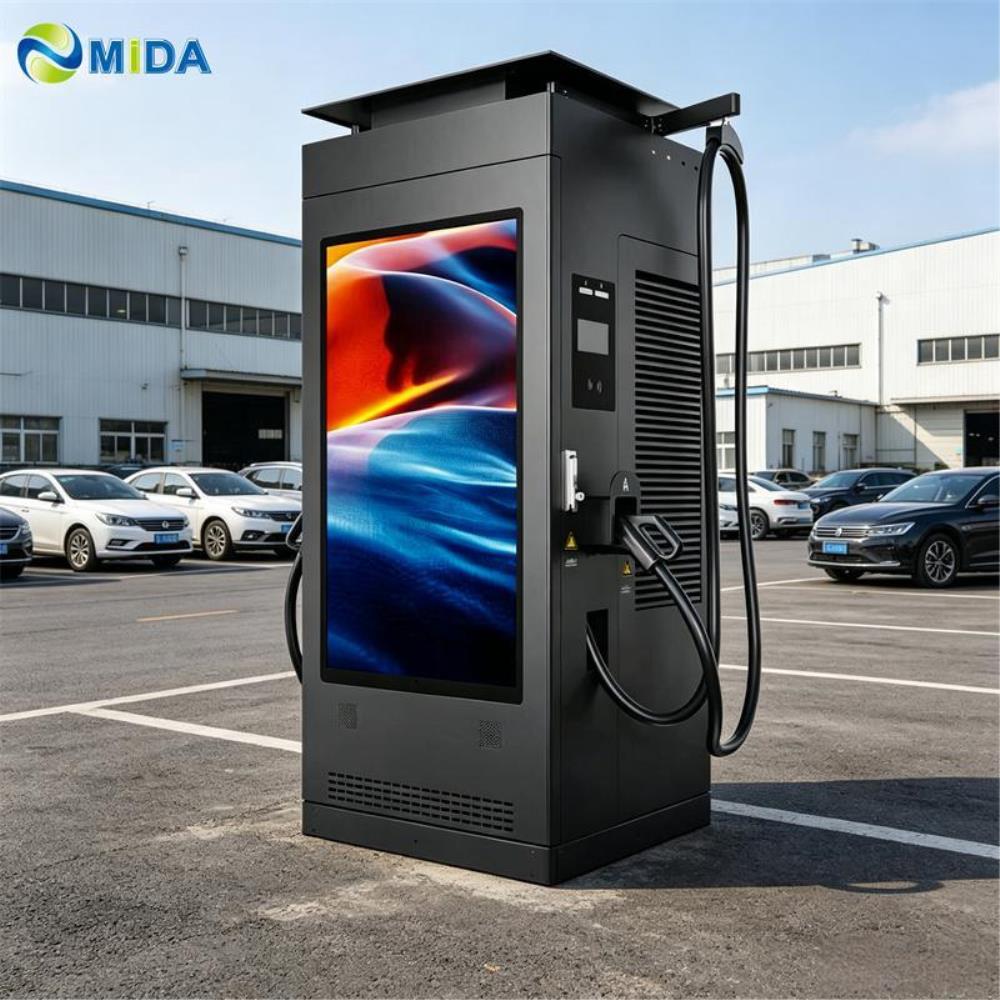
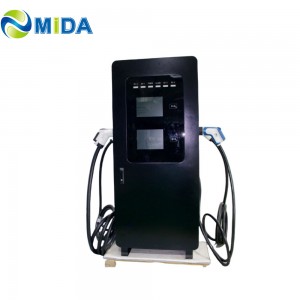
“Commercial EVSE” is an important framing. This product is not a consumer gadget or a municipal afterthought; it is a professional-grade charging asset for operators running networks, fleets, and commercial properties across multiple markets — often the same operator with sites in the US, Europe, and the Gulf. The dual-gun design maximizes throughput per bay, the 60–240kW modular power range lets a single cabinet SKU serve everything from a small urban lot to a highway hub, and the Media Profit Display — a large-format advertising panel — adds the revenue stream that improves unit economics in every configuration.
Positioning summary: this is the “global fleet” product of the MIDA advertising-charger family — the model a multinational CPO standardizes on, the model an equipment distributor stocks across three continents, the model a fleet operator specifies for depots that must serve mixed-brand vehicles with different connectors. Every engineering decision — connector flexibility, voltage range, power modularity, certification breadth, media display — is optimized for the operator who must deploy, manage, and profit from charging assets across jurisdictions. The sections below examine the media display economics, the multi-standard power architecture, safety and compliance breadth, the management platform, the full specification, and the deployment scenarios.

2. Interactive Advertising Screen: The Media Profit Display
The “Media Profit Display” is the commercial heart of this EVSE. Configured at 43-inch or 55-inch class (order-selectable), 1920×1080 Full-HD, and 2000 nits peak brightness, the display is managed through the MIDA cloud CMS and is designed to generate a measurable second revenue line for the operator — in any market, in any currency. The core insight is universal: a driver standing beside a charger for 20–40 minutes is a captive, high-value audience, and that attention has a market price.
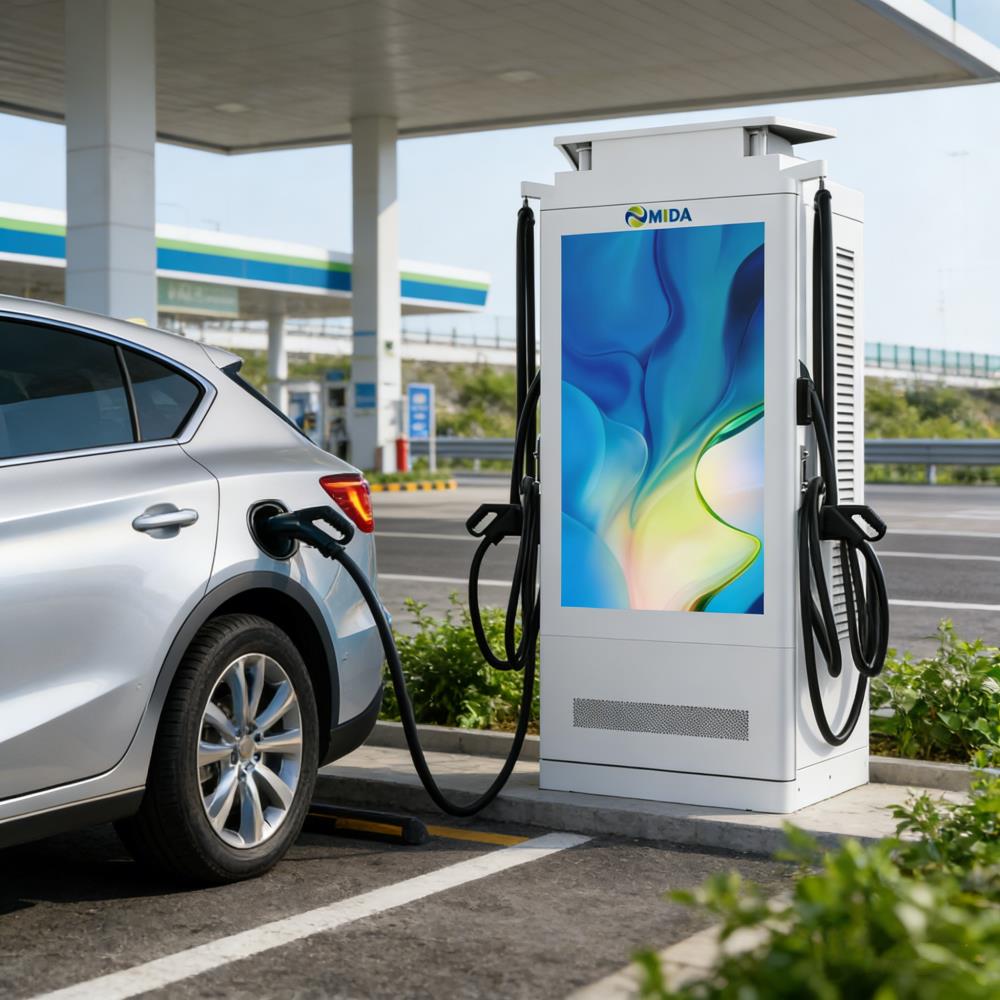
The profit mechanics are consistent across regions, though the numbers shift with local CPM rates. In dense urban and retail locations, gross media values of €80–€450 (or $90–$500) per screen per day are achievable at typical DOOH CPMs, and the dual-gun design doubles the session count that feeds impressions. The operator can sell inventory directly to local and national advertisers, fill residual slots programmatically, or — in the retail context — reserve prime day-parts for the property owner’s own campaigns. The CMS provides the full toolkit: multi-tenant scheduling, day-parting, geo-targeting, split-screen charging status, and engagement analytics for advertiser reporting.
The display is engineered for multi-market outdoor duty: IK10-rated tempered glass, IP65 housing, ambient-light auto-dimming, heat-pipe cooling, and 50,000-hour rated lifetime. Because the media and charging systems are electrically and logically isolated, advertising operations never compromise charging reliability — a design requirement for operators whose primary business is delivering energy, not media.
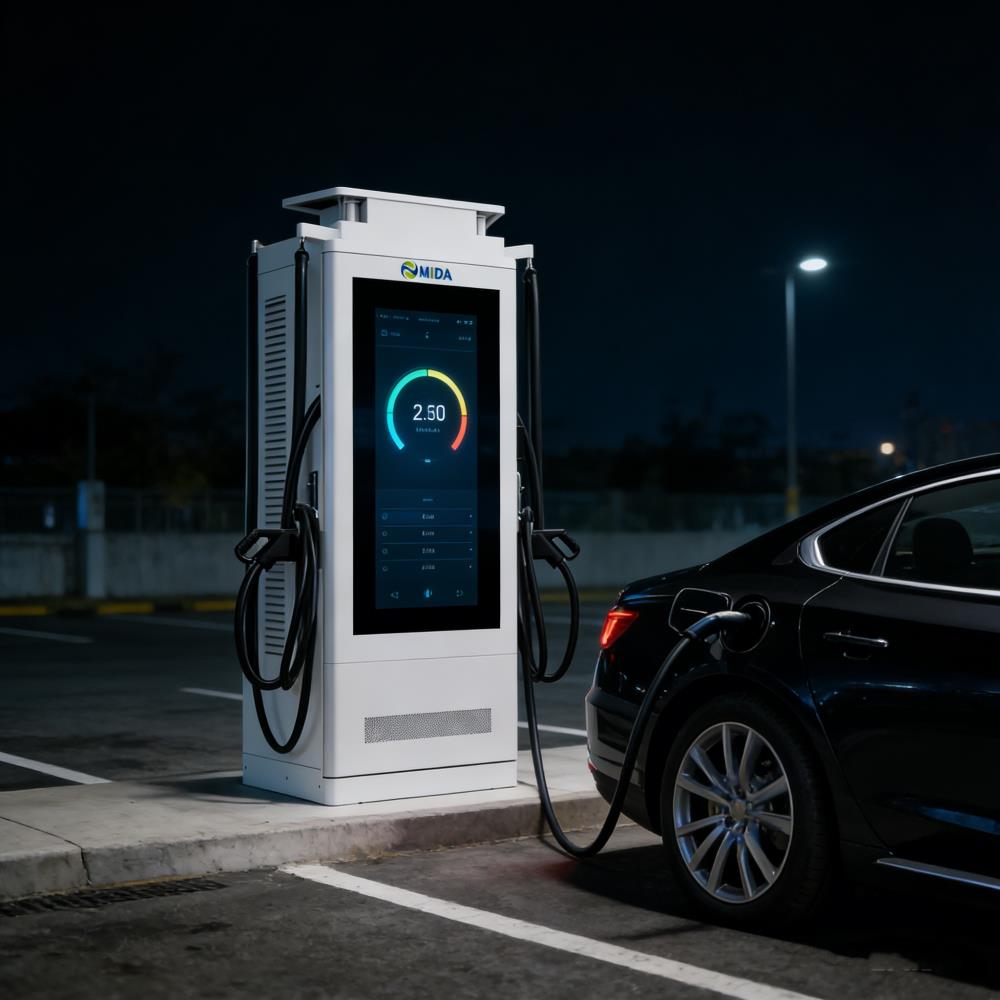
For operators standardizing on this EVSE across markets, the media network compounds: a portfolio of 50 screens across three countries can be packaged as regional or multinational advertising inventory, commanding rates unavailable to single-site operators, and managed from one CMS instance with per-site scheduling and unified reporting.
3. High-Performance Charging Technology: Multi-Standard, Multi-Market, Modular
The defining technical feature of this EVSE is its connector flexibility, engineered at the factory rather than through field adapters. Standard configurations include:
- Dual CCS2 for Europe, the Gulf, and most of Asia-Pacific;
- Dual CCS1 for North America;
- Hybrid CCS1 + CCS2 for mixed fleets and transition markets;
- NACS-native options for operators preparing for the North American standard’s expansion — with NACS adapter compatibility on CCS configurations to bridge the transition period.
This flexibility means one cabinet SKU, one service strategy, and one spare-parts pool can serve an operator’s entire portfolio across regions — a significant simplification of logistics, training, and inventory for multinational operators.
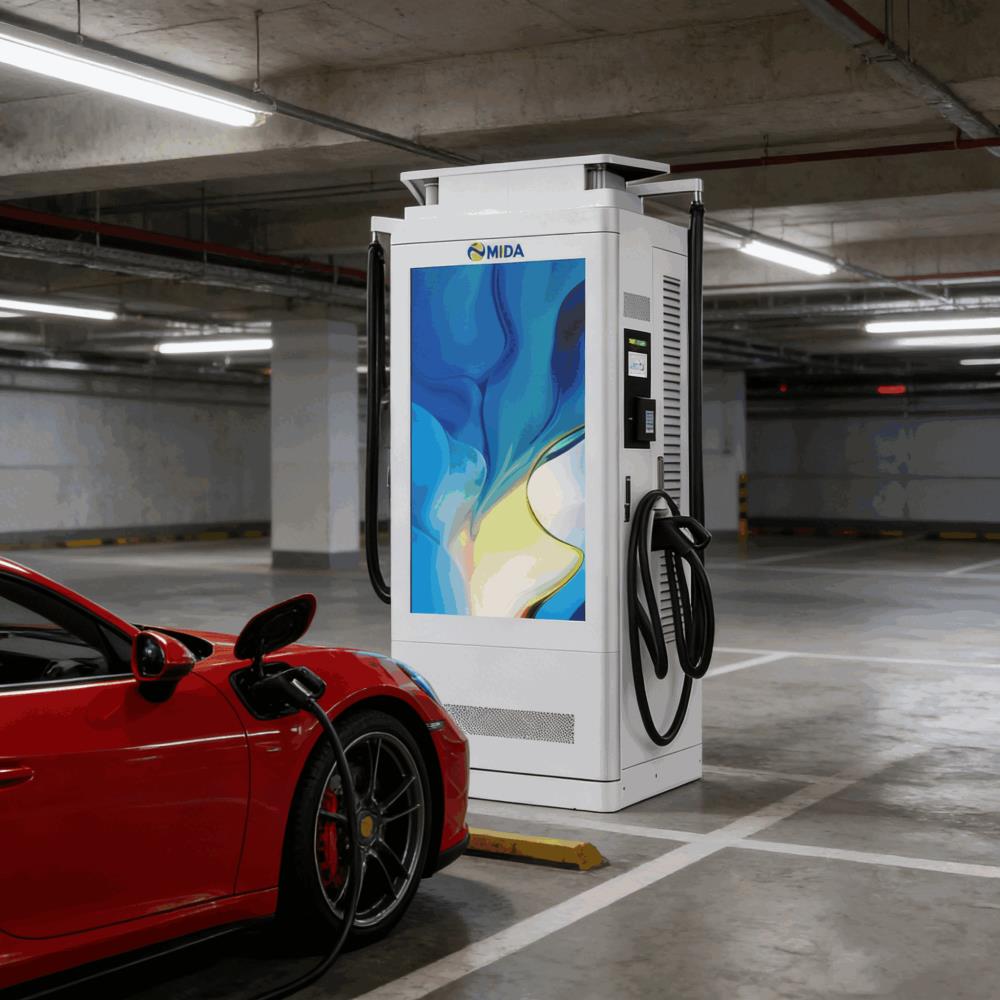
The power stage is modular across the 60–240kW range: hot-swappable power modules in 20kW/30kW increments let the operator right-size each site — 60kW for an urban lot, 120kW for a retail car park, 180–240kW for a highway hub — and upgrade modules later without replacing the cabinet. Dual guns are standard, with dynamic power sharing that rebalances in real time (e.g., 120kW+120kW, 180kW+60kW, or full power to one vehicle). The 150–1000V DC output range serves both 400V and 800V vehicle architectures, and per-gun current reaches 250A, covering passenger cars through large vans and trucks.
Input is 400V AC three-phase, 50/60Hz, ±15%, with 480V North American input variants available for US deployment. Peak efficiency of 95–96% and smart-charging features — time-of-use tariffs, demand response, load management — complete the power story. The EVSE supports OCPP 1.6J (2.0.1 on request), DIN 70121, and ISO 15118 Plug & Charge, ensuring backend and vehicle interoperability in every target market.
4. Safety and Reliability
Multi-market deployment means multi-market certification, and the MIDA EVSE is engineered for the full set: CE (LVD, EMC, RED) for Europe, UKCA for the UK, and cUL/UL certification pathways for North America, with IEC 61851-1/23, IEC 62196, and ISO 13849 compliance across the platform. Certification documentation — technical files, risk assessments, declarations of conformity — is provided to support import, permitting, and insurance in every market.
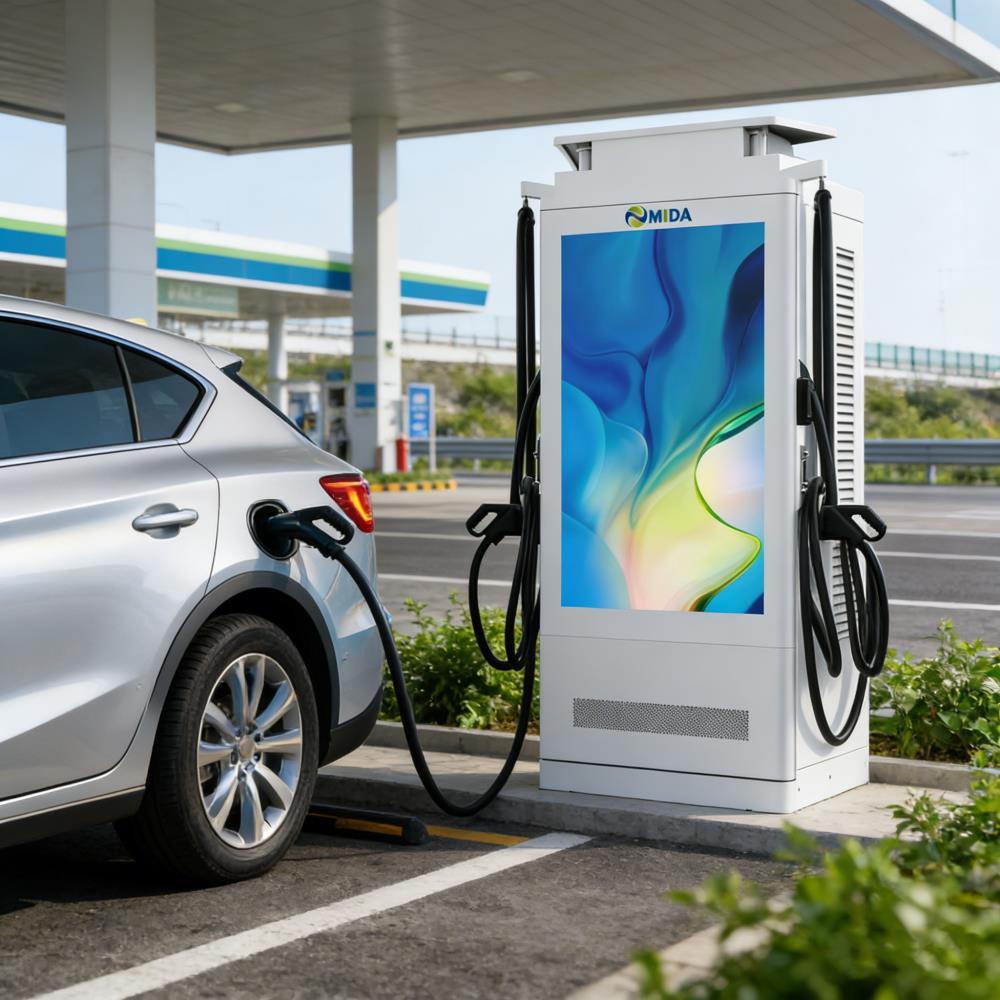
The protection suite is region-agnostic and layered: AC-side Type II surge protection, Type A RCDs with 6mA DC fault detection, DC-side insulation monitoring before and during every session, per-gun contactor weld detection, emergency stop, and remote de-energization. The IP55 cabinet and IP65 display housing, with IK10 impact ratings, resist rain, dust, hose-down cleaning, and vandalism — with corrosion-treated enclosures for coastal and high-humidity climates.
Thermal management uses intelligent forced-air cooling with variable-speed fans and heat-pipe display cooling, with graceful derating above 55°C and cold-weather startup to -25°C. All field-serviceable components are modular and hot-swappable, and the remote diagnostics platform provides fault alerts and over-the-air firmware updates — critical for operators whose service teams cover multiple countries from regional hubs. The design life is 10+ years with conservative derating throughout.
5. Smart Management and Connectivity
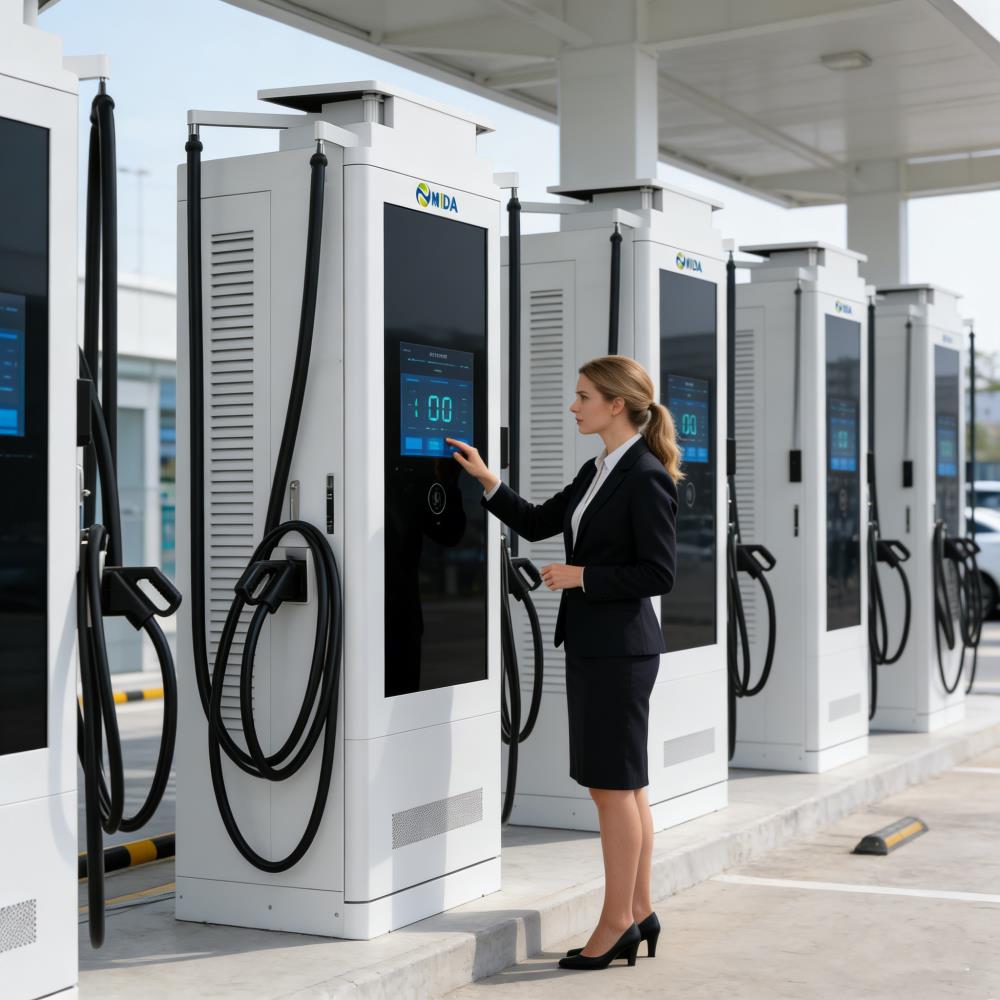
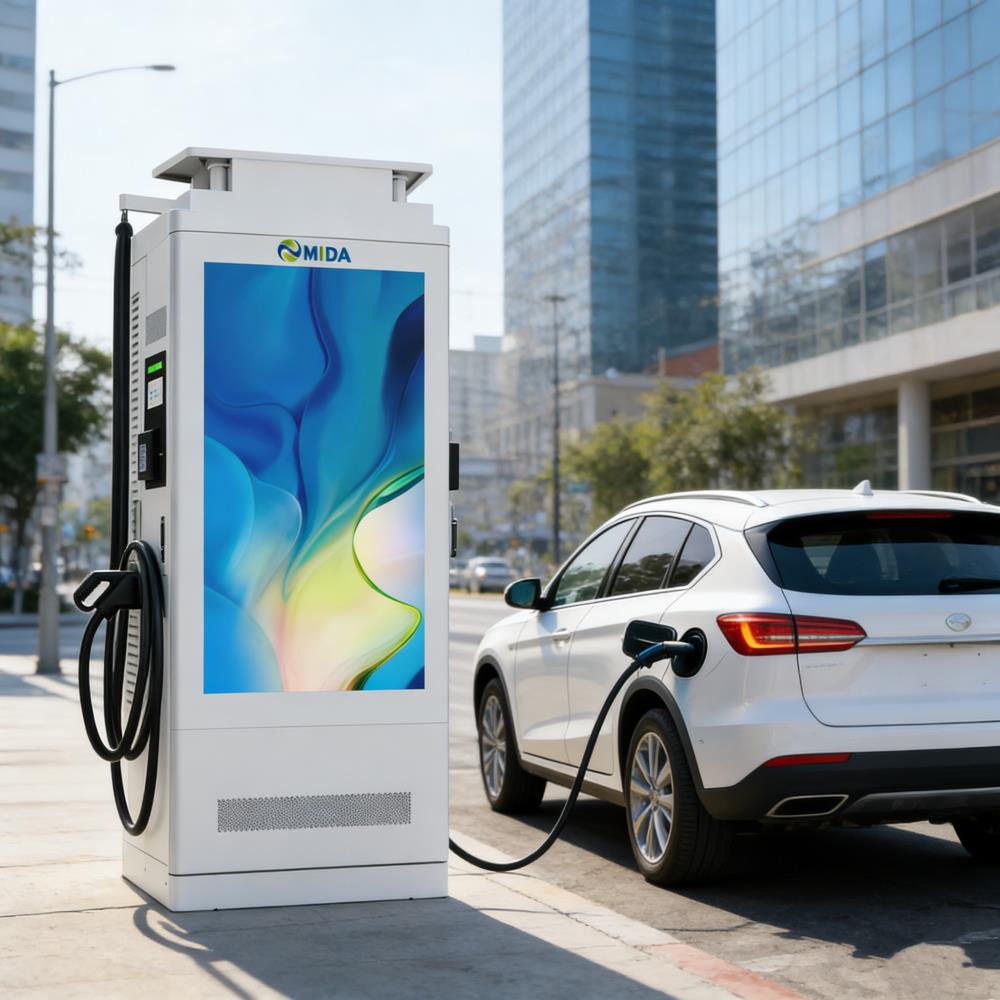
OCPP 1.6J is standard (2.0.1 optional), connecting the EVSE to any compliant backend worldwide — roaming platforms, white-label CPMS, fleet management systems — with no vendor lock-in. Connectivity is redundant (4G LTE/5G-ready, Wi-Fi, Ethernet, RS485) with offline session handling and local caching. Authentication supports RFID, QR, mobile app, and Plug & Charge, configurable per site and per market.
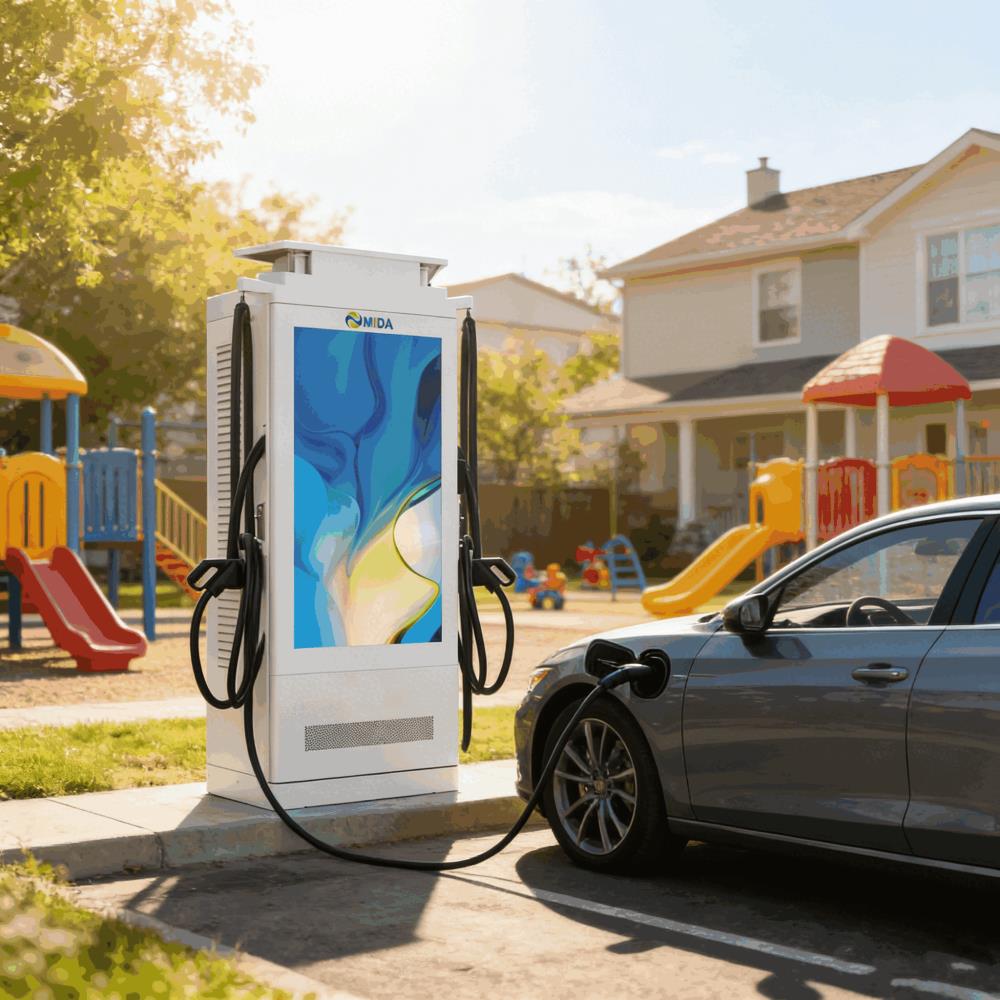
The backend dashboard manages the entire portfolio: live sessions, power distribution, energy, revenue, utilization, faults, and media impressions, with exportable reporting and role-based access for multinational teams. Remote operations include firmware updates, tariff configuration, power limits, and load management. For fleet operators, the platform supports contract-based billing, session reporting per vehicle, and driver authentication — alongside the advertising CMS, which operates as a logically isolated subsystem feeding the media P&L.
The result is a single management plane for a geographically dispersed estate: one dashboard, one set of APIs, one reporting standard — the operational simplicity that makes multi-market charging profitable rather than chaotic.
6. Detailed Technical Specifications
| Parameter | Specification |
|---|---|
| Model | MIDA 60–240kW Commercial EVSE with Media Profit Display |
| Output Power | 60kW / 120kW / 180kW / 240kW (modular, field-upgradeable) |
| Input | 400V AC ±15% (480V variant for North America), 3-phase, 50/60Hz |
| Output Voltage | 150–1000V DC |
| Output Current | Up to 250A per gun |
| Charging Connectors | Dual CCS2 / Dual CCS1 / Hybrid / NACS-native; GBT adapter ready |
| Charging Protocols | OCPP 1.6J (2.0.1 optional), DIN 70121, ISO 15118 Plug & Charge ready |
| Display | 43″ / 55″ TFT-LCD, 1920×1080 FHD, 2000 nits, auto-brightness |
| Display Protection | 4–6mm tempered glass, IK10, IP65 housing |
| Enclosure Rating | IP55 cabinet, IK10 vandal resistance |
| Cooling | Intelligent forced-air + heat-pipe (display) |
| Communication | 4G LTE / 5G-ready, Wi-Fi, Ethernet, RS485; RFID/QR/App/Plug & Charge |
| Efficiency | ≥95% peak module efficiency |
| Smart Charging | Time-of-use, demand response, load management, scheduled windows |
| Operating Temperature | -25°C to +55°C (graceful derating) |
| Certifications | CE (LVD/EMC/RED), UKCA, cUL/UL pathways, IEC 61851-1/23, IEC 62196, ISO 13849 |
| Dimensions (W×H×D) | ~800×2100×450mm, floor-mounted |
| Warranty | 2-year standard; 5-year extended option |
This specification defines a genuinely multi-market EVSE: connector flexibility at the factory, modular power for right-sized deployment, wide voltage coverage, and certification breadth that simplifies import and permitting across regions.
7. Use Cases & Installation
The multi-standard EVSE deploys across the operator’s entire portfolio:
- Multinational CPO Networks — One cabinet SKU across US, European, and Gulf sites; CCS1, CCS2, and NACS configurations per region; centralized management and media network across all markets.
- Fleet Depots with Mixed Vehicle Brands — Hybrid connector configurations serve mixed fleets; 60–120kW modules right-size depot capacity; contract billing and driver authentication via the backend.
- Retail & Commercial Properties — 120–180kW units with dual guns in parking lots; the media display generates advertising income and tenant promotion value; modular upgrades scale with demand.
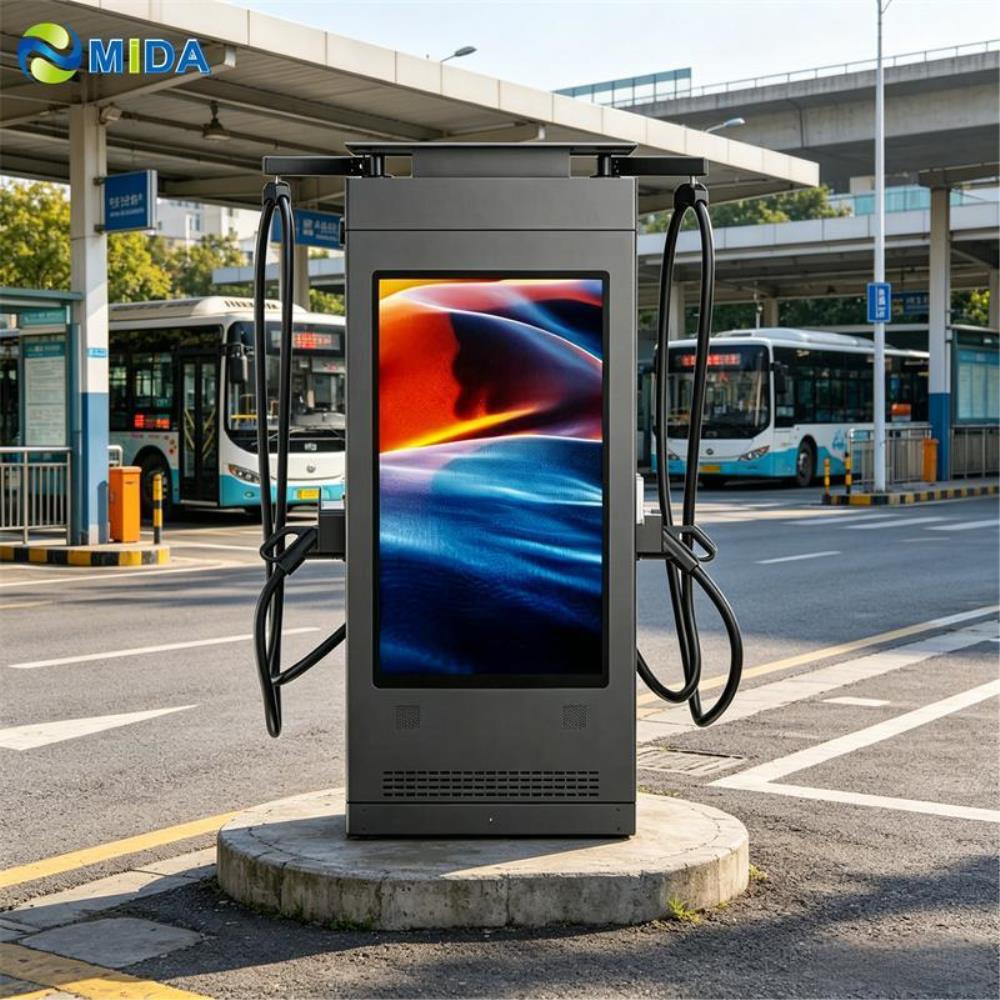
- Highway & Transit Hubs — 240kW configurations deliver ultra-fast throughput; NACS-native or CCS2 options match local standards; dual guns keep queues moving at peak times.
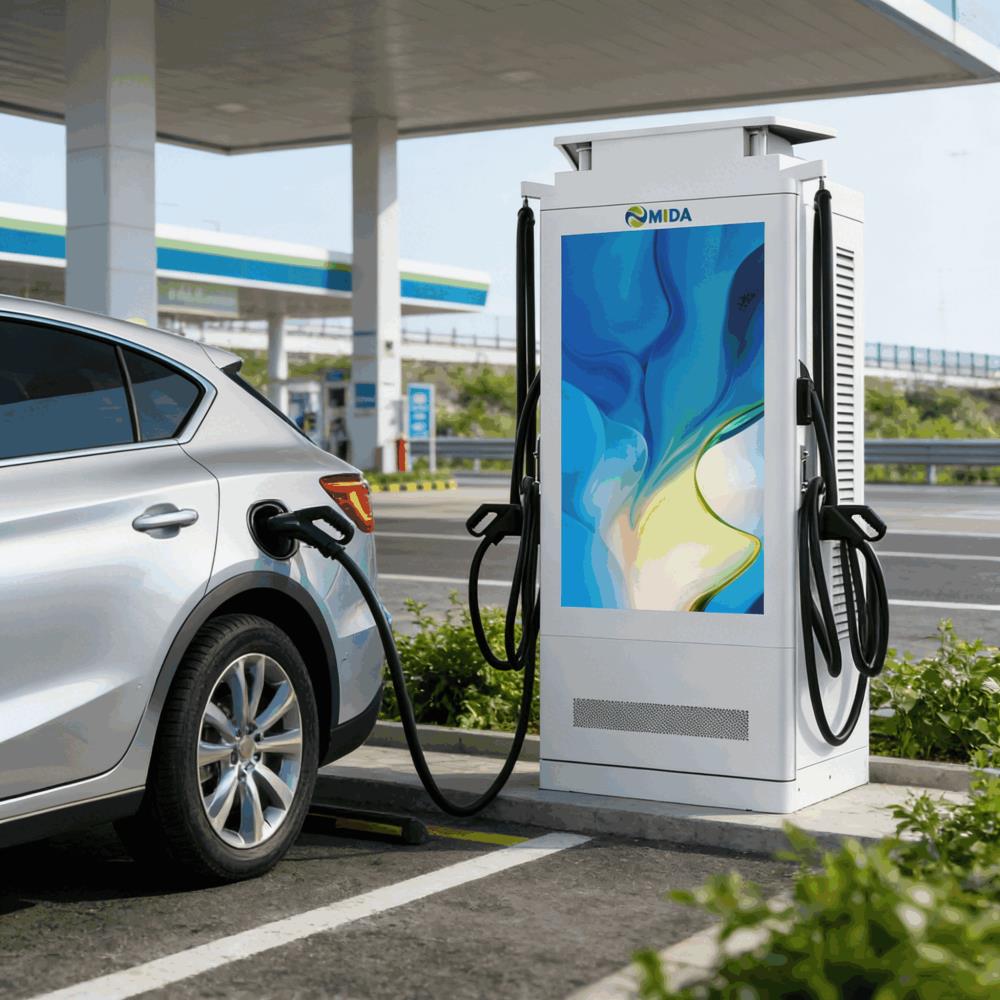
Installation follows regional codes and standards: North American installations use the 480V input variant and UL-listed components; European sites use the 400V configuration with CE documentation. Site survey, foundation, cabling, and commissioning are standard; the integrated cabinet minimizes assembly. Grid capacity scales with power configuration, and load management coordinates multiple units on shared feeders.
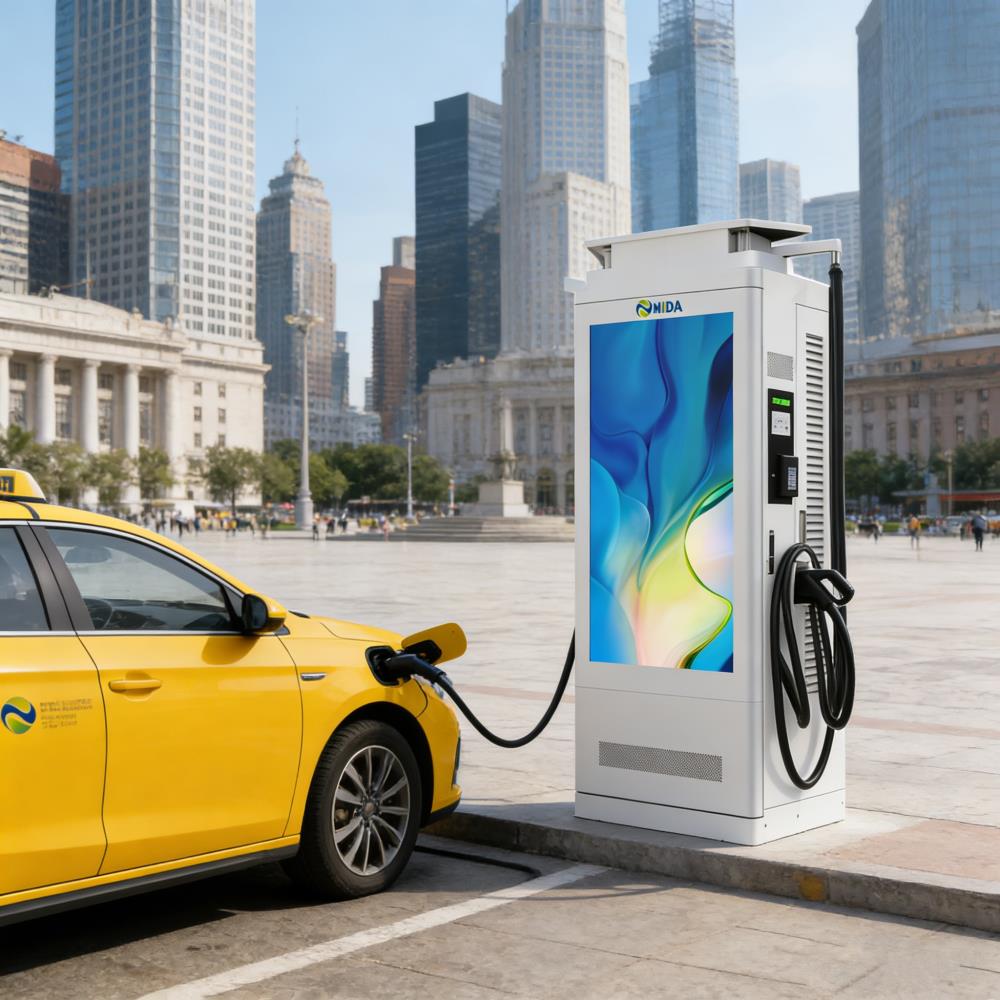
Operationally, the modular design simplifies spares across the portfolio — one module type, one display type, one controller across all sites — and the remote diagnostics platform lets a regional service team manage multiple countries efficiently. For the multinational operator, the combination of connector flexibility, modular power, media revenue, and centralized management makes this the highest-leverage unit in the fleet.
8. FAQ
Q1: Which connectors does this EVSE support? CCS1, CCS2, and NACS-native configurations are factory options, with hybrid CCS1+CCS2 and GBT adapter readiness. You specify the configuration per site at order time; one cabinet platform covers all markets.
Q2: Can I change the power level after installation? Yes. The modular power stage accepts hot-swappable modules in 20kW/30kW increments, so a 60kW site can be upgraded to 120kW, 180kW, or 240kW by adding modules — no cabinet replacement needed.
Q3: What is the “Media Profit Display”? A 43″ or 55″ advertising panel integrated into the EVSE, managed by a cloud CMS, that generates a second revenue stream from advertising while split-screen mode keeps charging status visible to drivers.
Q4: How does the dual-gun charging work? Dynamic power sharing distributes output in real time — e.g., 120kW+120kW, 180kW+60kW, or full power to one vehicle — rebalancing as sessions complete to maximize bay throughput.
Q5: Is this EVSE certified for North America and Europe? Yes. CE (LVD/EMC/RED) and UKCA cover Europe and the UK; cUL/UL certification pathways cover North America; IEC 61851-1/23, IEC 62196, and ISO 13849 compliance span the platform.
Q6: Can one management system handle sites in different countries? Yes. OCPP 1.6J connects every unit to your backend, and the dashboard provides network-wide monitoring, tariff configuration per site, firmware updates, and media management from one platform.
Q7: Which vehicles can charge here? All modern EVs: 150–1000V output covers 400V and 800V architectures, and the connector configuration is matched to your market’s standard — CCS2, CCS1, or NACS — with adapters for the transition period.
Products categories
-
180kw 240kW DC Ultra Fast EV Charger Station OC...
-
Level 3 EV DC Charger Electric Car Charging Sta...
-
240kw 300kw 360kw 420kW Fast Charging Station F...
-
120KW 160KW 180kW 200kw Fast EV Charger Station...
-
420KW CCS2 New energy electric vehicle Charging...
-
360KW New energy electric vehicle Charging station