

1. Introduction
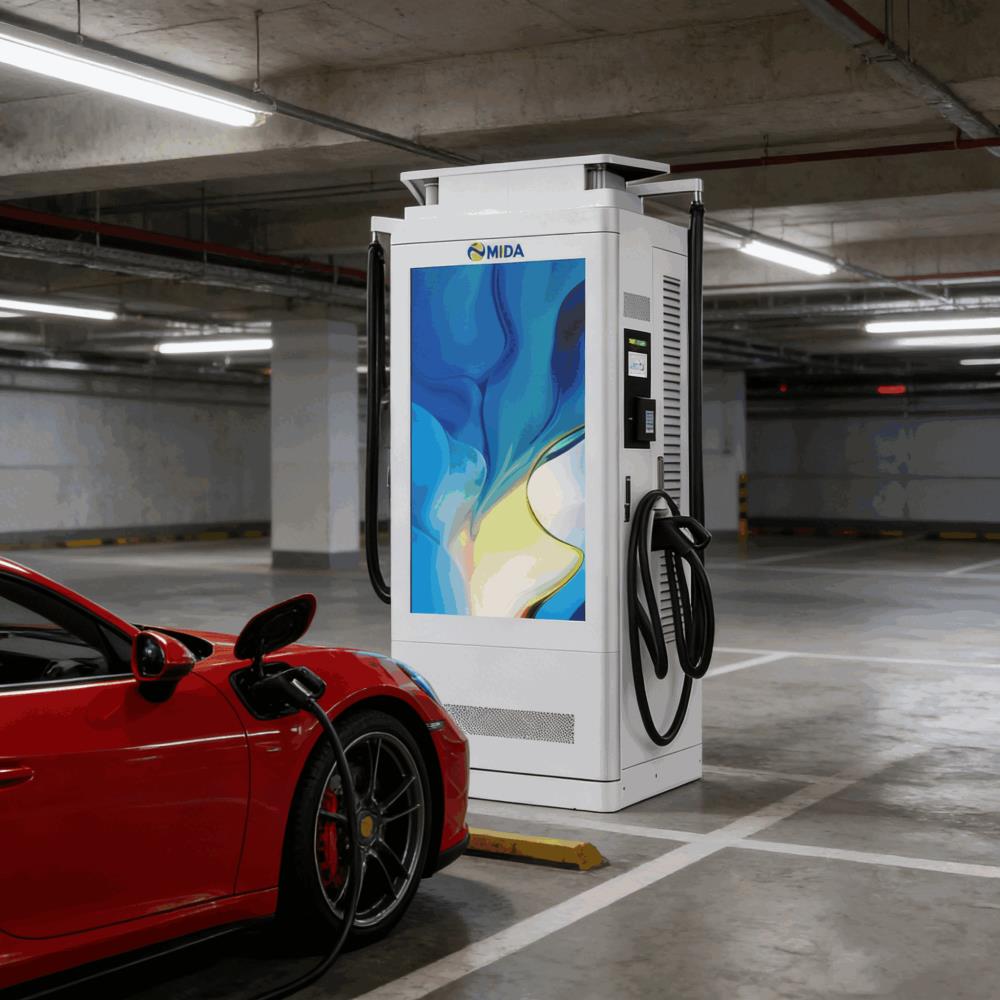
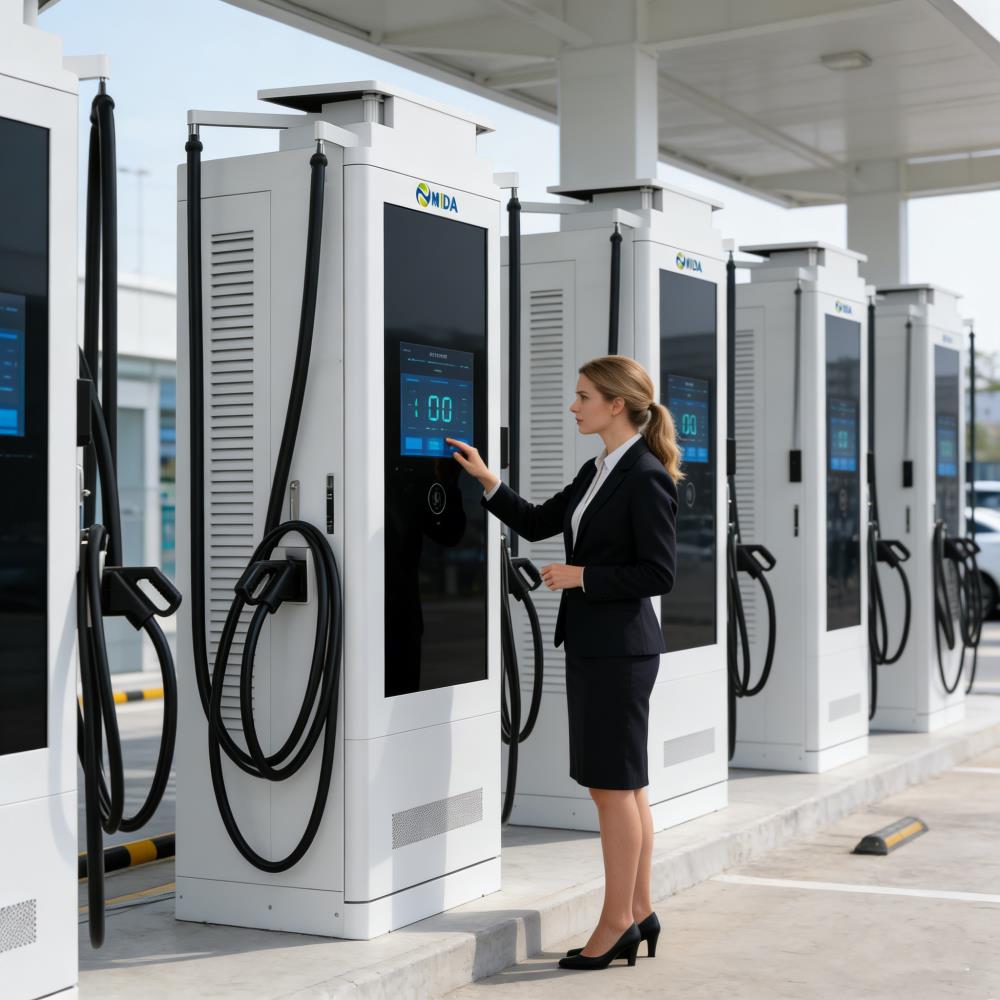
Fleet electrification is the industrial engine of the EV transition. Delivery vans, last-mile logistics vehicles, ride-hail cars, municipal service fleets, and corporate pools are converting to electric at scale — driven by total-cost-of-ownership advantages, regulatory deadlines (including Euro 7-era emissions rules and urban access restrictions), and corporate sustainability commitments. But fleet charging is a discipline with its own rules: vehicles must be charged within shift windows, multiple vehicle architectures share the depot, utilization must be maximized, and every minute of downtime costs money. The MIDA Dual-Gun 120kW DC Fast Charging Advertising Station with 1000V Wide Voltage is engineered for exactly these demands.
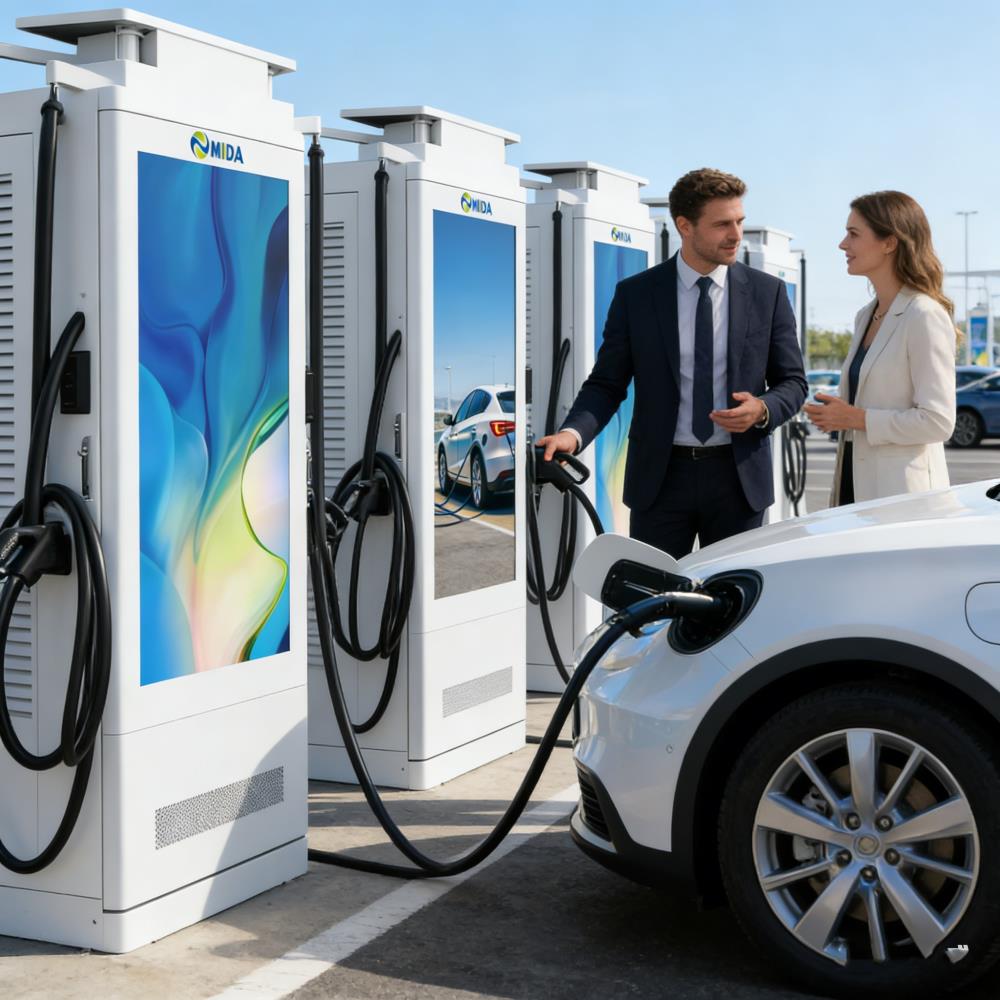
The 120kW power level is the fleet sweet spot. It delivers a full charge for typical delivery vans and passenger vehicles in 40–70 minutes — matching break and turnaround windows — while remaining deployable on the medium-voltage connections that most depots can support. The dual-gun design is the throughput multiplier: two vehicles charge simultaneously from one cabinet, effectively halving the number of cabinets a depot needs for a given fleet size. The 1000V wide voltage range is the compatibility guarantee: it serves 400V passenger platforms, 800V commercial-vehicle platforms, and the intermediate voltages found across mixed fleets.
Positioning summary: this station is the depot workhorse — the unit a fleet manager installs in multiples behind the warehouse, the unit a charging-as-a-service provider deploys for logistics clients, the unit a municipality specifies for its service vehicle yard. The integrated advertising screen, while secondary to the charging function in this context, adds a meaningful revenue stream and a communication channel: fleet depots can run driver information, safety notices, and shift messaging on the screen, while monetizing spare inventory to local advertisers. The sections below examine the display economics in the depot context, the charging technology, safety for high-utilization industrial environments, the management platform, the specification, and the fleet deployment playbook.
2. Interactive Advertising Screen: The Depot Media Channel
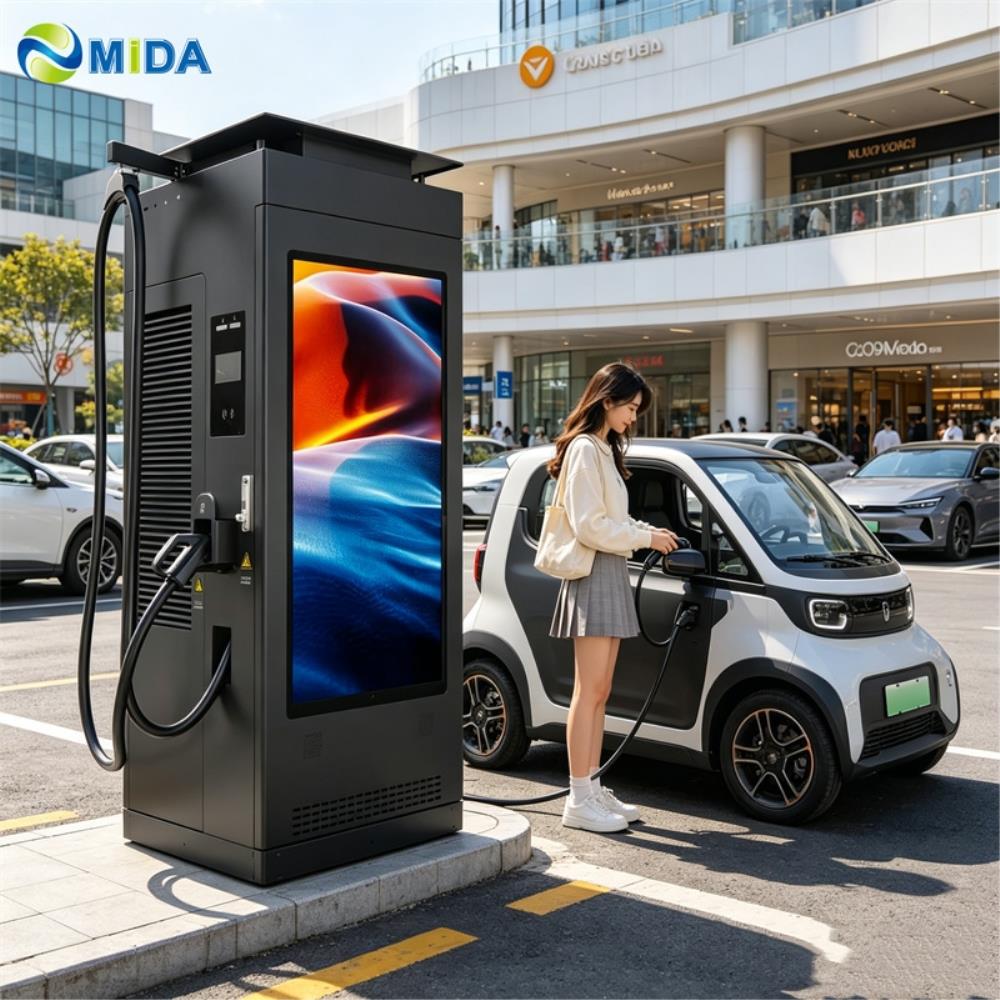
In a fleet depot, the advertising screen serves a dual role: internal communication and external revenue. Both roles are commercially significant. The 43-inch (or optional 55-inch) Full-HD display, rated at 2000 nits with auto-brightness, is positioned on the charger at driver height, where it is visible during plug-in, during the walk to the break room, and during shift starts and ends.
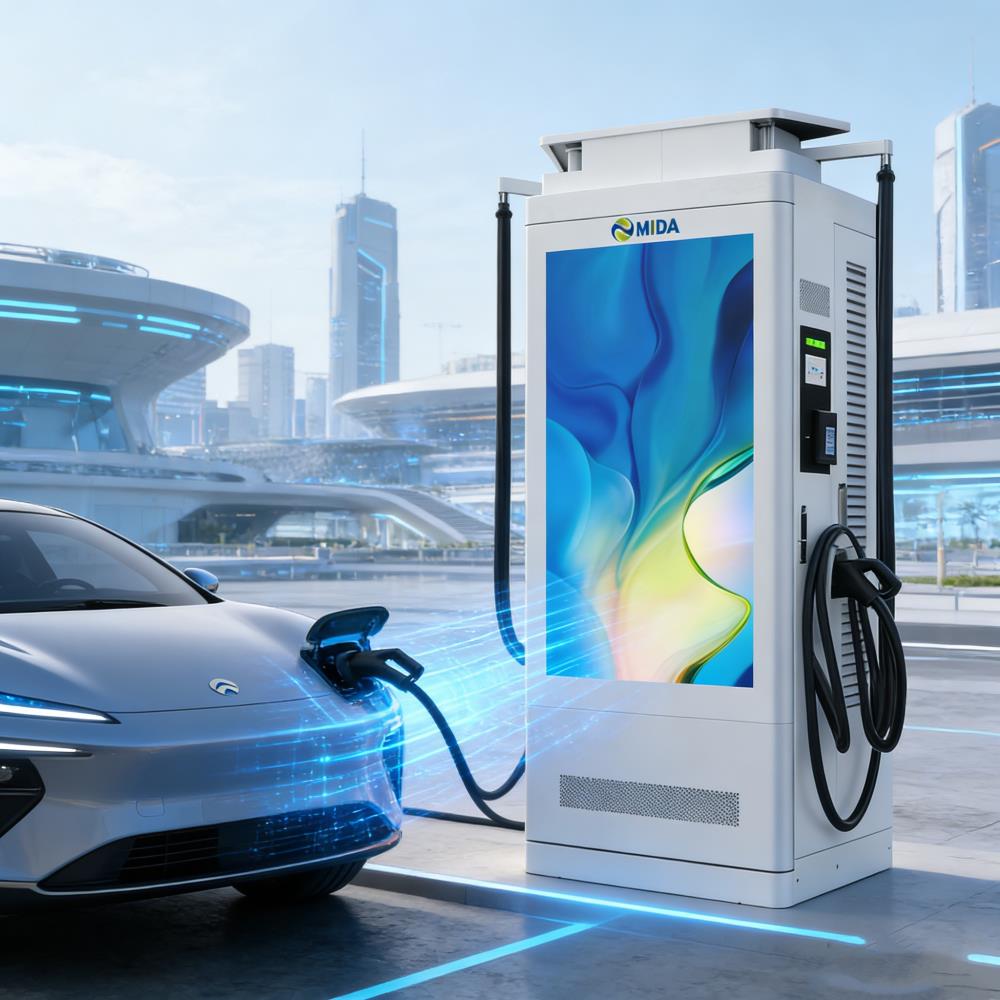
Internal communication value: Fleet operators can display shift schedules, safety briefings, vehicle assignment notices, charging status dashboards, and KPI updates on the depot screens. For a depot running 24/7 with rotating shifts, this replaces printed notices and reduces the administrative cost of communication — a tangible operational saving that the media P&L does not need to justify alone.
External revenue value: In depots located in industrial or mixed-use zones, the screen’s audience includes not only drivers but visitors, delivery personnel, and adjacent businesses. Local advertisers — truck services, tire shops, cafés, equipment suppliers — are natural buyers for hyper-local inventory at €100–€600 per month per advertiser. The CMS supports multi-tenant scheduling, day-parting (e.g., shift-change hours), and split-screen layouts that keep charging status visible while content plays.
The hardware is built for the industrial environment: IK10-rated tempered glass, IP65 housing, heat-pipe cooling, and 50,000-hour lifetime. Because the media system is electrically and logically isolated from the charging system, a content issue can never interrupt a fleet’s charging schedule — a non-negotiable property for depot operations where downtime is measured in lost revenue.
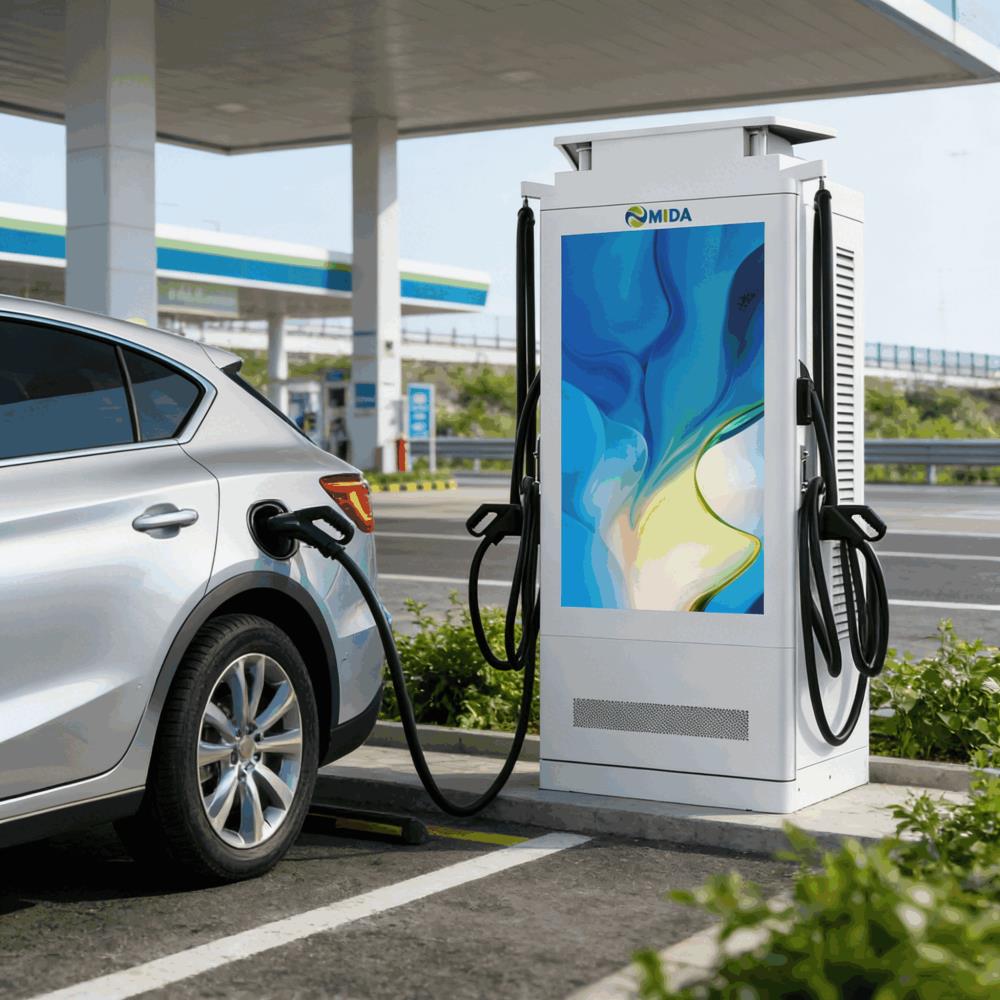
For fleet operators, the pragmatic view is that the screen pays for part of the charging infrastructure while improving depot communication. In a 10-cabinet depot, screen revenue of €1,000–€6,000 per month across the fleet meaningfully offsets energy and maintenance costs — and the internal communication value is a bonus that no conventional charger can offer.
3. High-Performance Charging Technology: Dual-Gun 120kW with 1000V Wide Voltage
The charging architecture is built for fleet realities. Dual guns with dynamic power sharing deliver 60kW+60kW to two vehicles, or the full 120kW to a single vehicle, with real-time rebalancing as sessions complete. For a depot with mixed vehicle types — a van needing a full charge and a passenger car needing a top-up — the station adapts automatically: the van draws up to 120kW alone, then shares as the second vehicle arrives. This maximizes the energy delivered per cabinet per day, which is the fundamental metric of depot economics.
The 1000V DC output range is the fleet compatibility cornerstone. Commercial vehicles — delivery vans, light trucks, and the emerging class of 800V-architecture electric vans — often require charge voltages above 700–900V to draw rated power. A charger capped at 500V or 750V would throttle these vehicles, extending charging time and breaking shift windows. The MIDA station’s 150–1000V range serves every platform in the mixed fleet: 400V passenger cars, 800V commercial vehicles, and legacy intermediate architectures. Per-gun current reaches 250A, sufficient for rapid charging of large-battery vans.
The power stage is modular and hot-swappable: 20kW/30kW modules in an N+1-friendly configuration mean a module failure reduces capacity but does not strand vehicles, and spares management is a single SKU across the fleet. Peak efficiency of 95–96% reduces energy cost — a first-order line item for fleets charging hundreds of kWh daily. Input is 400V AC three-phase, 50/60Hz, ±15%, and the station integrates with depot-level load management to coordinate multiple cabinets on a shared connection, avoiding transformer upgrades where possible.
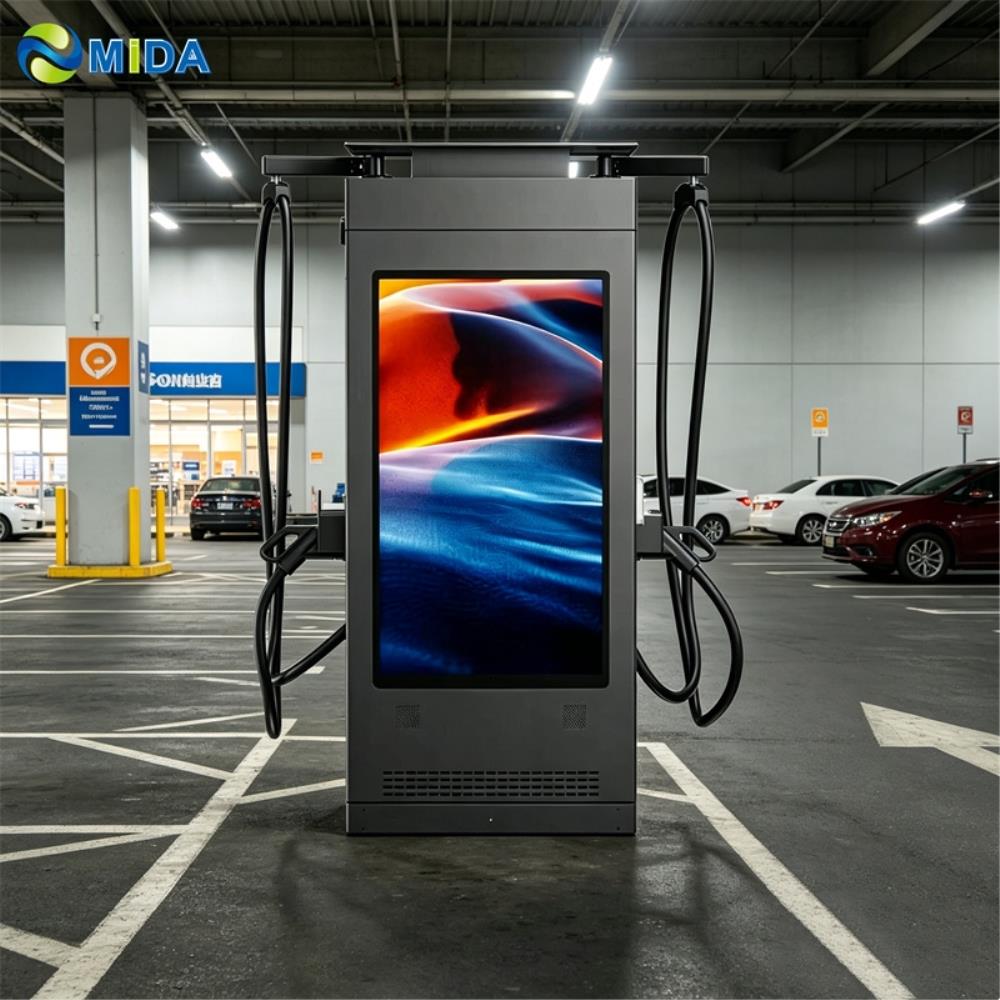
Connector configuration is set at order time: dual CCS2 for European fleets, dual CCS1 or NACS-native for North American fleets, with hybrid options for mixed markets. OCPP 1.6J (2.0.1 optional), DIN 70121, and ISO 15118 Plug & Charge support driver authentication and contract billing. Pre-session safety checks, insulation monitoring, and graceful thermal derating ensure reliable operation through back-to-back sessions across the 24/7 depot duty cycle, in ambient conditions from -25°C to +55°C.
4. Safety and Reliability
Depot environments combine high vehicle traffic, forklifts, dock equipment, and 24/7 operation — the safety and durability requirements are industrial-grade. The MIDA station is CE certified (LVD, EMC, RED), UKCA marked, and compliant with IEC 61851-1/23, IEC 62196, and ISO 13849, with North American certification pathways available.
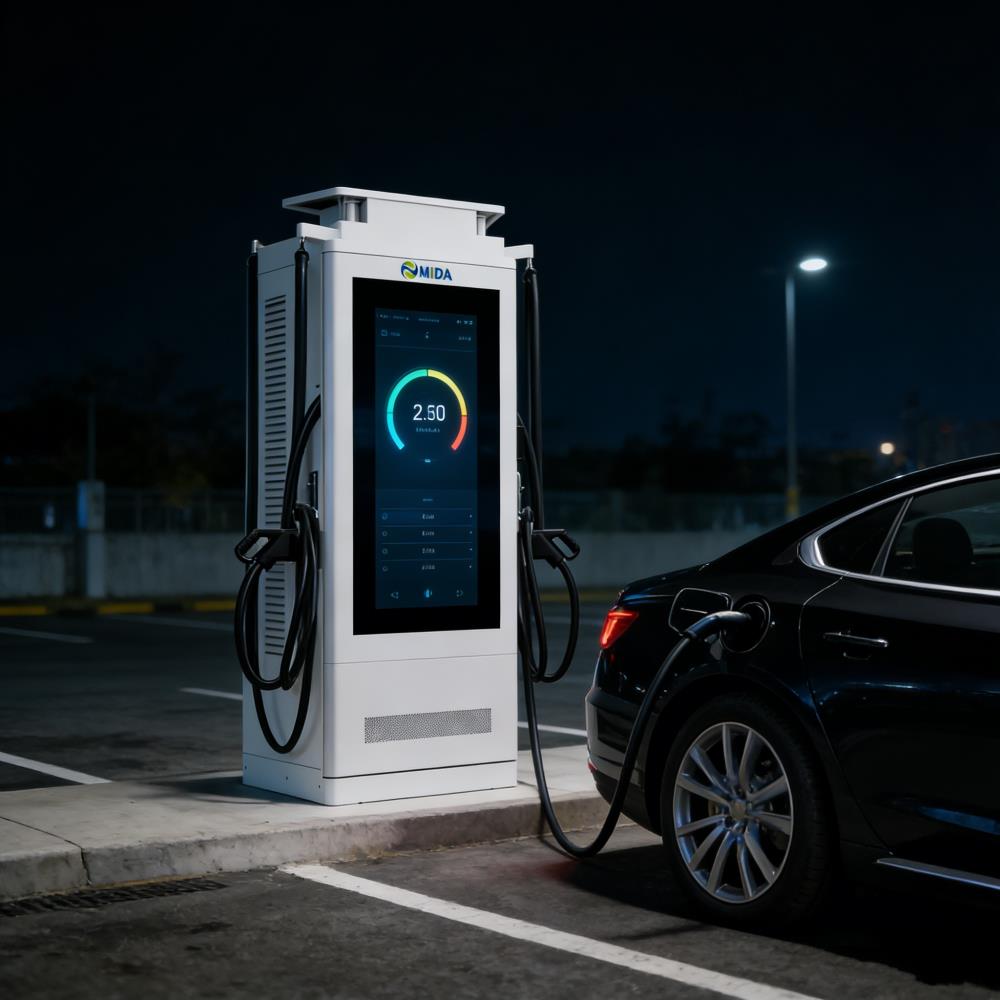
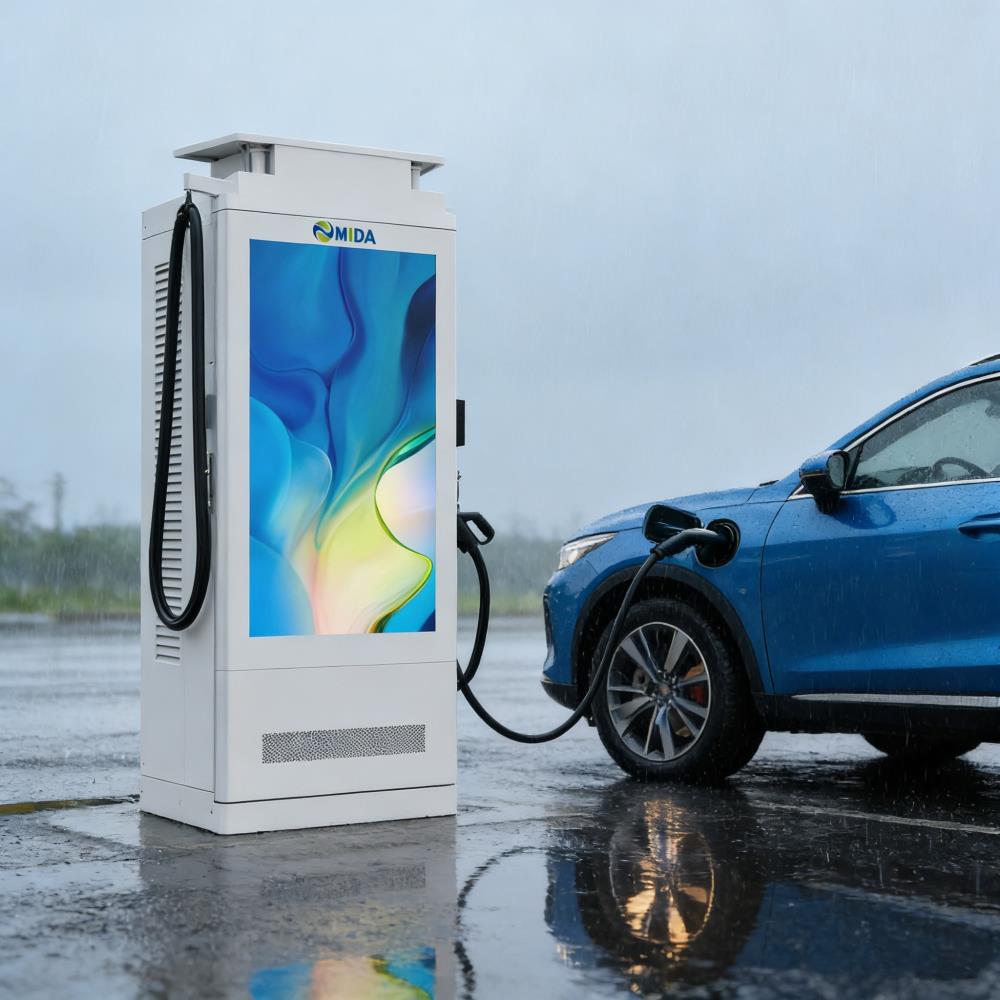
The protection architecture includes AC-side Type II surge protection, Type A RCDs with 6mA DC fault detection, DC-side insulation monitoring, per-gun contactor weld detection, emergency stop, and remote de-energization. The IP55 cabinet and IP65 display housing resist dust, water jets, and hose-down cleaning — essential in depots where floors are washed regularly — with IK10 impact ratings protecting against forklift and vehicle contact. The floor-mounted cabinet is secured to a concrete pad with optional bollards for vehicle impact protection.
Thermal design is matched to the brutal duty cycle of depot charging: back-to-back sessions, often at full power, in enclosed or semi-enclosed loading areas. Intelligent forced-air cooling with variable-speed fans, conformal-coated electronics, and conservative component derating deliver the 10+ year design life that fleet CFOs model. All serviceable parts are modular and hot-swappable, and the remote diagnostics platform pushes fault alerts and firmware updates — keeping depot availability at plan with minimal technician visits.
5. Smart Management and Connectivity
Fleet charging management is about integration: the charging backend must connect to fleet telematics, scheduling systems, and energy management. The MIDA station’s OCPP 1.6J compliance (2.0.1 optional) provides that integration point. The station connects to any OCPP-compliant fleet charging platform, and the backend supports contract-based billing, per-vehicle session reporting, driver authentication via RFID or app, and plug-and-charge for ISO 15118-capable vehicles.
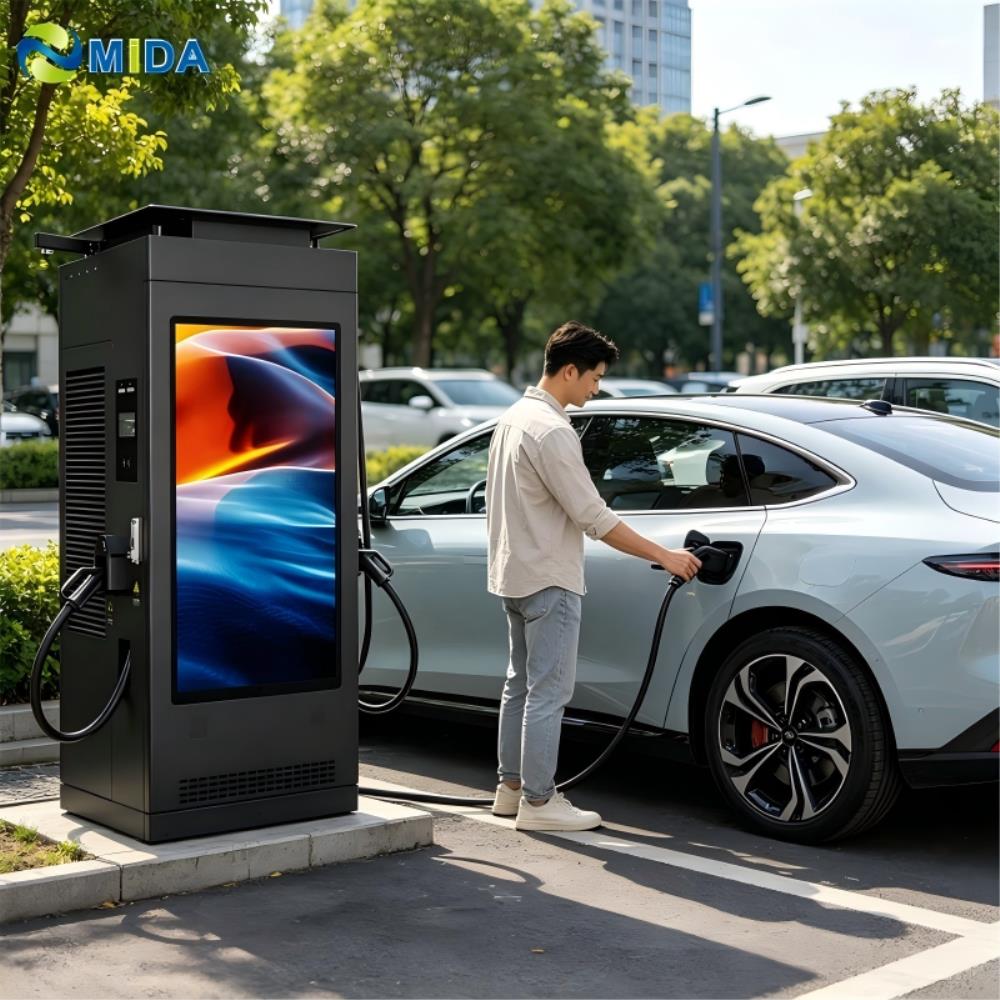
Connectivity is redundant — 4G LTE (5G-ready), Wi-Fi, Ethernet, RS485 — with offline session handling so a network outage never stops the depot from charging. Smart-charging features are central to fleet economics: time-of-use scheduling shifts charging to off-peak tariff windows, demand-response participation earns grid flexibility revenue, and load management coordinates all depot cabinets on the available capacity. The dashboard provides fleet-wide visibility: sessions per vehicle, energy per day, cost per session, utilization per cabinet, and fault status.
The advertising CMS runs on the same connectivity, logically isolated: internal communication content and external ad campaigns play from local cache during outages, and media operations never affect charging availability. Role-based access separates operations, finance, and media teams. For the fleet operator, the platform delivers the three things that matter: charge vehicles on schedule, minimize energy cost, and report everything to finance.
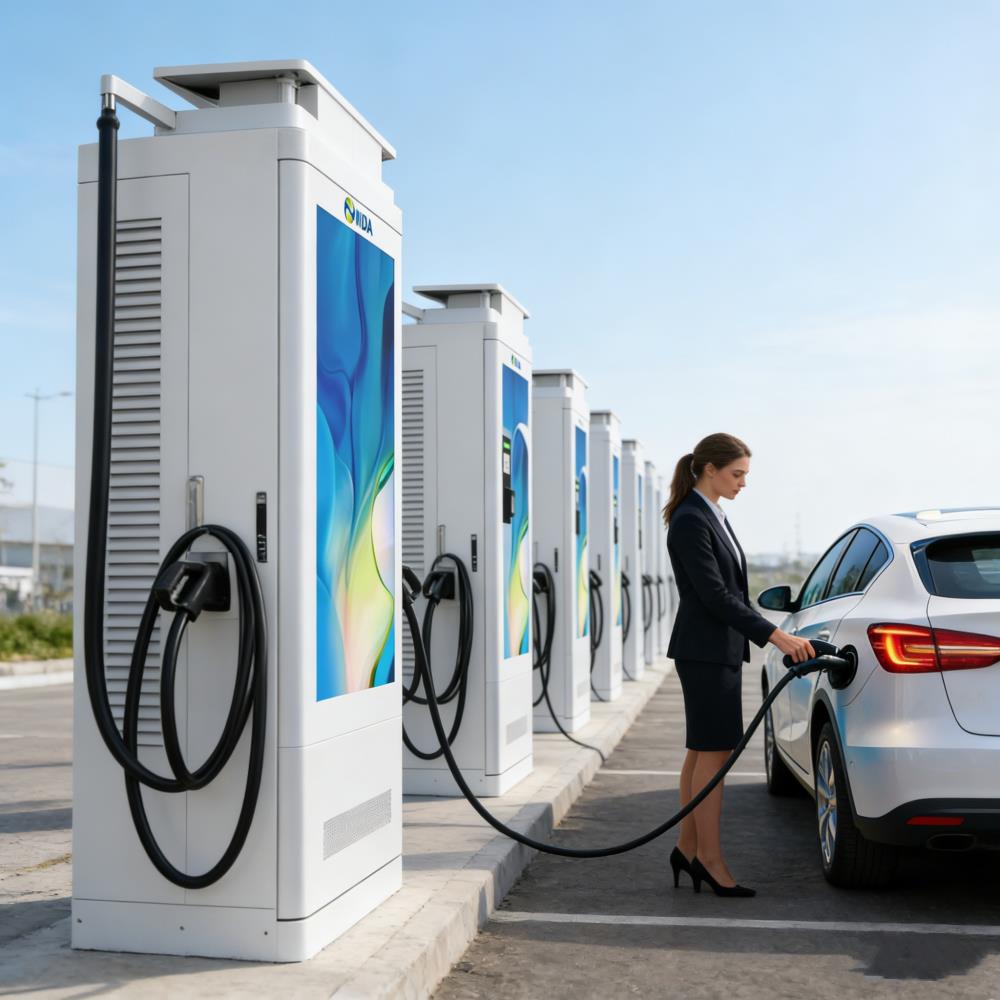
6. Detailed Technical Specifications
| Parameter | Specification |
|---|---|
| Model | MIDA Dual-Gun 120kW DC Fast Charging Advertising Station |
| Output Power | 120kW (dual gun, dynamic power sharing) |
| Input | 400V AC ±15%, 3-phase, 50/60Hz |
| Output Voltage | 150–1000V DC (wide voltage, mixed-fleet compatible) |
| Output Current | Up to 250A per gun |
| Charging Connectors | Dual CCS2 / Dual CCS1 / NACS-native / Hybrid |
| Charging Protocols | OCPP 1.6J (2.0.1 optional), DIN 70121, ISO 15118 Plug & Charge ready |
| Display | 43″ / 55″ TFT-LCD, 1920×1080 FHD, 2000 nits, auto-brightness |
| Display Protection | 4–6mm tempered glass, IK10, IP65 housing |
| Enclosure Rating | IP55 cabinet, IK10 vandal resistance |
| Cooling | Intelligent forced-air + heat-pipe (display); N+1 module config |
| Communication | 4G LTE / 5G-ready, Wi-Fi, Ethernet, RS485; RFID/QR/App/Plug & Charge |
| Efficiency | ≥95% peak module efficiency |
| Smart Charging | Time-of-use, demand response, load management, depot scheduling |
| Operating Temperature | -25°C to +55°C (graceful derating) |
| Certifications | CE (LVD/EMC/RED), UKCA, IEC 61851-1/23, IEC 62196, ISO 13849 |
| Dimensions (W×H×D) | ~700×1900×450mm, floor-mounted |
| Warranty | 2-year standard; 5-year extended option |
This specification defines a depot-grade charger: dual-gun throughput, 1000V mixed-fleet compatibility, modular reliability, industrial environmental ratings, and full management integration.
7. Use Cases & Installation
The 120kW dual-gun advertising station serves fleet and high-utilization contexts:
- Delivery & Last-Mile Depots — Vans charge between delivery waves; dual guns halve cabinet count; the screen runs shift and route information; time-of-use scheduling cuts energy cost.
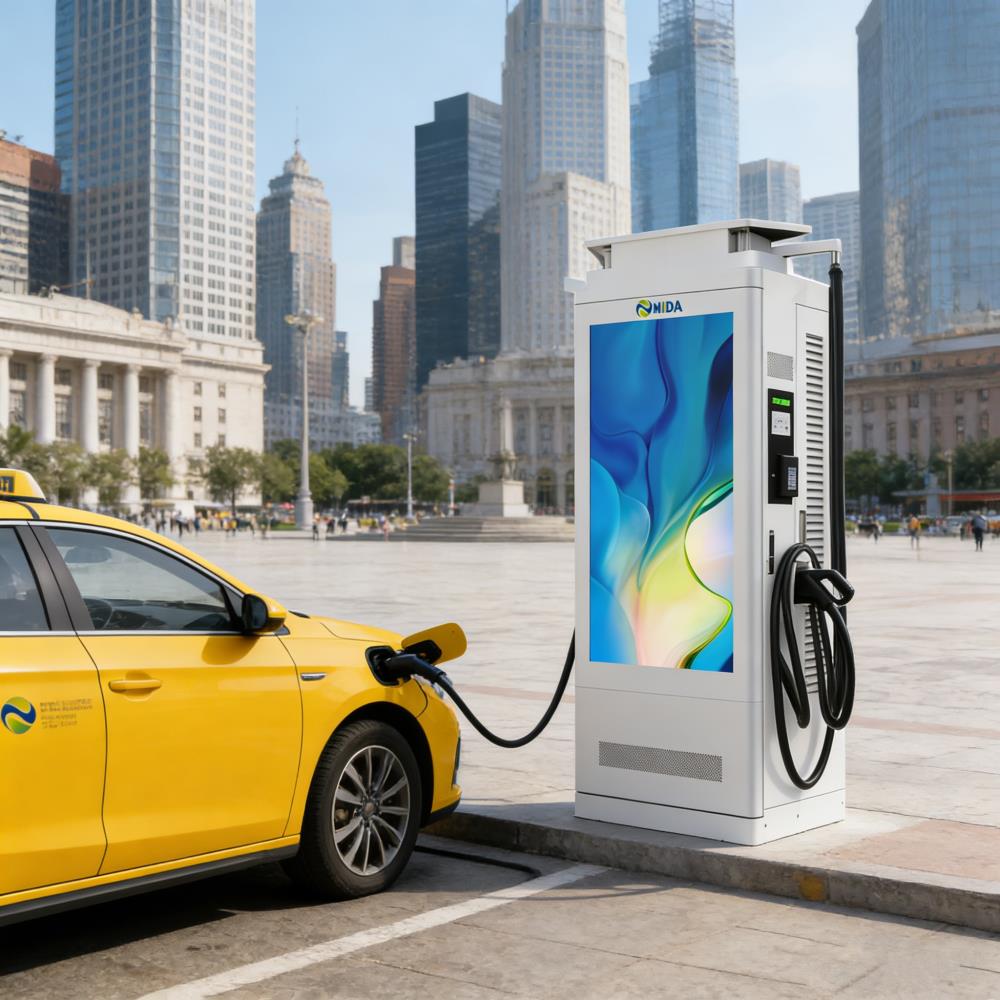
- Ride-Hail & Taxi Hubs — High-turnover charging between shifts; 1000V range serves mixed passenger platforms; the screen shows driver incentives and local ads during the 40–70 minute session.
- Municipal & Utility Service Yards — Service vehicles of mixed architectures charge overnight; the screen displays maintenance notices and public-service announcements; contract billing assigns costs to departments.
- Corporate & Logistics Fleets — Pool vehicles and distribution trucks share depot capacity; load management coordinates multiple cabinets on constrained connections; ISO 15118 automates authentication for driver convenience.
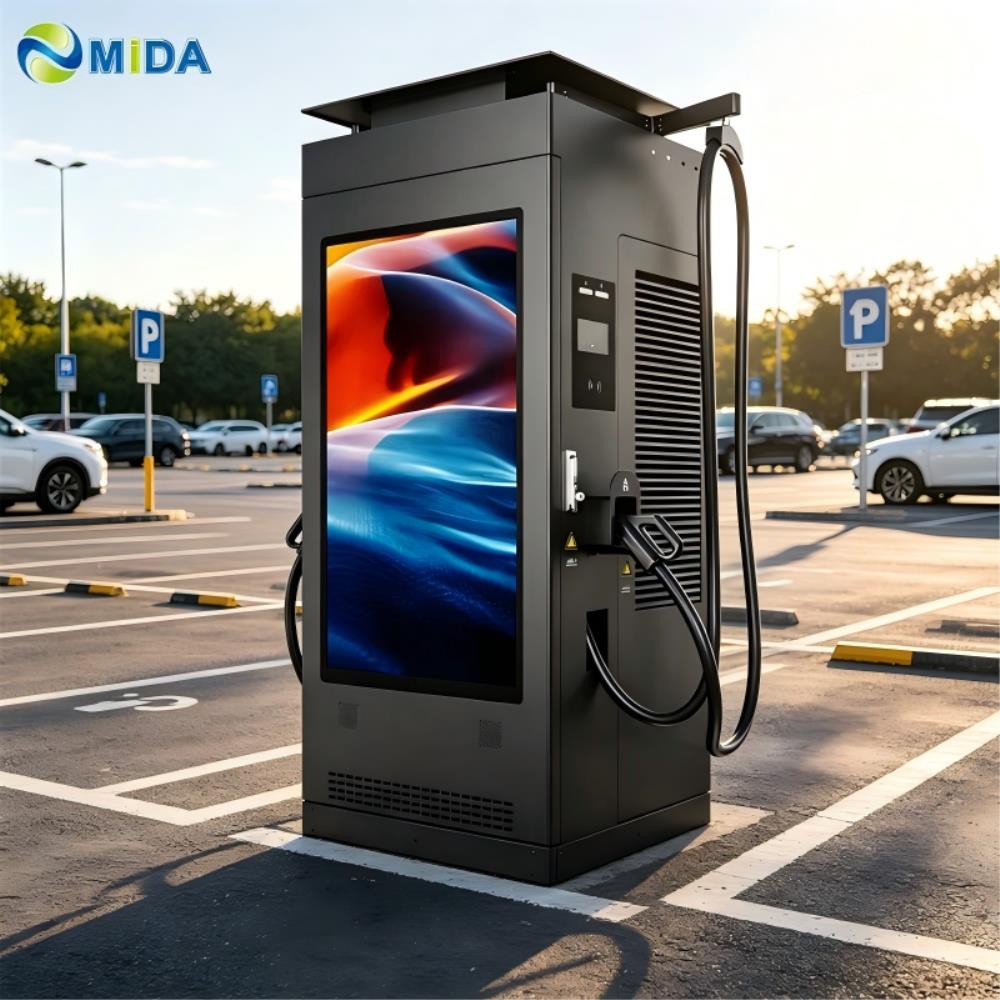
Installation in depots follows an industrial pattern: transformer and switchgear assessment, concrete pads or plinths, armored cabling per local code, and commissioning with the fleet’s charging platform. Load management configuration is critical — the station coordinates with other cabinets and the depot’s energy management system to maximize throughput within the available connection. Typical install time is 1–3 days per cabinet.

Operationally, depot utilization targets are 2–4 sessions per bay per day for shift-based fleets (each session being a substantial charge), with energy throughput of 150–400kWh per cabinet daily. Maintenance is quarterly inspection plus annual service; firmware and content updates are remote. For the fleet operator, the dual-gun design, wide voltage range, and management integration translate directly into lower capital cost, higher uptime, and lower energy cost per kilometer driven.
8. FAQ
Q1: Why 120kW for fleet charging? 120kW delivers a full charge for typical vans and passenger EVs in 40–70 minutes, matching shift and turnaround windows, while fitting depot grid connections better than ultra-fast units. Dual guns double throughput per cabinet.
Q2: What does the 1000V wide voltage range mean for a mixed fleet? It means every vehicle charges at its rated power: 400V passenger platforms, 800V commercial platforms, and intermediate architectures all draw full current. A 500V-capped charger would throttle 800V vehicles and break shift windows.
Q3: How does dual-gun charging work in a depot? Two vehicles charge simultaneously with dynamic power sharing — 60kW+60kW, or the full 120kW to one vehicle, rebalancing in real time. The station adapts automatically to mixed session needs.
Q4: Can the advertising screen be used for internal depot communication? Yes — and it is a primary use case. Shift schedules, safety briefings, vehicle assignments, and KPI displays run on the screen, while spare inventory is sold to local advertisers via the CMS.
Q5: How does the station integrate with fleet management systems? OCPP 1.6J connects to any OCPP-compliant fleet charging platform; contract billing, per-vehicle session reporting, RFID/app authentication, and ISO 15118 Plug & Charge are supported out of the box.
Q6: What happens during a power module failure? The N+1-capable modular design keeps the station charging at reduced capacity while the failed module is hot-swapped — typically one technician visit, minimizing depot downtime.
Q7: Can multiple cabinets share one grid connection? Yes. The station supports depot-level load management and time-of-use scheduling, coordinating all cabinets on the available capacity and shifting charging to off-peak tariffs to cut energy cost.

Products categories
-
180kw 240kW DC Ultra Fast EV Charger Station OC...
-
Level 3 EV DC Charger Electric Car Charging Sta...
-
240kw 300kw 360kw 420kW Fast Charging Station F...
-
120KW 160KW 180kW 200kw Fast EV Charger Station...
-
420KW CCS2 New energy electric vehicle Charging...
-
360KW New energy electric vehicle Charging station