


1. Introduction
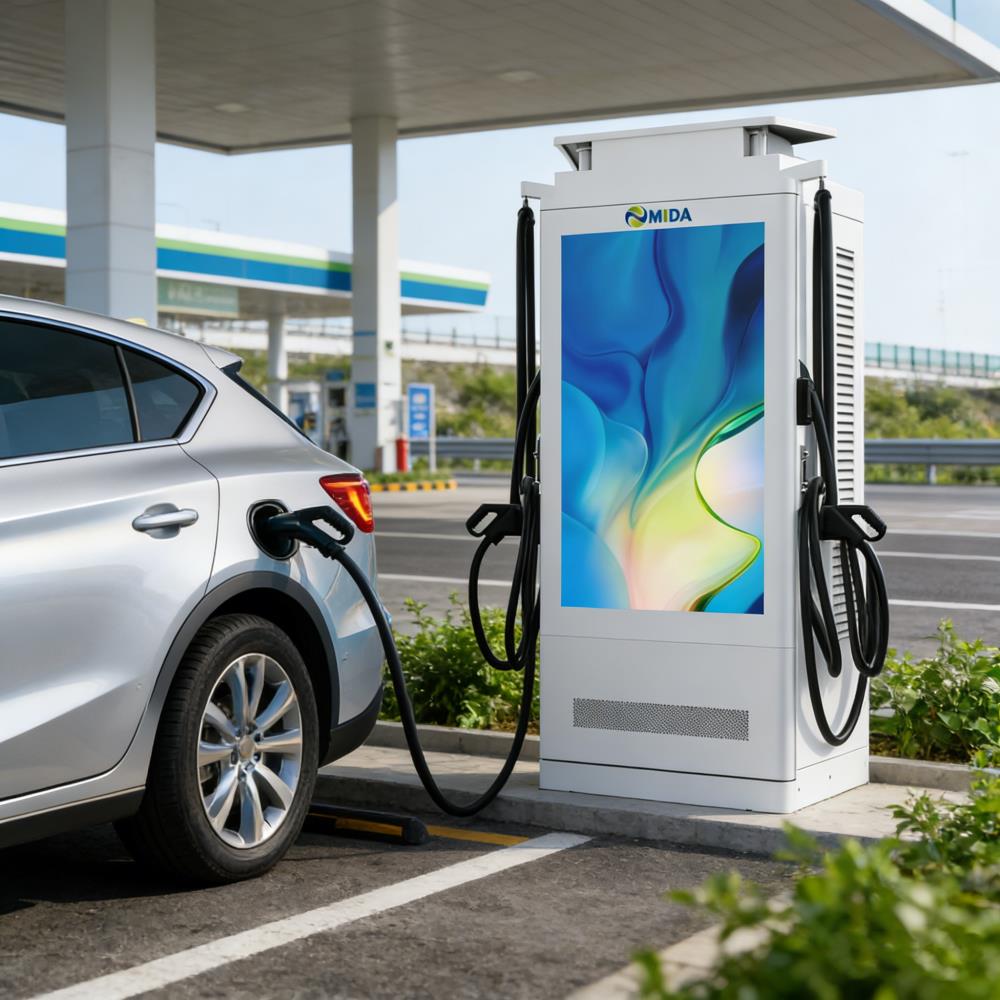
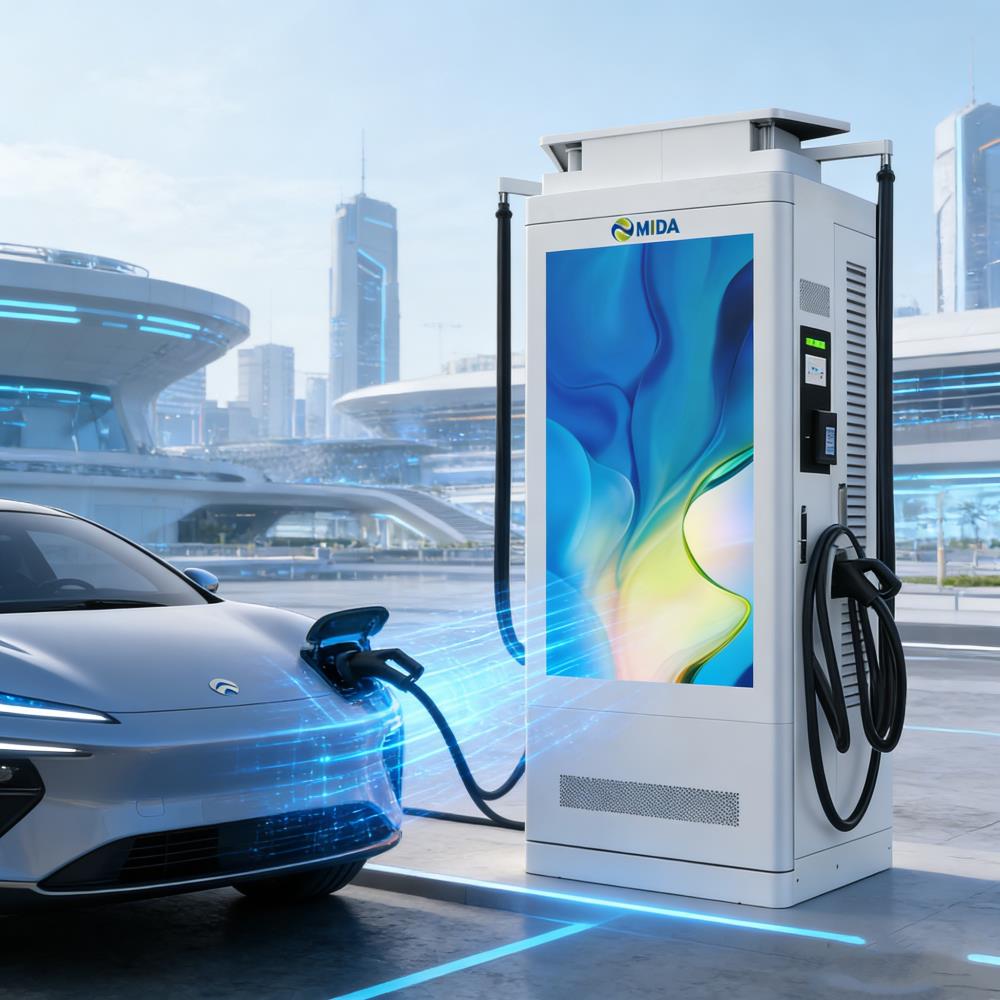
European and Middle Eastern markets are now in the scale-up phase of EV charging deployment, and the competitive landscape has shifted from “first to install” to “best operated.” Utilities, oil-and-gas retailers, supermarket chains, and municipal operators are all looking for charging equipment that maximizes uptime, minimizes total cost of ownership, and — increasingly — creates a secondary revenue stream that improves the unit economics of every installed bay. The MIDA 120kW/180kW DC EV Charger Station with a 43-inch Digital Media Display answers this market need with a deliberately balanced specification: two CCS2 guns, a compact 43-inch advertising and information display, and full CE certification for frictionless deployment across the EU, UK, and GCC regions.
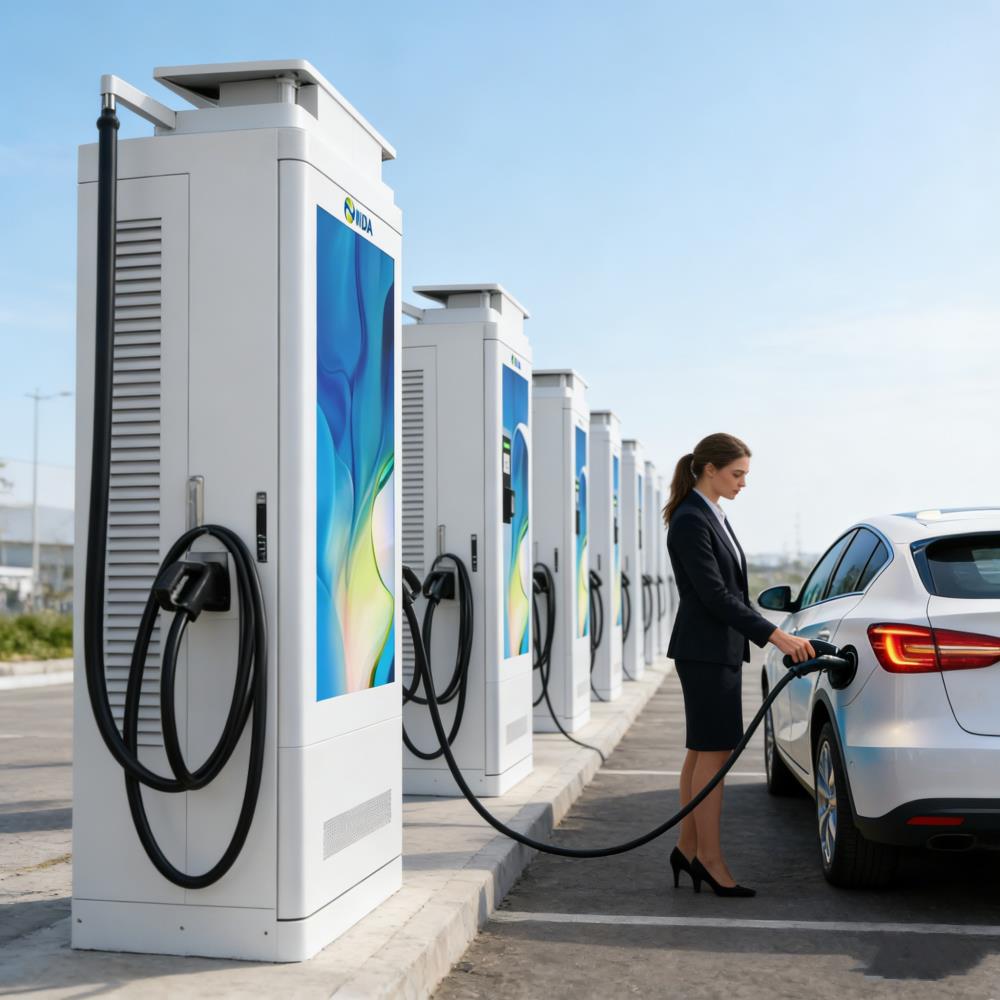
The 120kW and 180kW power levels are strategically chosen. They are high enough to deliver a meaningful fast-charging experience — enough to add 200–250km of range during a 20–30 minute shopping stop — while remaining compatible with the grid connections and transformer capacities that already exist at most commercial sites. This distinguishes the product from 240kW+ ultra-fast units that require dedicated high-voltage connections and often sit underutilized during the early years of a site’s life. The 43-inch display is the ideal size for this market segment: large enough to be a genuine advertising and communication surface with strong visual impact, yet compact enough to keep the station’s footprint, weight, and cost in the range where volume economics make sense for multi-site rollouts.
Positioning summary: this station is the workhorse of the MIDA advertising-charger family. It is the model a retail chain installs across 50 supermarket car parks, or a CPO deploys in a city-wide network of 100 locations. Every element — the power stage, the display, the connector configuration, and the certifications — has been optimized for repeatable, certified, low-risk deployment in regulated markets. The dual CCS2 guns ensure that every modern EV sold in Europe and the Gulf states can charge, and the CE marking, backed by full technical files and declarations of conformity, removes the administrative friction that delays commissioning in jurisdictions with strict import and electrical-safety regimes. The remainder of this document details the display economics, power electronics, safety case, software ecosystem, specifications, and deployment scenarios for this platform.

2. Interactive Advertising Screen: The 43-Inch Digital Media Display
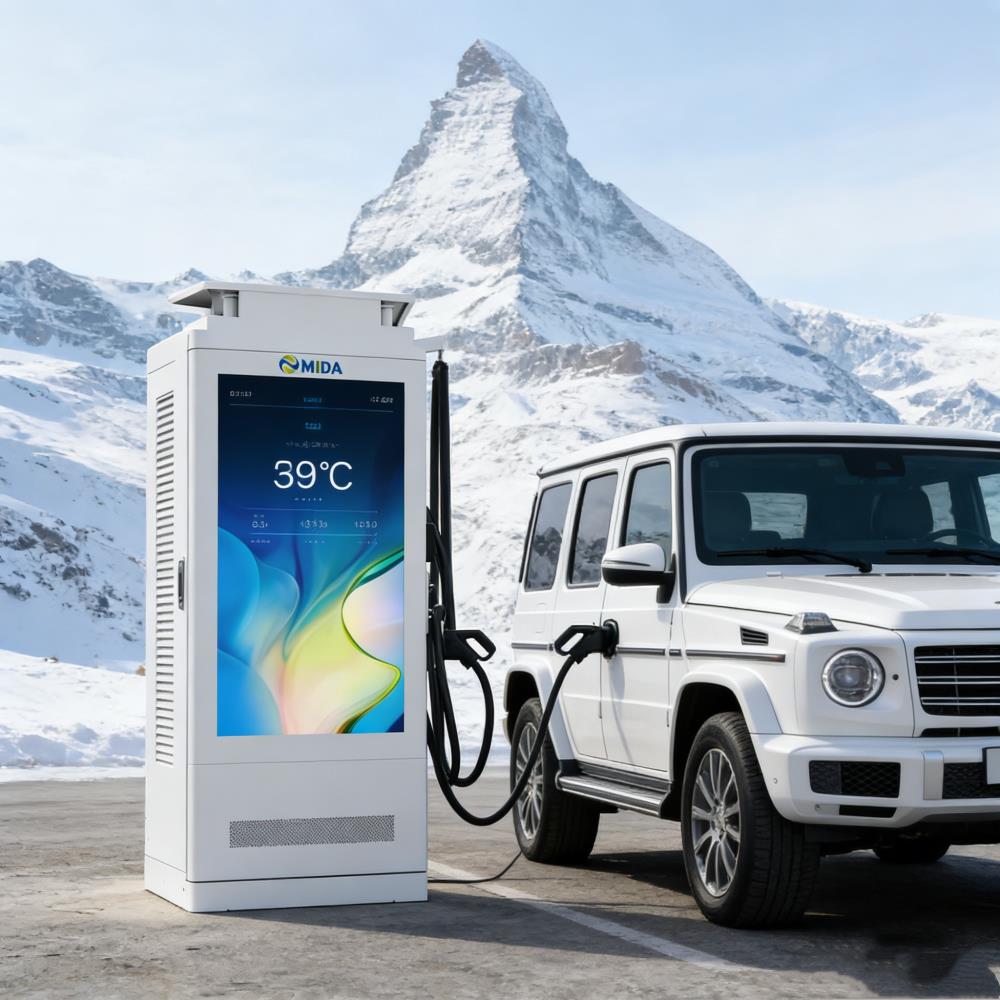
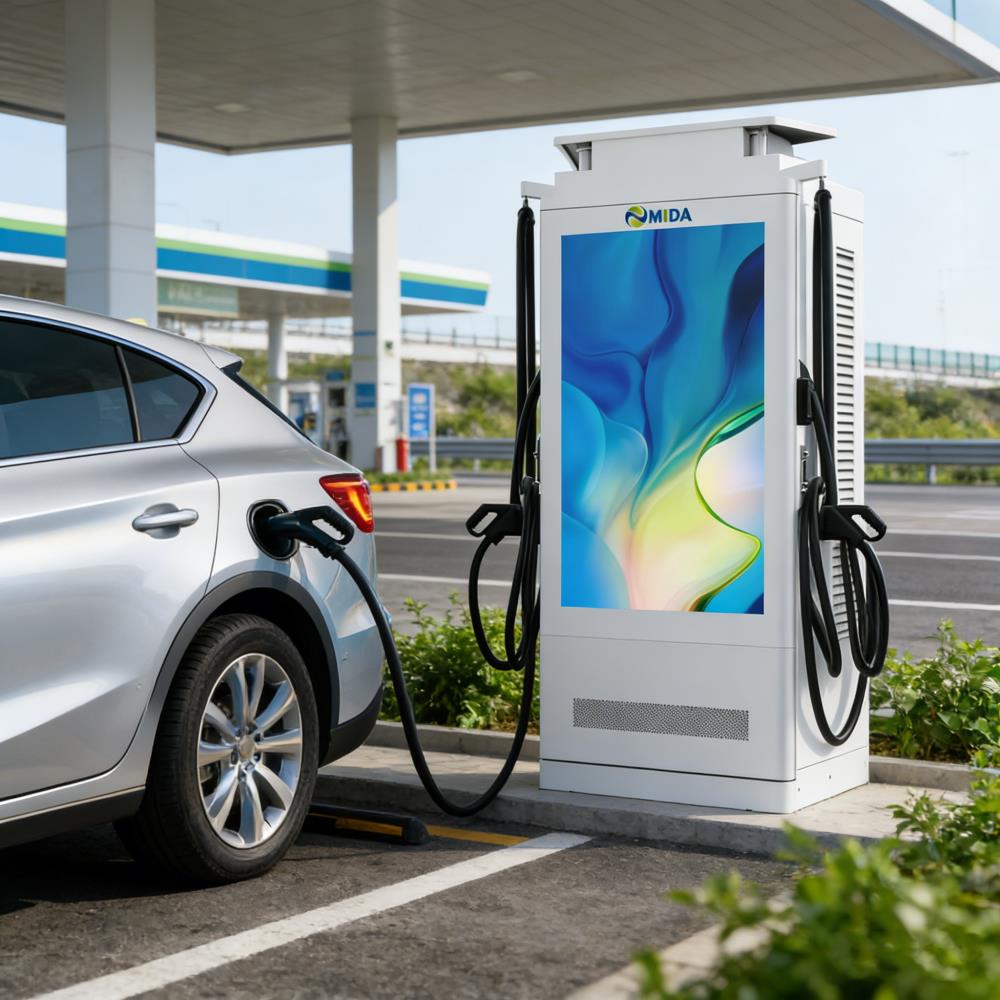
The 43-inch display on this station is engineered for a specific purpose: high-frequency, multi-location advertising at a capital cost that makes sense when deploying dozens of units. At 1920×1080 Full-HD resolution and 2000 nits peak brightness, the panel delivers the same daylight visibility as larger sibling models, but in a footprint that reduces the overall station width and weight. For a supermarket car park or a petrol station forecourt, this compactness matters: it fits into standard parking bays without overhanging, keeps shipping and installation costs lower, and presents a less imposing visual profile that planners and local authorities find easier to approve.
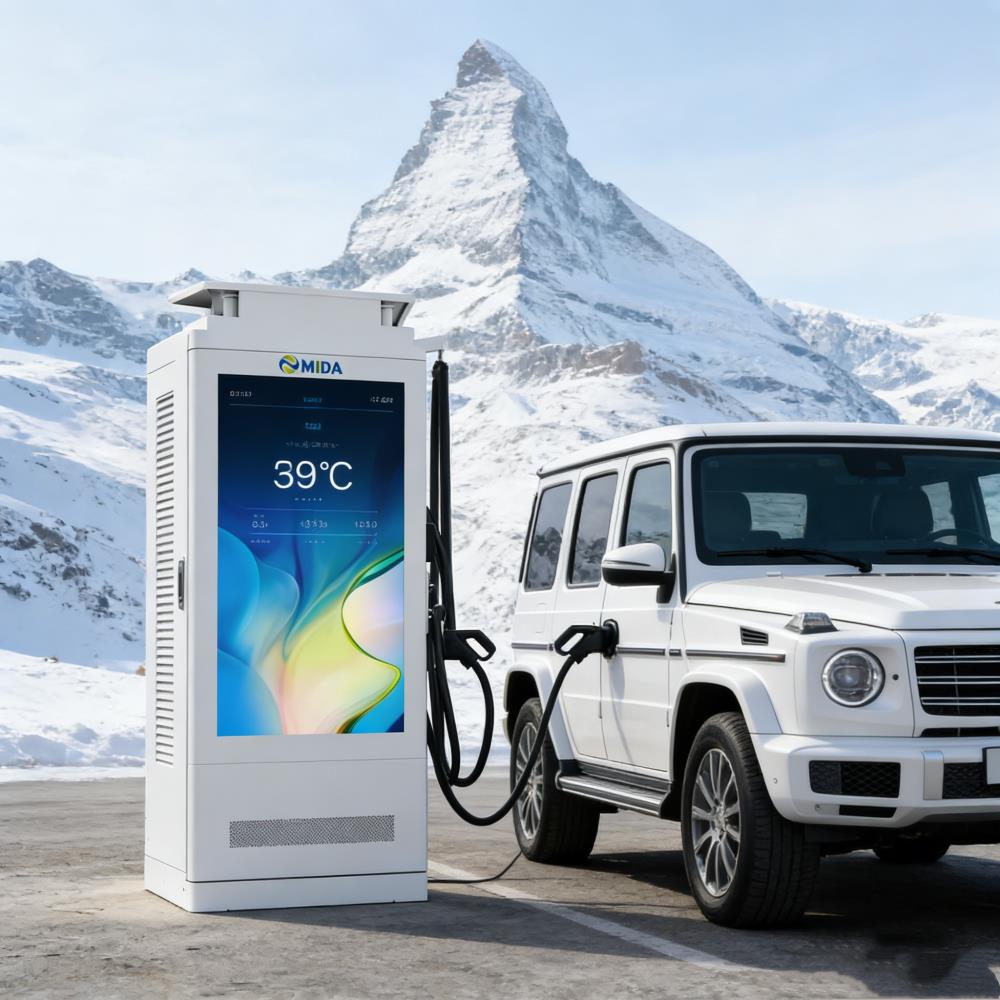
The commercial logic of the 43-inch size deserves examination. Industry data on DOOH advertising shows that viewer recall and engagement are driven less by absolute screen size than by position, dwell time, and content quality. A 43-inch panel mounted at eye level on a charger that a driver stands beside for 20–30 minutes delivers sustained, high-attention exposure — a media property that outperforms much larger screens seen for only a few seconds from a passing car. For advertisers, this is “dwell-based” inventory: verifiable, high-intent audiences in a commercial context. Typical rates in European retail locations range from €6 to €18 CPM for this class of inventory, and a well-positioned unit in a busy supermarket car park can log 8,000–20,000 impressions per day, translating to €50–€250 per day in gross media value.
The revenue model supports multiple approaches. A retail chain can sell slots to national brands (FMCG, automotive, telecom) through its media arm; a CPO can pool inventory across its network and sell regionally or programmatically; and site owners can reserve day-parts for their own campaigns. The built-in CMS handles all of it: multi-tenant playlists, day-parting, geo-targeted content, and split-screen modes that keep live charging status — power, state of charge, time remaining — permanently visible alongside the advertising content. This split-screen design is a usability and trust feature: drivers never have to hunt for session information because an ad covered it, and operators avoid the “advertising hiding functionality” complaint that plagues poorly integrated displays.
Hardware robustness matches the charger itself. The 43-inch panel is protected by 4–6mm tempered glass with IK10 impact resistance, housed in an IP65 enclosure, and cooled by a dedicated heat-pipe system that keeps the backlight within specification even during summer peak charging hours. The auto-brightness sensor steps the panel down at night, cutting energy consumption to roughly 120–200W average — negligible against the station’s throughput — and satisfying municipal light-pollution rules. With a 50,000-hour rated lifetime, the display is designed to outlast the initial financing term of the hardware, and its modular construction allows field replacement within minutes if ever required.
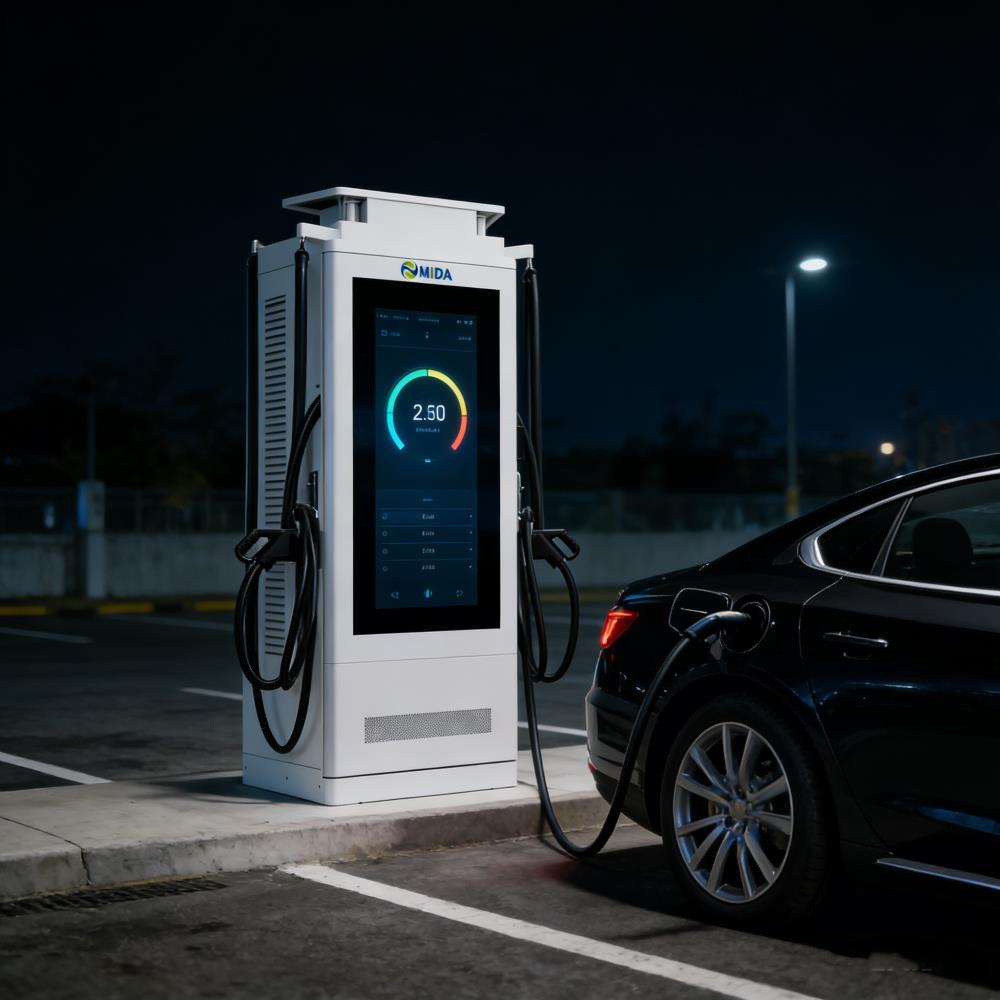
From a profit-potential standpoint, the 43-inch screen on a 120–180kW charger typically adds 20–35% to the site’s gross margin per bay in the first year of operation, with the advertising line growing as utilization rises. The key insight for operators is that media revenue is a function of impressions, and impressions are a function of sessions: the dual-gun design, roaming connectivity, and competitive charging prices all drive session count, which in turn feeds the advertising P&L. The two revenue streams are mutually reinforcing rather than independent, and the CMS analytics provide the impression counts and session data needed to report both to stakeholders.
3. High-Performance Charging Technology: 120kW/180kW with Dual CCS2 Guns
The power stage of this station is a mature, field-proven platform built around high-efficiency DC modules. Output power is configured at 120kW or 180kW at the factory, using hot-swappable module slots that also allow on-site upgrades within the same cabinet. For a network operator, this modularity simplifies spare-parts management: a single module SKU serves the entire fleet, and a failed module can be swapped in minutes by a technician with basic training, without taking the whole station offline.
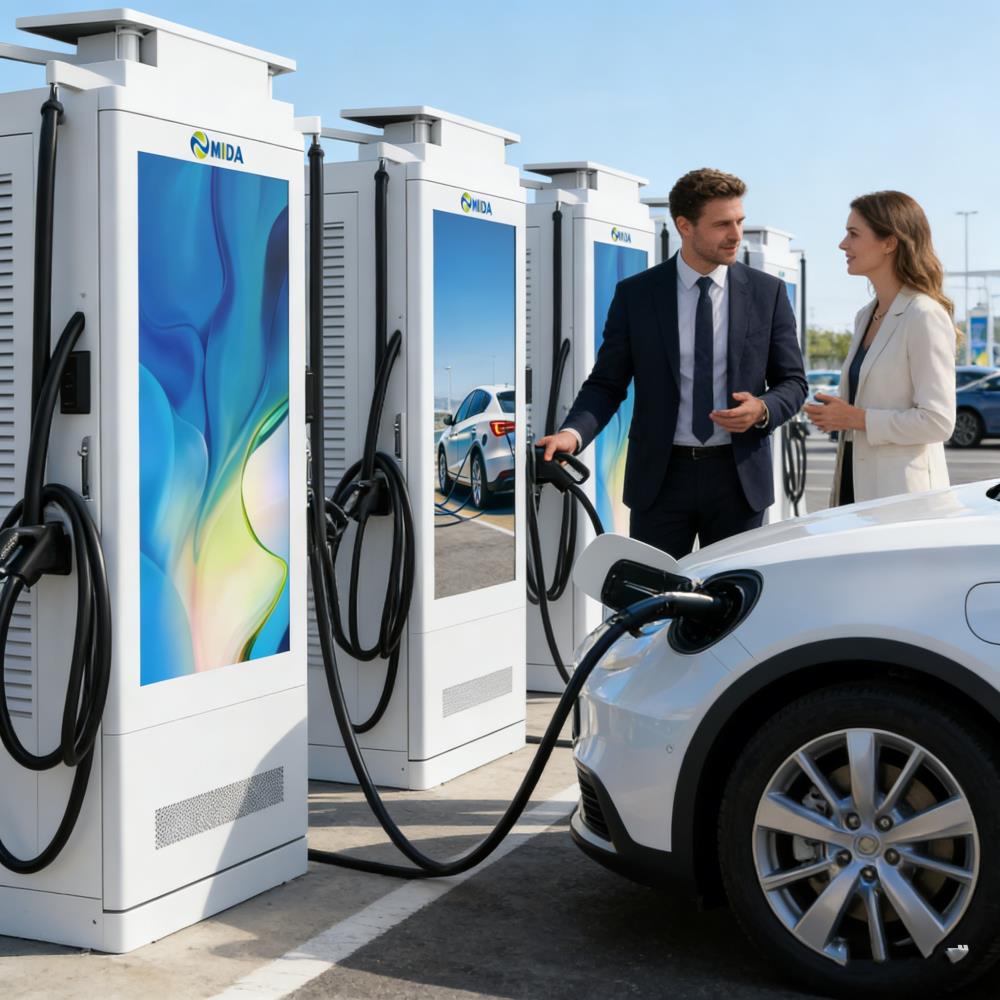
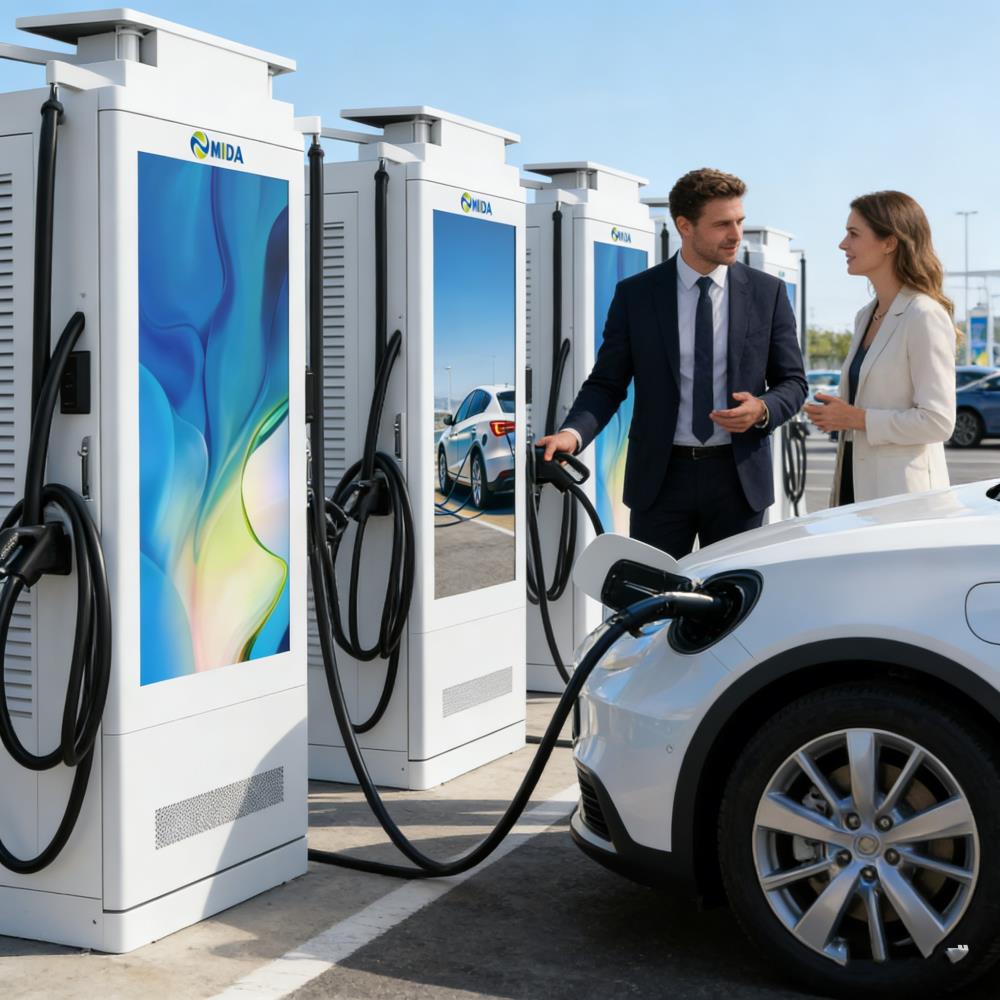
Dual CCS2 guns are standard on both power tiers, and the dynamic power-sharing logic distributes output intelligently. With 120kW: 60kW+60kW to two vehicles, or the full 120kW to a single vehicle. With 180kW: 90kW+90kW, 120kW+60kW, or 180kW to one vehicle. The controller rebalances power in real time based on each vehicle’s charging curve, so a vehicle finishing its session releases power to the other bay automatically — maximizing throughput and minimizing queue times, which are the two metrics that most directly affect both charging revenue and ad impressions.
The 150–1000V DC output range is a core technical asset. It covers legacy 400V vehicles, current mainstream models, and next-generation 800V platforms, ensuring the station remains relevant as the vehicle parc evolves over its 10+ year design life. Maximum continuous current per gun is 250A, sufficient for rapid charging of large SUVs and vans, and the charging curve is managed jointly by the vehicle and the station per DIN 70121 / ISO 15118, with the station enforcing its own thermal and electrical limits. Peak module efficiency of 95–96% keeps energy losses — and therefore operating cost and cooling load — low.
Input requirements are deliberately aligned with real-world commercial sites: 400V AC three-phase, 50/60Hz, ±15% tolerance, compatible with standard commercial distribution boards and, for the 120kW tier, often achievable without transformer reinforcement. The station supports local load management, so multiple units can share a constrained connection without tripping the main breaker — a critical feature for supermarket chains retrofitting existing stores, where grid capacity is rarely abundant. Emergency stop, insulation monitoring, and contactor weld detection are integrated into the charging logic, and the unit performs a pre-session safety check before every charge.
For fleet and multi-standard needs, connector options can be adapted: while dual CCS2 is standard for Europe and the Gulf, the platform can be configured with CCS1, CHAdeMO-capable variants, or hybrid combinations for specific markets, and NACS adapter readiness covers the North American trend. The station is delivered with the charging protocols pre-configured for the destination market, and OCPP 1.6J compliance ensures backend interoperability out of the box.
4. Safety and Reliability
For equipment deployed across dozens of sites in regulated markets, certification is not a box-ticking exercise — it is the gate that determines whether a project proceeds on schedule or stalls in permitting. The MIDA 120/180kW station carries CE marking under the Low Voltage Directive (2014/35/EU), EMC Directive (2014/30/EU), and Radio Equipment Directive (2014/53/EU) where applicable, with complete technical documentation, risk assessments, and declarations of conformity available to customers and authorities. UKCA marking covers the UK market. The design additionally complies with the core charging standards IEC 61851-1/23, IEC 62196-1/2/3 for connectors, and ISO 13849 for safety-related control functions.
The electrical protection architecture is layered for redundancy. AC-side Type II surge protection clamps lightning-induced and switching transients. Residual current protection is implemented with Type A RCDs plus 6mA DC leakage detection — the configuration mandated for DC charging installations to guard against the specific DC fault signatures that standard RCDs cannot see. DC-side insulation monitoring runs before and during every session, with automatic shutdown in milliseconds on fault detection. Contactor weld monitoring per gun blocks unsafe sessions and flags maintenance needs. An emergency stop is provided on the cabinet, and remote de-energization is possible through the backend.
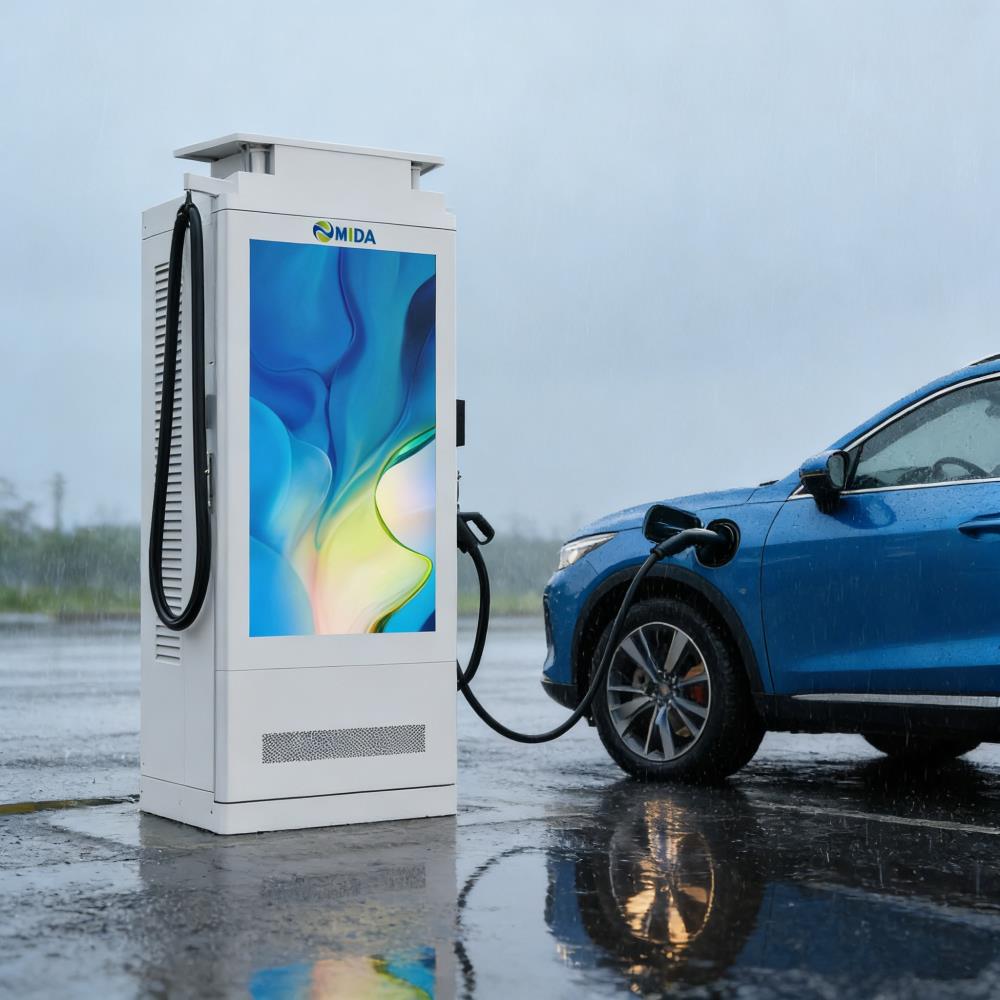
Physical protection matches outdoor commercial duty: the cabinet is IP55-rated against dust and water jets, the display housing is IP65, and both cabinet and screen glass carry IK10 impact ratings. The enclosure is fabricated from powder-coated steel with marine-grade corrosion treatment for coastal installations, and all cable entries are glanded and sealed. The station operates from -25°C to +55°C ambient with graceful derating at extremes rather than hard shutdowns, and the intelligent cooling system modulates fan speed to balance component temperature and acoustic noise — a practical consideration for residential-adjacent retail sites where loud fans attract complaints.
Reliability is engineered at the component level: the power modules use industrial-grade IGBT/SiC devices with conservative derating, the control board is conformal-coated against humidity and condensation, and the communication hardware includes redundant pathways so that a failed cellular modem does not strand a charging session. Mean time to repair is minimized by modular construction — modules, fans, display, and communication boards are all field-replaceable — and MIDA’s service support includes remote diagnostics, spare module stocking, and regional service partnerships. For a 50-site retail rollout, the practical meaning is simple: predictable uptime above 98%, low maintenance cost, and a single supplier accountable for the whole unit, not a fragmented assembly of third-party components.
5. Smart Management and Connectivity
OCPP 1.6J compliance is the foundation of the software story. The station registers and communicates with any OCPP-compliant Charge Point Management System, which means the operator — whether a retailer, a CPO, or a municipality — can integrate the units into an existing platform without proprietary gateways or vendor lock-in. OCPP 2.0.1 is available on request for operators preparing for ISO 15118 Plug & Charge and advanced smart-charging use cases.
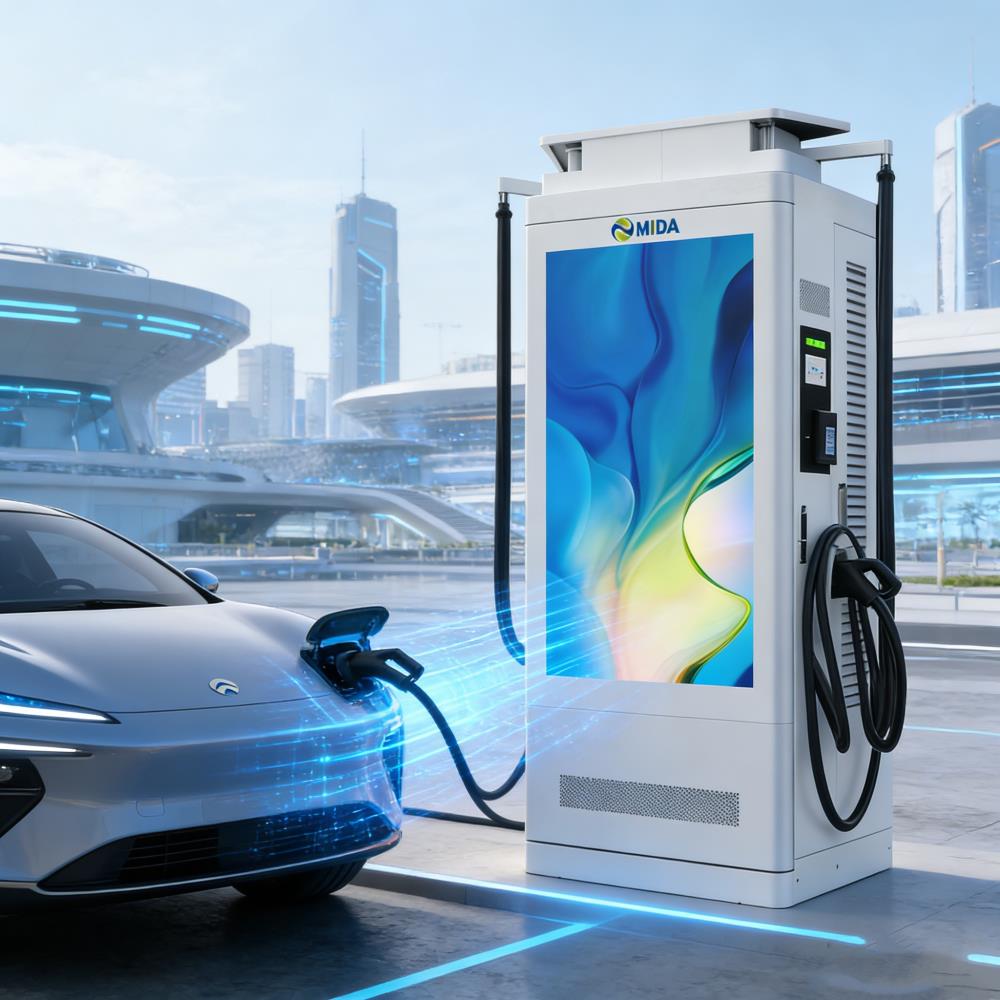
Connectivity is redundant and robust: 4G LTE (5G-ready) via the onboard modem, Wi-Fi, and Ethernet, with RS485 for site-level integration. The station can operate in offline mode — completing charging sessions and caching transaction data locally — and synchronize to the backend when connectivity returns, which is an important resilience feature for sites with intermittent cellular coverage. Authentication supports RFID, QR code, mobile app, and Plug & Charge, letting operators choose the friction level appropriate to their user base. For supermarket deployments, QR and app charging integrated with the store’s loyalty program is a proven pattern: the charge appears on the customer’s account, and the screen can display a coupon validated at checkout.
The backend management system provides real-time visibility across the entire network: session status, power output, energy delivered, revenue, utilization, and fault alerts, all in one dashboard with exportable reporting. Remote operations include over-the-air firmware updates, tariff and pricing configuration (time-of-use, session fees, per-kWh, dynamic pricing), power-limit adjustments, and load-balancing coordination across multiple units on one site. For the advertising function, the CMS is operated through the same connectivity but remains logically isolated: scheduled content plays from local cache even during backend outages, and the charging and media systems never interfere with each other.
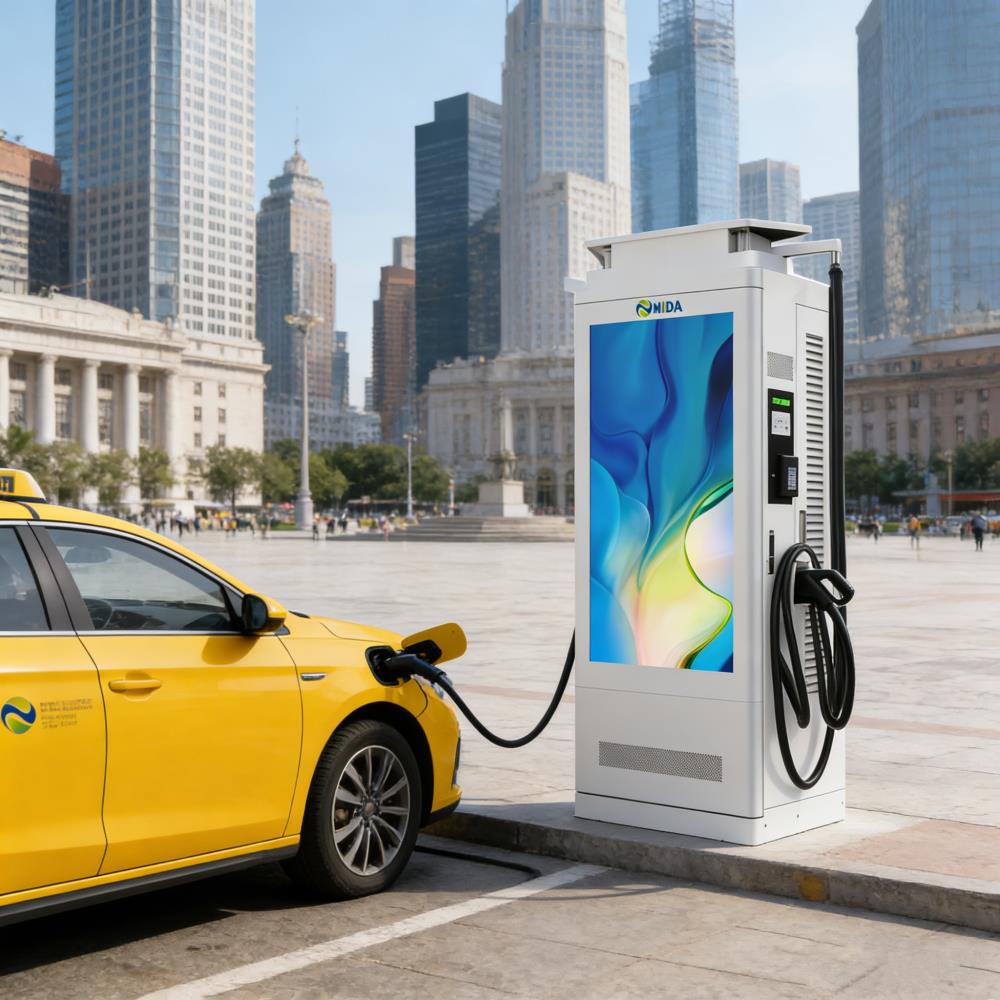
The combination of OCPP 1.6J, dual-gun throughput, and advertising CMS makes this station particularly attractive to operators who want to participate in roaming networks. By activating roaming through their CPMS, a retailer’s chargers become visible in the major EV navigation and payment apps, increasing utilization and, consequently, ad impressions. All transaction and session data is exportable for finance integration, and the system supports role-based access for multi-team operations (site staff, media sales, finance, support).
6. Detailed Technical Specifications
| Parameter | Specification |
|---|---|
| Model | MIDA 120kW / 180kW DC EV Charger Station with 43″ Digital Media Display |
| Output Power | 120kW or 180kW (factory-configurable, module upgrade path) |
| Input | 400V AC ±15%, 3-phase, 50/60Hz |
| Output Voltage | 150–1000V DC |
| Output Current | Up to 250A per gun |
| Charging Connectors | Dual CCS2 (standard); CCS1 / hybrid / GBT / NACS-ready options |
| Charging Protocols | OCPP 1.6J (2.0.1 optional), DIN 70121, ISO 15118 Plug & Charge ready |
| Display | 43-inch TFT-LCD, 1920×1080 FHD, 2000 nits, auto-brightness |
| Display Protection | 4–6mm tempered glass, IK10, IP65 housing |
| Enclosure Rating | IP55 cabinet, IK10 vandal resistance |
| Cooling | Intelligent forced-air + heat-pipe (display) |
| Communication | 4G LTE / 5G-ready, Wi-Fi, Ethernet, RS485; RFID/QR/App/Plug & Charge |
| Efficiency | ≥95% peak module efficiency |
| Operating Temperature | -25°C to +55°C (graceful derating) |
| Certifications | CE (LVD/EMC/RED), UKCA, IEC 61851-1/23, IEC 62196, ISO 13849 |
| Dimensions (W×H×D) | ~700×1900×400mm, floor-mounted |
| Warranty | 2-year standard; 5-year extended option |
These parameters define a station that is deliberately aligned with the 120–180kW commercial segment: strong per-session performance, dual-bay throughput, market-standard connectors, full certification, and a compact display that preserves site flexibility. When comparing tenders, operators should weight output voltage range, power-sharing flexibility, and certification depth equally with headline kilowatt figures.
7. Use Cases & Installation
This station is engineered for repeatable, multi-site deployment, and the use cases reflect that:
- Supermarket & Hypermarket Car Parks — 120kW units near store entrances serve the 30–60 minute shop-and-charge dwell pattern. The 43-inch screen promotes store offers and national brands; dual guns halve queue risk at peak times; and the compact footprint fits standard bays.
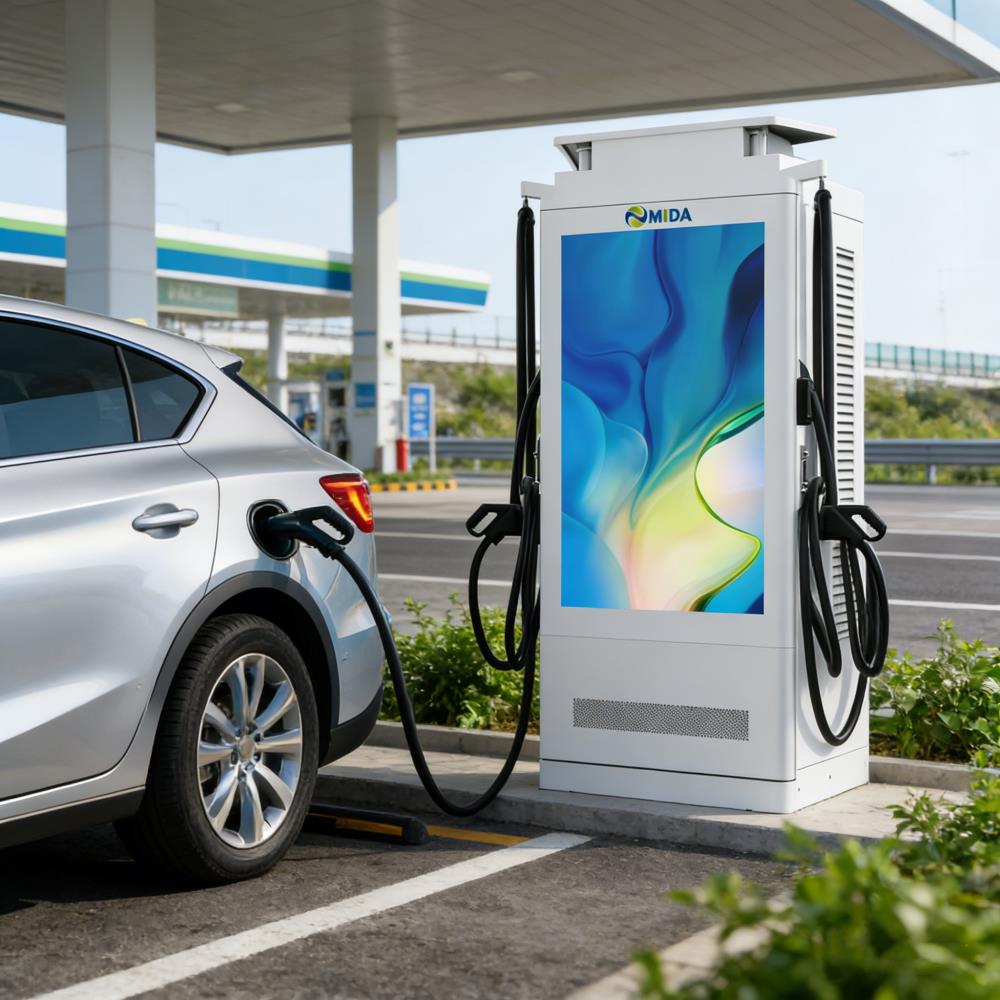
- Petrol Station Forecourts — 180kW units replace or complement conventional fuel islands. Drivers expect a quick top-up; the screen monetizes the 20-minute session with local business and FMCG advertising while the station integrates with the site’s payment ecosystem.
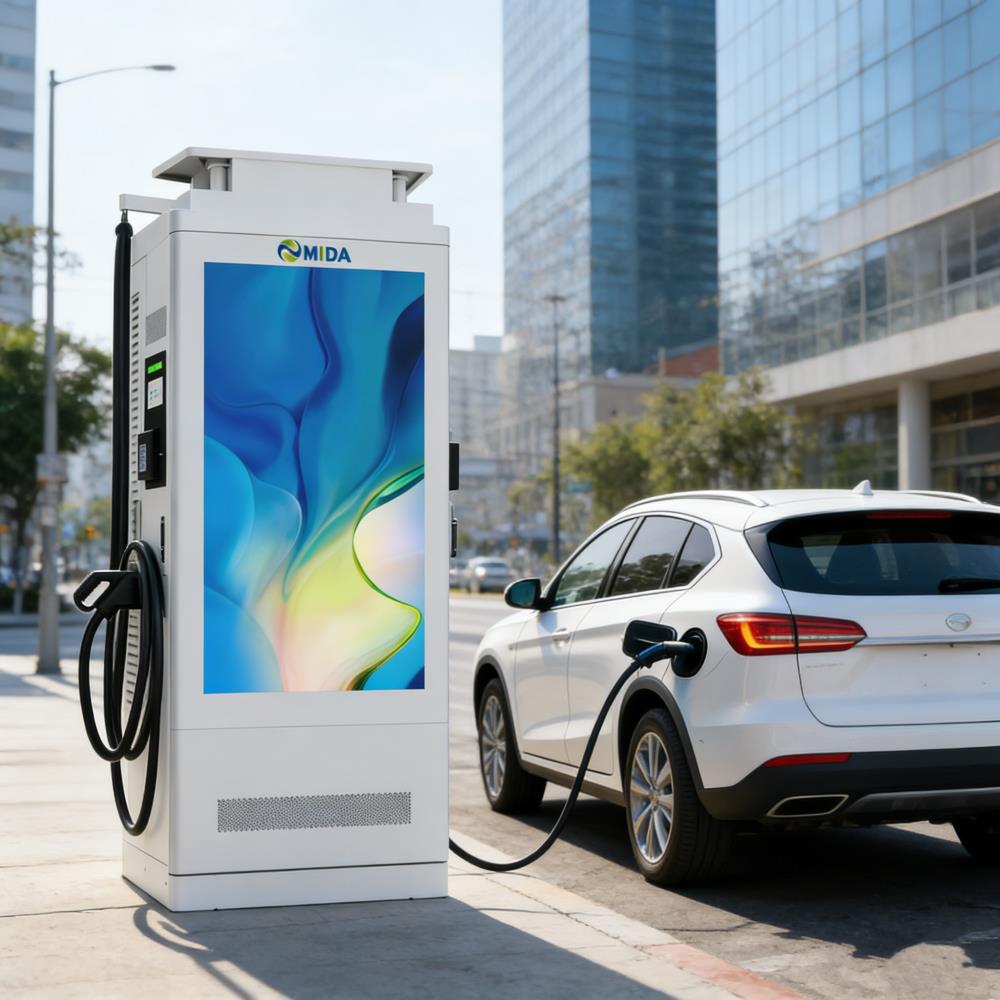
- City Parking Garages — 120kW configurations on upper levels serve commuters and residents; the screen doubles as wayfinding and municipal information display; load management coordinates multiple units on constrained garage feeders.
- Highway Service Areas & Retail Rest Stops — 180kW units handle high turnover; the dual-gun design and dynamic power sharing keep queues moving; advertising rates are highest here due to captive audiences.
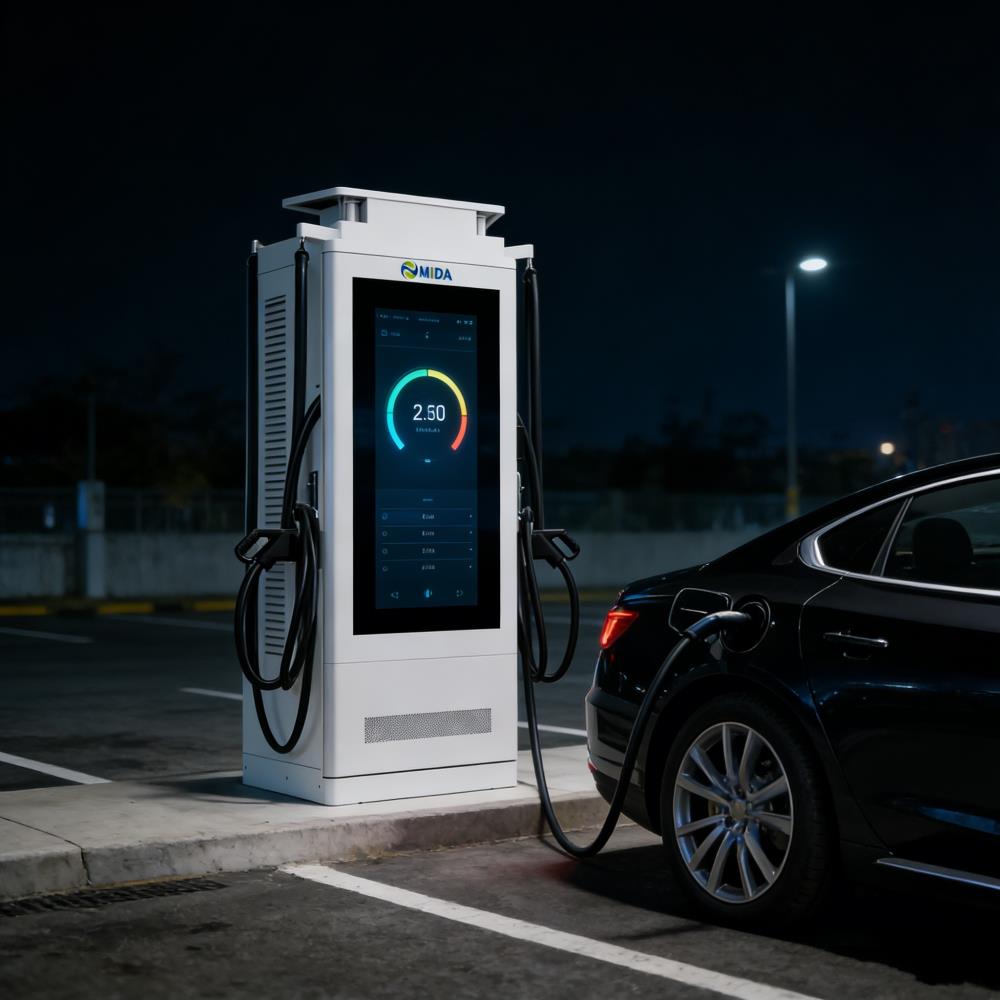
Installation follows a standardized process suited to multi-site rollouts. Site survey confirms grid capacity and civil conditions; the integrated cabinet minimizes on-site assembly; commissioning covers connectivity, backend registration, tariffs, and a full-power test. Typical install time is 1–3 days per site depending on civils. Grid considerations: 120kW units generally integrate with existing commercial supplies (subject to survey), while 180kW units may require feeder reinforcement or a dedicated transformer. The station supports local load management so multiple units can share capacity intelligently.
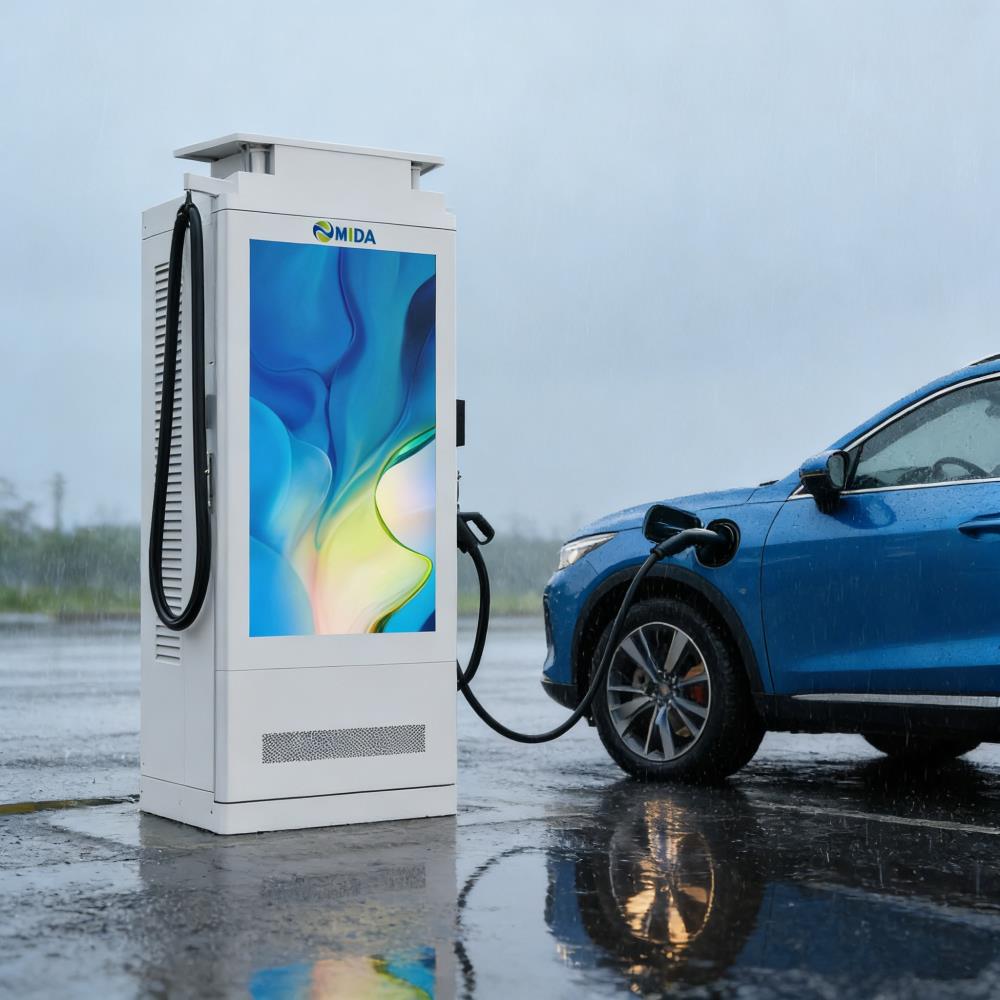
Operationally, operators should expect 8–14 sessions per day per bay in year one, scaling with EV adoption and roaming visibility. Maintenance is quarterly inspection plus annual filter service; firmware and configuration updates are remote. With MIDA’s modular spares and diagnostics, a technician can resolve most faults on a single visit, keeping the network’s availability high and its operating cost predictable — the decisive factors for a fleet of 50 or 500 units.
8. FAQ
Q1: Why choose 120kW/180kW instead of higher power? These levels deliver a genuine fast-charging experience (200–250km in 20–30 minutes) while remaining compatible with existing commercial grid connections. Ultra-fast 240kW+ units often require transformer upgrades and sit underutilized in early-stage sites; 120–180kW optimizes return on capital in most retail locations.
Q2: Can the 43-inch screen really generate meaningful ad revenue? Yes. Positioned at eye level with 20–30 minute dwell time, a 43-inch panel delivers 8,000–20,000 impressions per day in busy retail locations. At €6–€18 CPM, gross media value of €50–€250 per day is realistic, adding 20–35% to site gross margin.
Q3: What does CE certification cover on this product? CE marking covers the Low Voltage, EMC, and Radio Equipment Directives, with full technical files and declarations of conformity. The design also complies with IEC 61851-1/23, IEC 62196, and ISO 13849, easing permitting and insurance across the EU and UK.
Q4: Can both guns charge simultaneously? Yes. Dual CCS2 guns with dynamic power sharing distribute 120kW or 180kW intelligently — e.g., 60+60, 90+90, or 120+60 — rebalancing in real time as vehicles complete their sessions.
Q5: Which vehicles are compatible? All modern EVs: the 150–1000V output covers 400V and 800V architectures, and dual CCS2 connectors serve every current European and Gulf-market EV. Adapter options extend coverage to NACS and other standards.
Q6: Does the screen interfere with the charging session display? No. Split-screen mode keeps charging status (power, state of charge, time remaining) permanently visible alongside ad content, and the media and charging systems are electrically and logically isolated.
Q7: What is the typical installation time and grid requirement? 1–3 days on site for a standard installation. 120kW typically integrates with existing commercial supply after survey; 180kW may need feeder reinforcement. Load management coordinates multiple units on shared capacity.
Products categories
-
360kW Solar Powered DC Fast Charging Station wi...
-
600kW Liquid-Cooled Split DC Fast Charger for P...
-
44kW Floor-Mounted AC EV Charger with Dual Type...
-
Troniq Compact 40kW-200kW Modular Fast DC Charger
-
22kW AC Charging Station Pedestal for Workplace...
-
20kW High Efficiency Electric Vehicle DC Fast C...