

1. Introduction
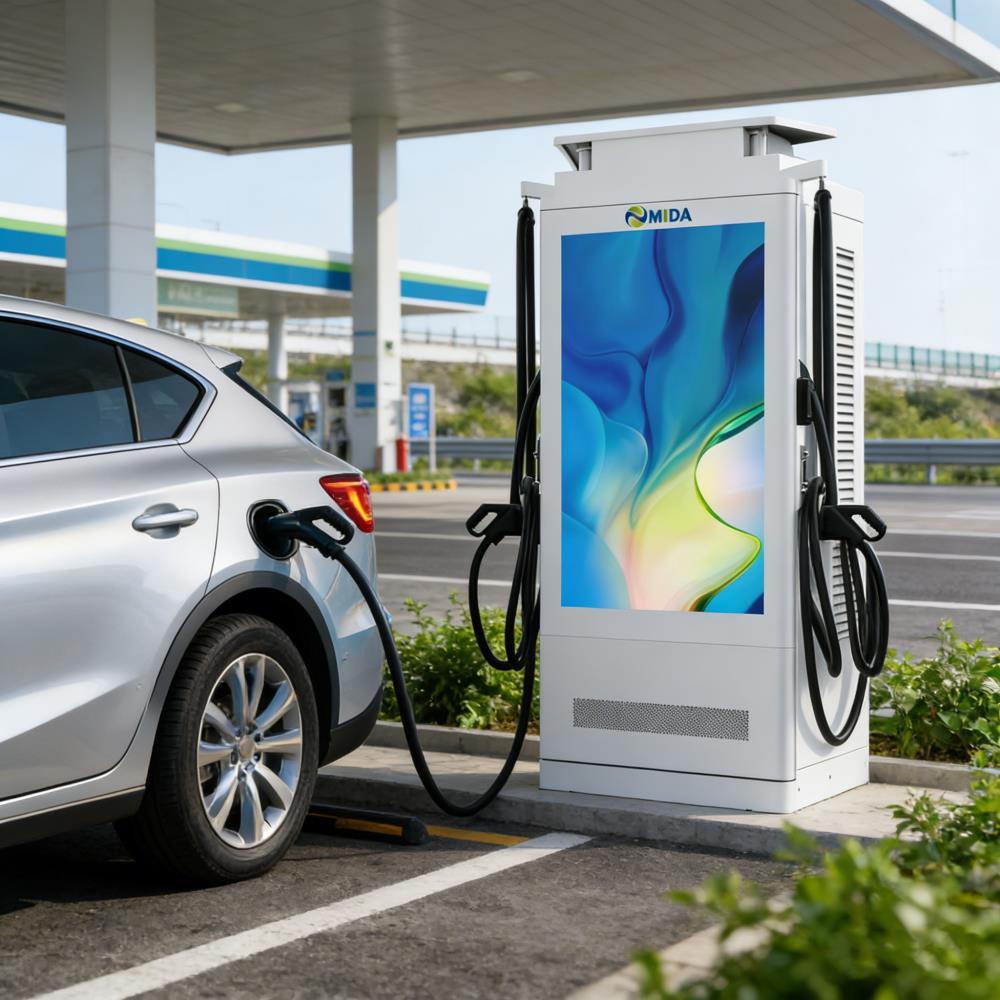
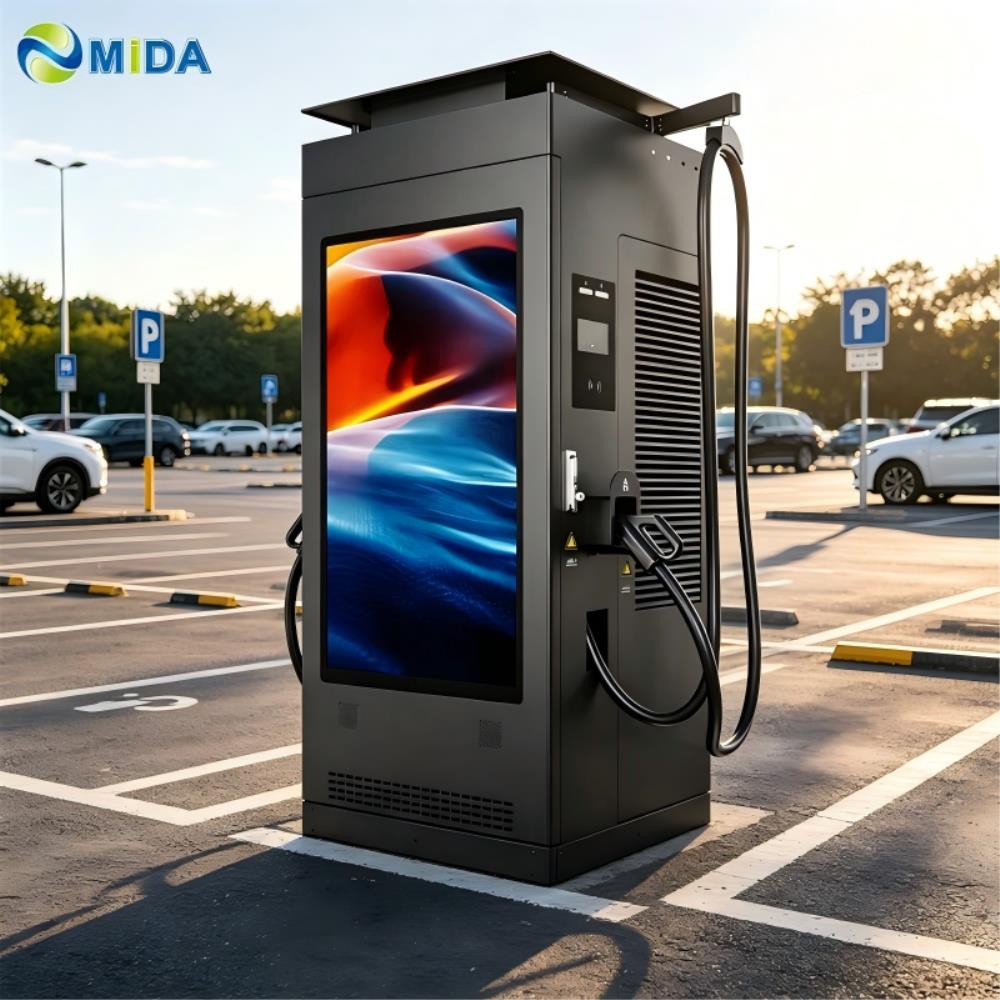
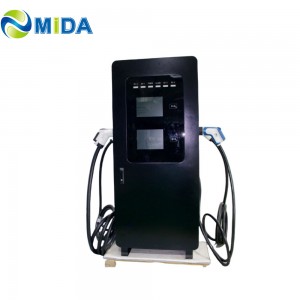
Level 3 DC fast charging is the standard by which public charging networks are judged in North America and increasingly worldwide. Drivers expect a Level 3 charger to deliver a meaningful charge in the time it takes to use the restroom and buy a coffee — and they expect to find it where they actually stop: highway corridors, travel centers, urban convenience hubs, and fleet-adjacent sites. The MIDA 240kW Level 3 DC Fast Charger with 55-inch Outdoor Advertising Screen & Smart App Control is the flagship of the MIDA advertising-charger family, engineered to deliver the full Level 3 experience — 240kW output, 1000V architecture, dual guns — while adding the two capabilities that make a charging asset financially distinctive: a large outdoor advertising screen and a full smart-app control ecosystem.
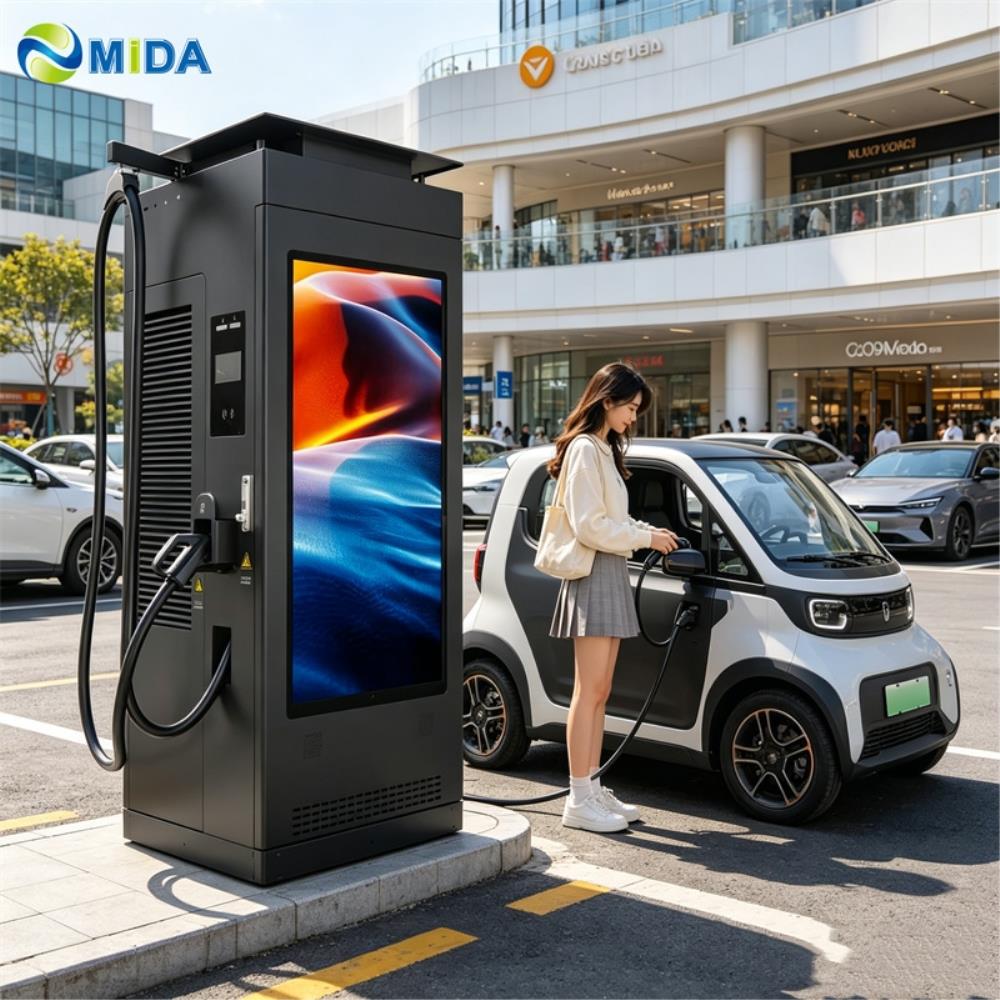
The 240kW power tier defines the modern Level 3 experience. It is the power level at which an 800V-architecture EV gains 250–300km of range in 15–20 minutes, turning a charging stop from a planned detour into an impulse decision. It is also the power level at which site economics begin to favor dedicated transformer infrastructure, which in turn signals a long-term commitment to the site — the right context for investing in a permanent, high-value advertising asset. The 55-inch outdoor screen is that asset: a full-size DOOH panel that commands premium media rates and pays back a meaningful share of the infrastructure cost.
Positioning summary: this product is for the operator building flagship charging sites — travel center chains, highway service operators, urban charging plazas, and CPOs establishing brand presence in high-visibility corridors. It combines maximum charging performance with a premium media surface and a driver-facing app experience that builds loyalty and network stickiness. The smart-app ecosystem is the third pillar: drivers find the station, start sessions, monitor progress, pay, and receive receipts through the MIDA app (or any OCPP-connected roaming app), while operators manage the entire network — energy, pricing, media — from a mobile dashboard. The sections below examine the display economics, charging technology, safety, app and connectivity stack, specification, and deployment.
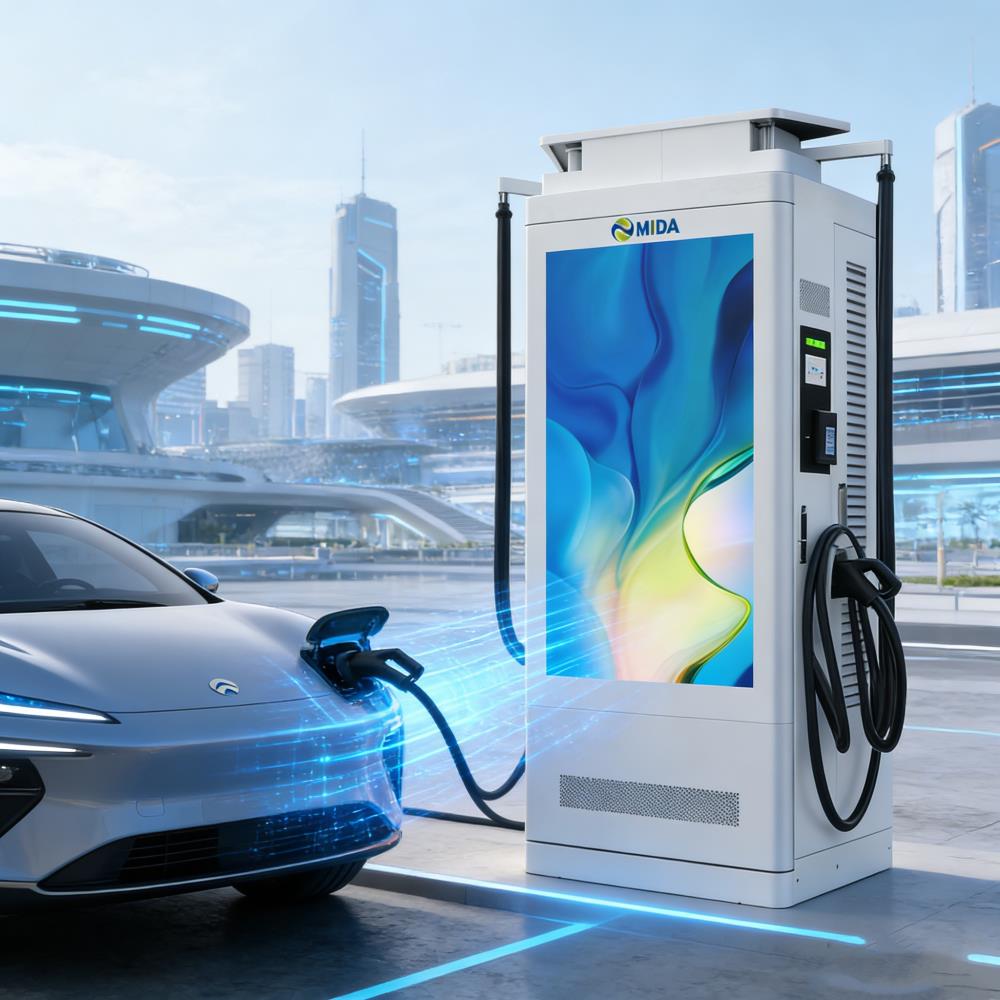
2. Interactive Advertising Screen: The 55-Inch Outdoor Media Surface
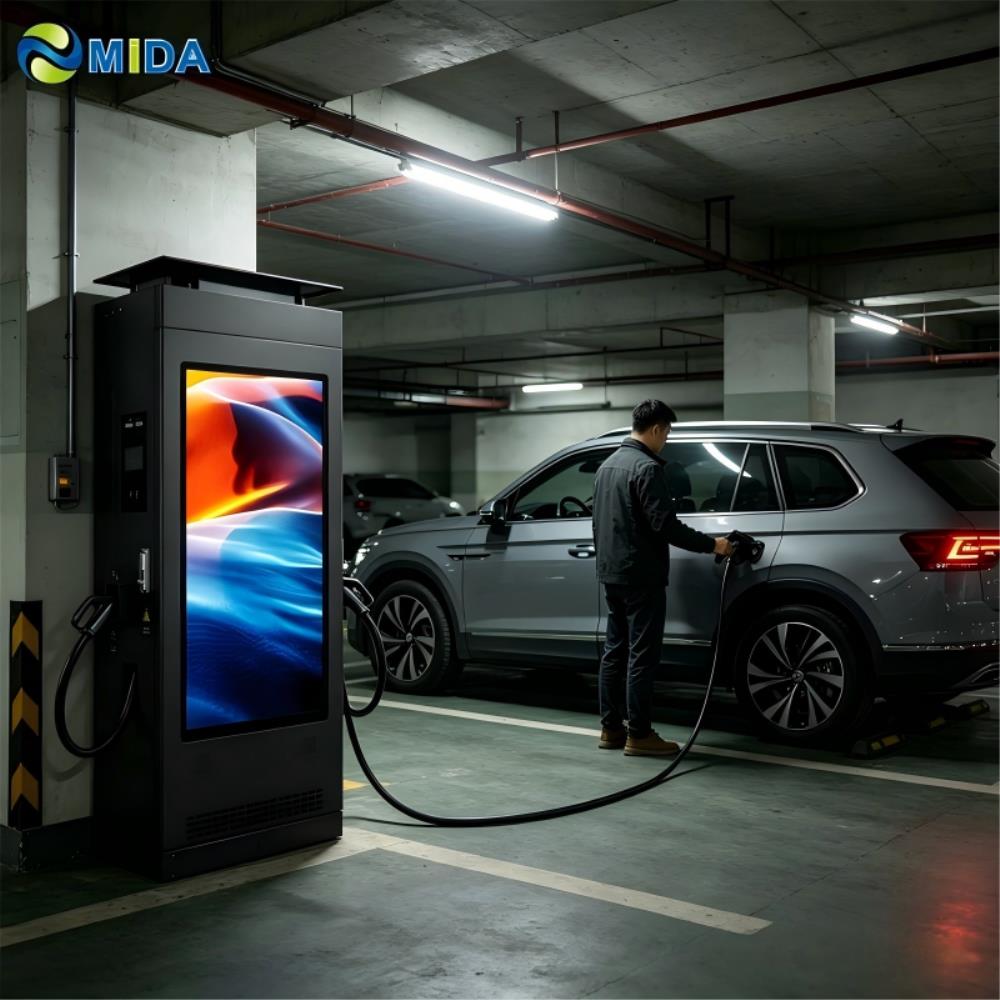
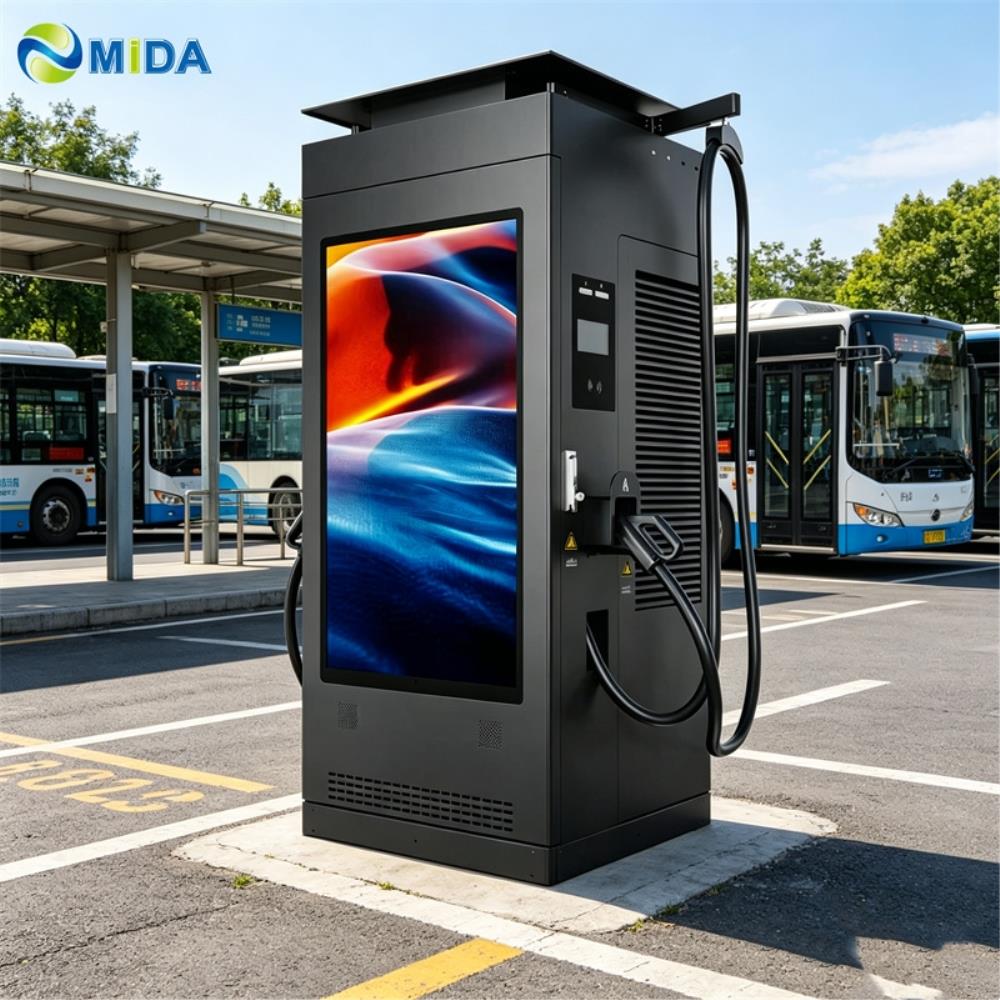
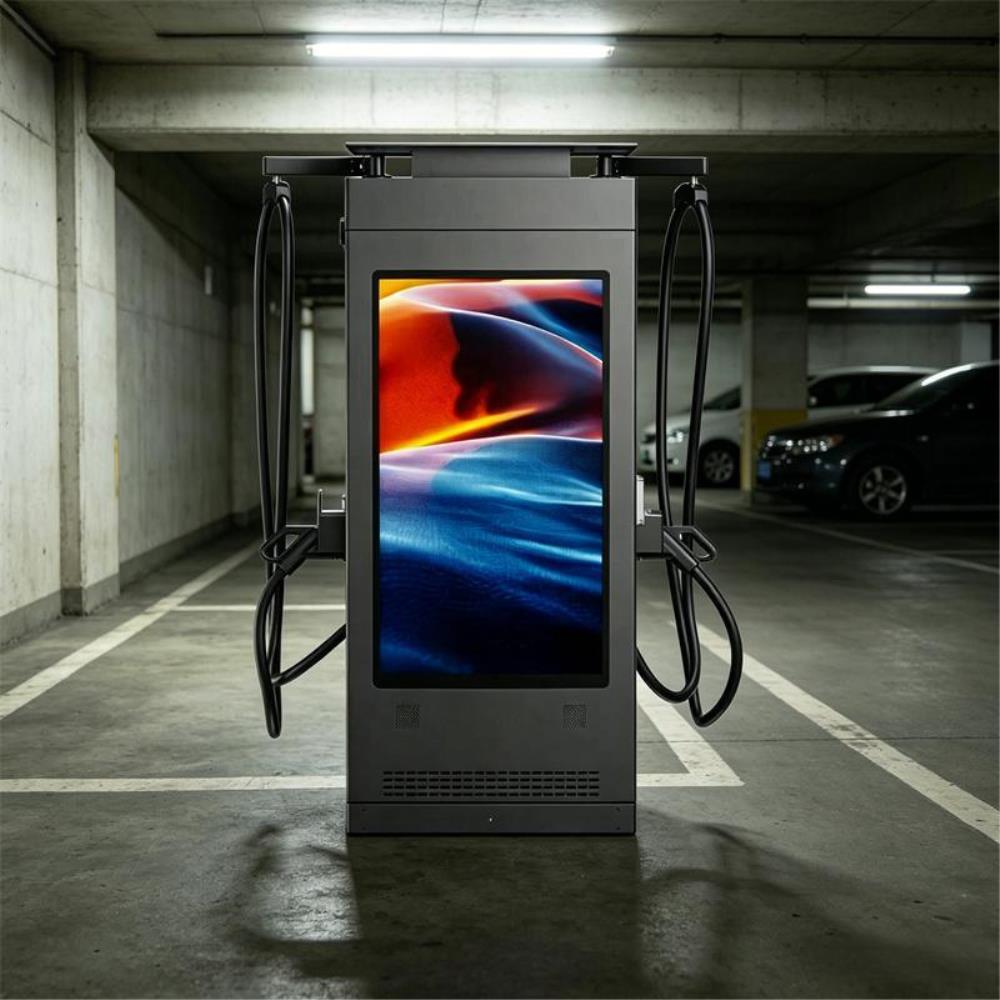
The 55-inch advertising screen on this flagship charger is a full-fledged Digital Out-of-Home asset. At 1920×1080 Full-HD resolution and 2500 nits peak brightness, it is engineered for the most demanding outdoor environments — exposed highway sites, sunlit plazas, and travel-center forecourts — with an ambient-light sensor for automatic brightness control, IK10-rated tempered glass, IP65 housing, and heat-pipe cooling for continuous operation in summer heat.
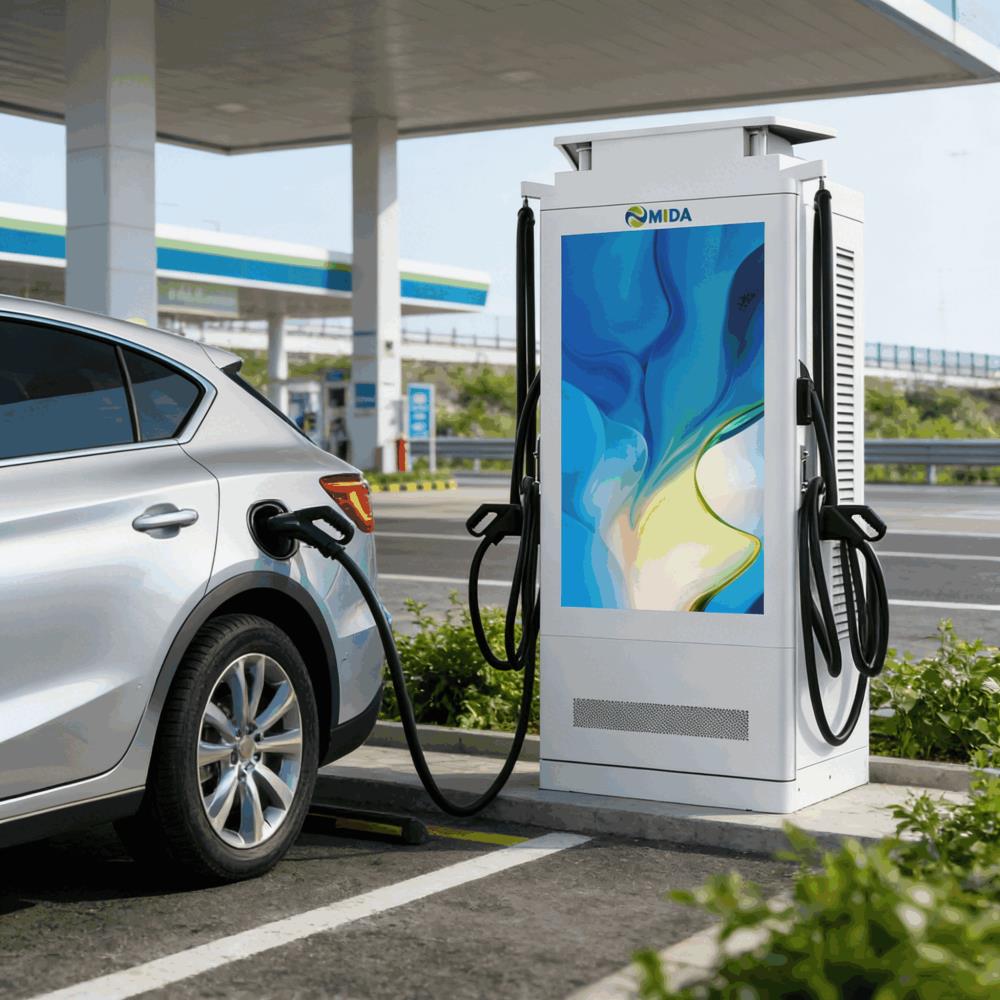
The audience economics at flagship sites are the strongest in the DOOH industry. A 240kW charger at a highway travel center turns over 15–25 sessions per day per bay, and each session anchors a driver (and often passengers) beside the screen for 15–30 minutes. Add queuing vehicles and pedestrian traffic at the site, and a single screen can log 15,000–35,000 impressions per day. At highway-corridor CPMs of €10–€25 for full-motion inventory, gross media value of €150–€875 per screen per day is achievable — a revenue line that can exceed the charging margin of the same unit in competitive markets.
The commercial structure supports multiple layers:
- Direct national campaigns: automotive, telecom, FMCG, and travel brands buy premium slots at flagship locations.
- Programmatic fill: unsold inventory is offered through DOOH programmatic platforms for baseline yield.
- Local and site-adjacent sponsorship: travel-center food brands, fuel partners, and local services buy targeted day-parts.
- Site-level naming and sponsorship: “powered by” branding packages across the entire screen network.
The CMS delivers multi-tenant scheduling, day-parting, geo-targeting, split-screen charging status, and live data widgets (weather, fuel prices, travel times) that keep the screen valuable even when no vehicle is charging. Engagement and impression analytics feed advertiser reporting automatically, and the media system is logically isolated from the charging system — a content glitch can never interrupt a charging session.
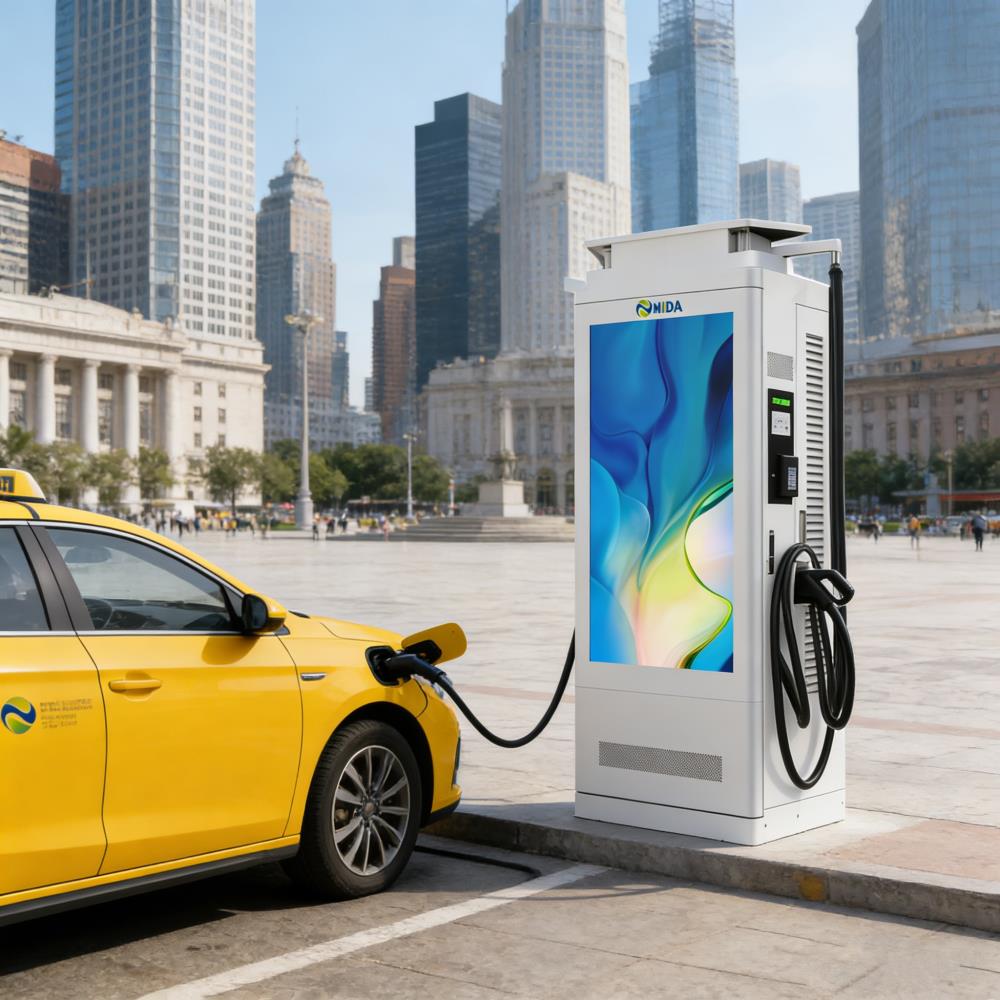
For the operator, the 55-inch screen transforms a flagship site from a charging location into a media property with its own sales pipeline, utilization metrics, and revenue forecast. Combined with charging revenue, it typically compresses site payback to 24–36 months — the strongest unit economics in the MIDA family.
3. High-Performance Charging Technology: 240kW Level 3 Performance
The power stage delivers true Level 3 performance: 240kW output from hot-swappable modules in an N+1-capable configuration, dual guns with dynamic power sharing (120kW+120kW, 180kW+60kW, or full 240kW to one vehicle), and a 150–1000V DC output range that serves 400V and 800V architectures at full rated current. Per-gun current reaches 250A continuous (600A combined in split mode), and peak efficiency of 95–96% keeps energy losses and cooling load low.
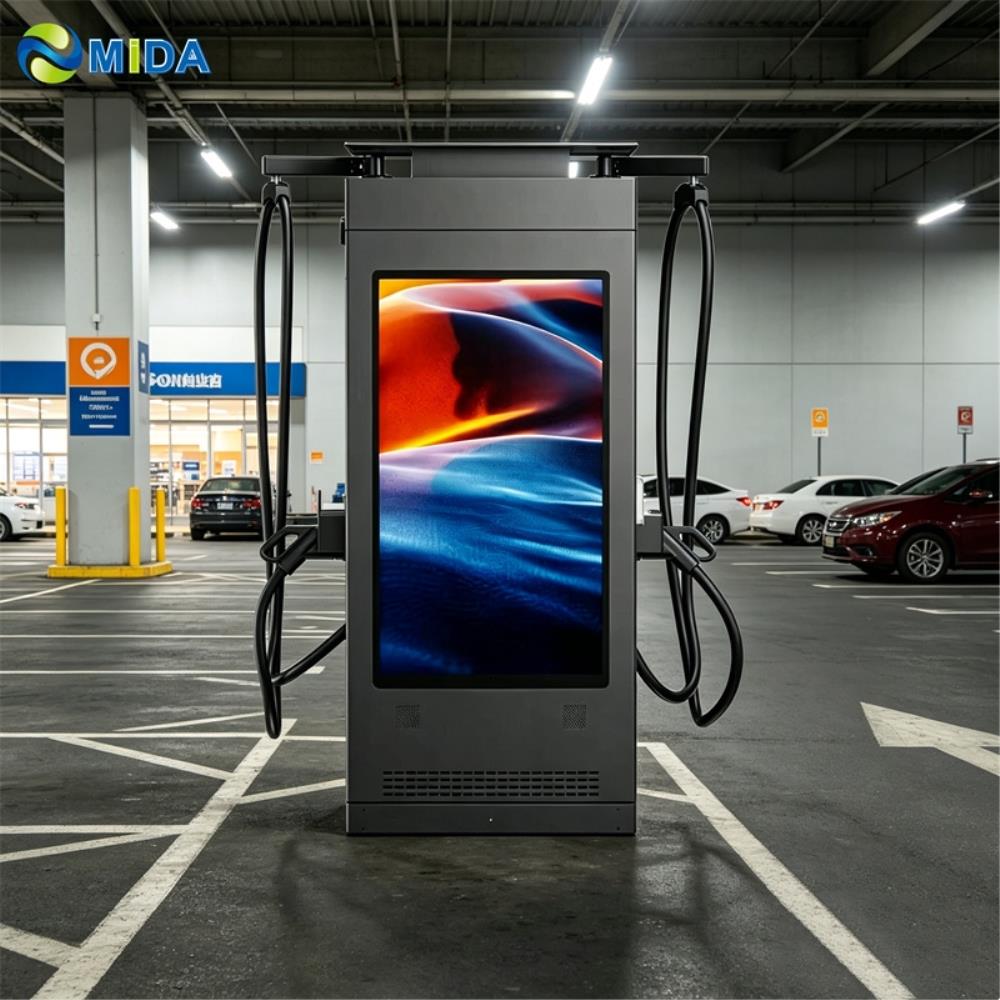
The 1000V rail is what makes 240kW real for modern EVs. An 800V-architecture vehicle requires charge voltages above 900V to draw its peak power; a charger capped at 750V would deliver only a fraction of its rated output to precisely the vehicles most likely to use a flagship site. With the 1000V rail, the MIDA charger delivers its full rated current to every platform, and the charging curve is negotiated per DIN 70121 / ISO 15118 for optimal battery-friendly charging.
Input is 400V AC three-phase, 50/60Hz, ±15% (480V variant for North America), with transformer sizing per site plan. Smart-charging features — time-of-use tariffs, demand response, solar and storage coordination, load management — let the operator optimize energy cost and grid interaction at flagship scale. Connector configuration is set at order: dual CCS2, dual CCS1, NACS-native, or hybrid, matching the site’s market. The charging process includes pre-session contactor checks, insulation monitoring, emergency stop, and graceful thermal derating above 55°C, with cold-weather startup to -25°C.
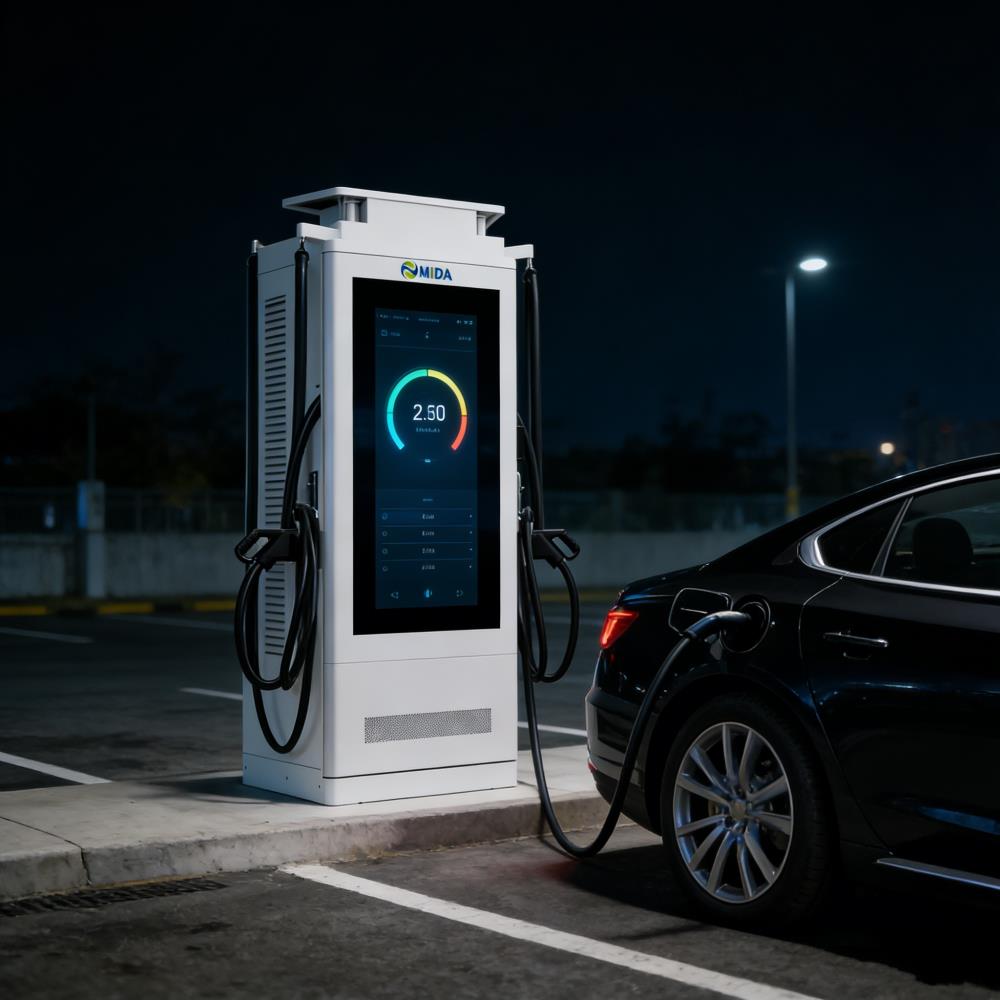
4. Safety and Reliability
Flagship sites are public, exposed, and high-profile — safety and reliability are brand issues as much as engineering issues. The MIDA 240kW charger is CE certified (LVD, EMC, RED), UKCA marked, with cUL/UL pathways for North America and compliance with IEC 61851-1/23, IEC 62196, and ISO 13849.
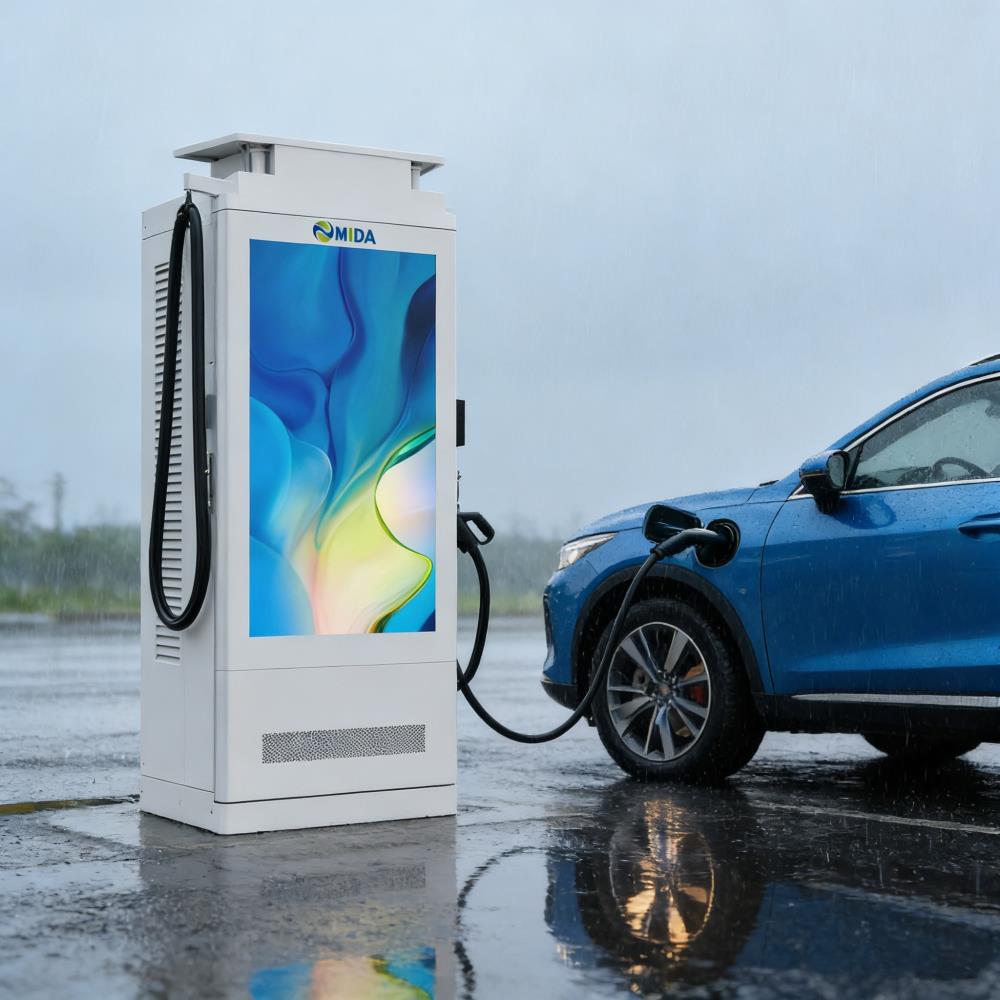
The protection suite is comprehensive: AC-side Type II surge protection, Type A RCDs with 6mA DC fault detection, DC-side insulation monitoring before and during every session, per-gun contactor weld detection, emergency stop, and remote de-energization. The IP55 cabinet and IP65 display housing, with IK10 impact ratings, resist rain, dust, hose-down cleaning, coastal corrosion, and vandalism — with the display protected by 4–6mm tempered glass.
Thermal management uses intelligent forced-air cooling with variable-speed fans and independent heat-pipe cooling for the display, with model-based derating that maximizes availability in extreme conditions. All field-serviceable components are modular and hot-swappable; the remote diagnostics platform provides fault alerts, predictive maintenance signals, and over-the-air firmware updates. The design life of 10+ years, conservative component derating, and redundant communications (4G/5G, Wi-Fi, Ethernet) deliver the >98% uptime that flagship site financial models require.
5. Smart Management and Connectivity: App Control and the Connected Ecosystem
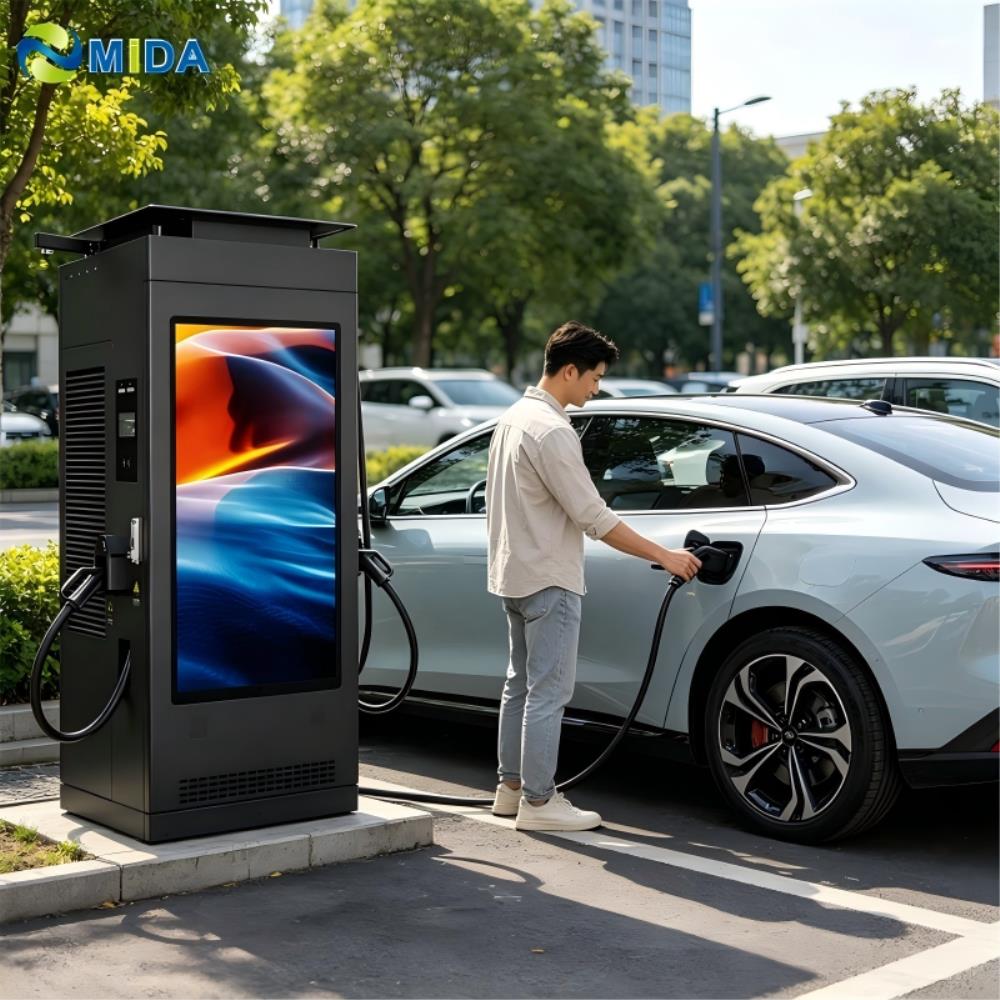
The “Smart App Control” pillar makes this charger distinctive in daily operation. Drivers interact through the MIDA app (white-label available) or any OCPP-connected roaming app: they locate the station, check live availability and power, start the session, monitor progress in real time, receive notifications when charging completes, pay digitally, and receive receipts automatically. For the operator, the app ecosystem builds network loyalty — drivers who can find, start, and pay through one app return to the same network — and generates first-party data on usage patterns that inform site planning and media sales.
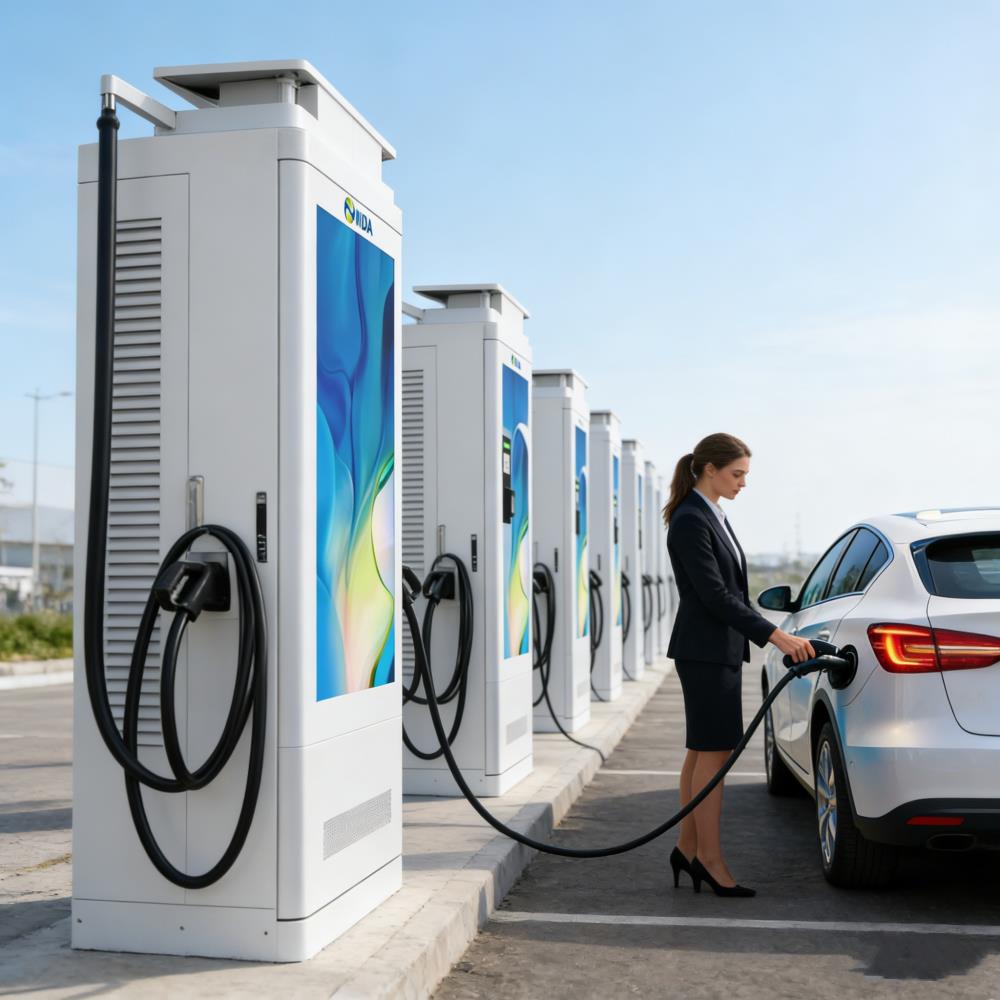
On the operator side, the backend dashboard provides complete network control: live sessions, power distribution, energy, revenue, utilization, faults, and media impressions, all in one view, with role-based access for operations, finance, and media teams. Remote operations include over-the-air firmware updates, tariff configuration (time-of-use, dynamic pricing), power-limit adjustments, load management, and demand-response participation. OCPP 1.6J (2.0.1 optional) ensures the charger also integrates with any third-party CPMS or roaming hub — no vendor lock-in.
Authentication is flexible: RFID, QR, app, and ISO 15118 Plug & Charge. Connectivity is redundant (4G LTE/5G-ready, Wi-Fi, Ethernet, RS485) with offline session handling. The advertising CMS operates on the same connectivity, logically isolated, with campaign scheduling, day-parting, and impression analytics feeding the media P&L. The result is a single connected platform where energy, revenue, media, and maintenance are managed from one dashboard — and where drivers experience a seamless, app-first charging journey.
6. Detailed Technical Specifications
| Parameter | Specification |
|---|---|
| Model | MIDA 240kW Level 3 DC Fast Charger with 55″ Outdoor Screen & Smart App Control |
| Output Power | 240kW (modular, hot-swappable, N+1 capable) |
| Input | 400V AC ±15% (480V variant for North America), 3-phase, 50/60Hz |
| Output Voltage | 150–1000V DC |
| Output Current | Up to 250A per gun; up to 600A combined in split mode |
| Charging Connectors | Dual CCS2 / Dual CCS1 / NACS-native / Hybrid |
| Charging Protocols | OCPP 1.6J (2.0.1 optional), DIN 70121, ISO 15118 Plug & Charge ready |
| Display | 55-inch TFT-LCD, 1920×1080 FHD, 2500 nits, auto-brightness |
| Display Protection | 4–6mm tempered glass, IK10, IP65 housing |
| Enclosure Rating | IP55 cabinet, IK10 vandal resistance |
| Cooling | Intelligent forced-air + heat-pipe (display); model-based derating |
| Communication | 4G LTE / 5G-ready, Wi-Fi, Ethernet, RS485; RFID/QR/App/Plug & Charge |
| Efficiency | ≥95% peak module efficiency |
| Smart Charging | Time-of-use, demand response, solar/storage coordination, load management |
| App Control | MIDA app (white-label), roaming apps, push notifications, live session tracking |
| Operating Temperature | -25°C to +55°C (graceful derating) |
| Certifications | CE (LVD/EMC/RED), UKCA, cUL/UL pathways, IEC 61851-1/23, IEC 62196, ISO 13849 |
| Dimensions (W×H×D) | ~900×2200×500mm, floor-mounted |
| Warranty | 2-year standard; 5-year extended option |
This specification defines the flagship of the family: maximum power, 1000V compatibility, premium outdoor media surface, app-driven user experience, and full certification across target markets.
7. Use Cases & Installation
The 240kW app-controlled advertising charger anchors flagship deployments:
- Highway Travel Centers & Service Areas — 240kW delivers 250–300km in 15–20 minutes; the 55-inch screen captures captive travel audiences at premium CPMs; app control streamlines high-turnover sessions.
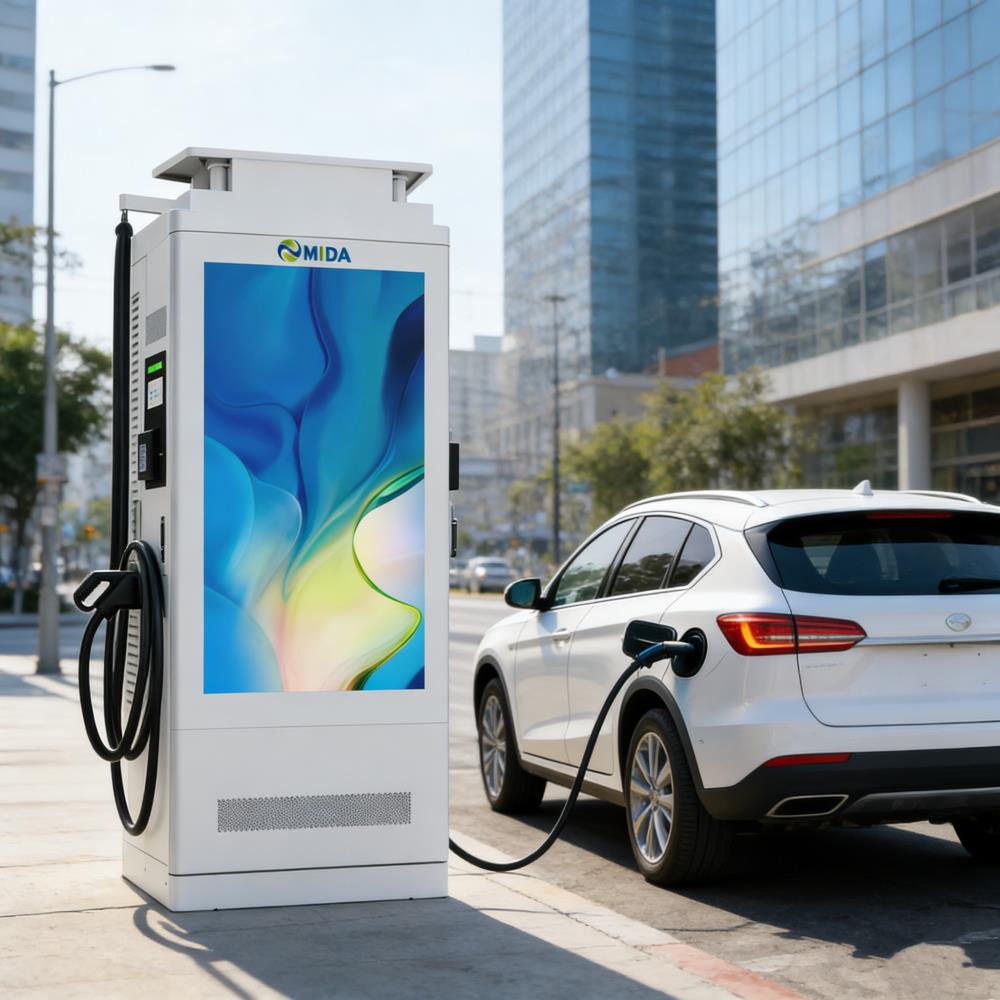
- Urban Charging Plazas — Multi-bay city sites near major corridors; media revenue diversifies income; app-based loyalty drives repeat usage; solar and storage coordination cut energy cost.
- Airport & Transit Hubs — High-value travelers with defined dwell windows; the screen runs traveler-relevant advertising and flight information; app notifications time the return to the vehicle.
- Flagship Retail Destinations — Premium mall and outlet locations; the screen network carries tenant and national campaigns; the flagship presence signals the property’s sustainability commitment.
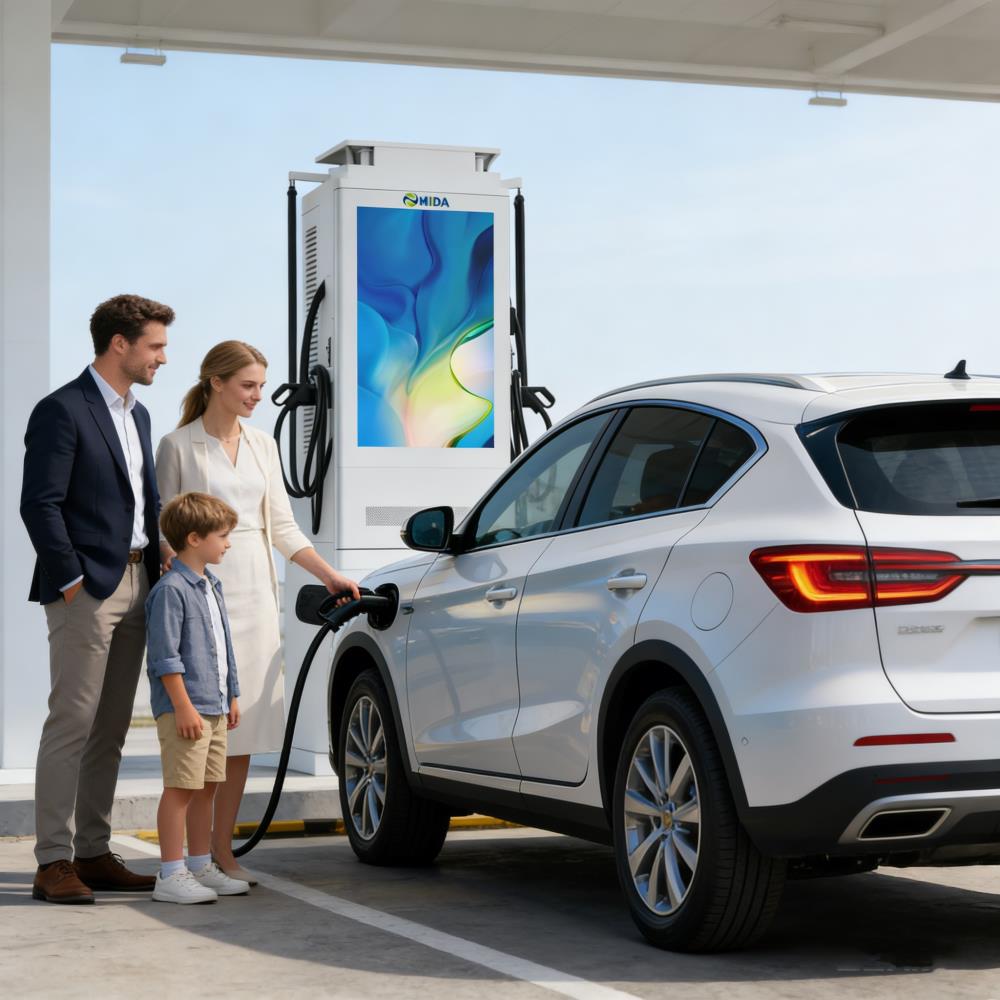
Installation at flagship scale is a managed civil project: transformer sizing (250–315kVA per 240kW cabinet), concrete foundations, cable trenches, site lighting, bollards, and signage, followed by commissioning — connectivity, backend and app registration, load management, media CMS setup, and full-power testing. Phased deployment is standard: install cabinets as utilization grows, with the transformer sized for the final phase.
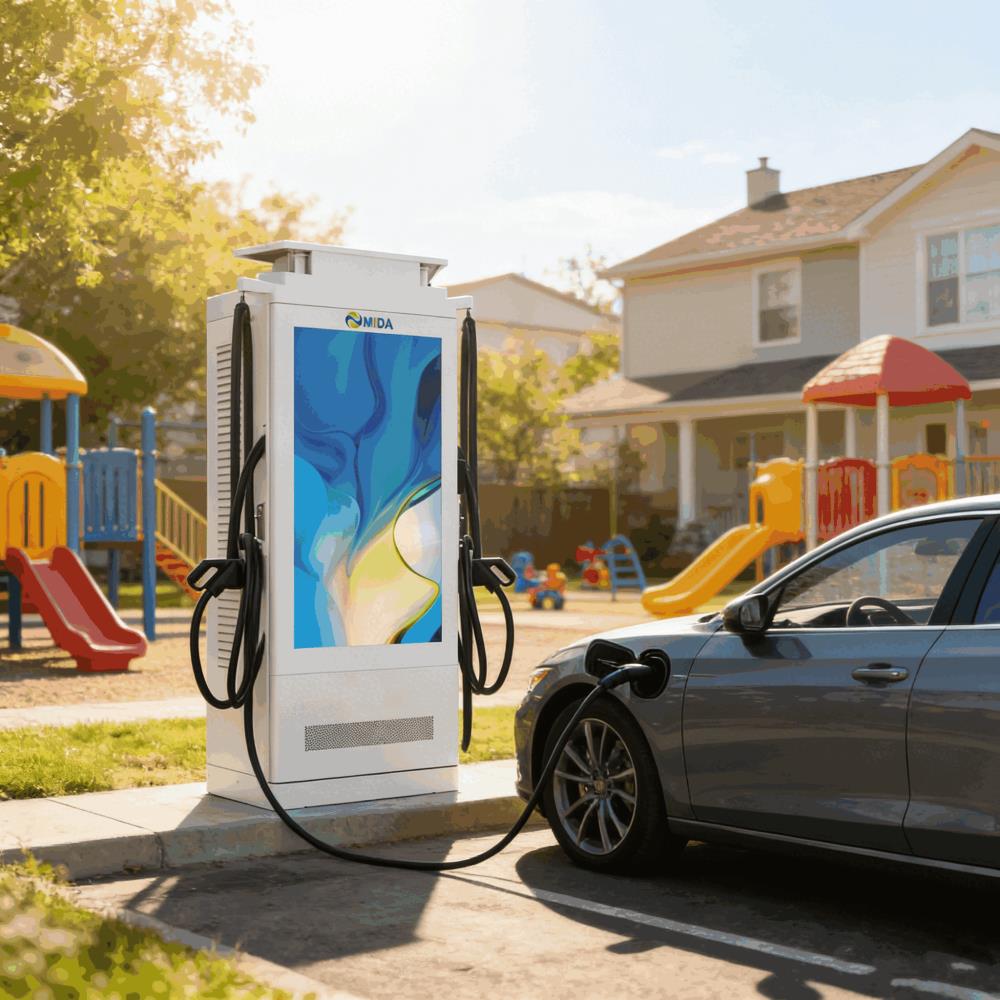
Operationally, target utilization is 15–25 sessions per bay per day in mature corridors. Maintenance follows a quarterly cycle with annual cooling service; firmware, tariff, and content updates are remote. With the app ecosystem driving loyalty and the media network driving incremental margin, the flagship site typically achieves the 24–36 month payback that makes 240kW infrastructure financeable.
8. FAQ
Q1: What exactly is “Level 3″ charging? Level 3 is the SAE term for DC fast charging — direct-current charging at 50kW and above. This charger’s 240kW output sits at the top of the Level 3 class, adding 250–300km of range in 15–20 minutes on 800V vehicles.
Q2: How does the smart app control work for drivers? Drivers use the MIDA app (or any OCPP-connected roaming app) to find the station, check live availability, start the session, monitor progress with notifications, pay digitally, and receive receipts — a fully app-driven charging journey.
Q3: How much advertising revenue can the 55-inch screen generate? At flagship highway locations, 15,000–35,000 daily impressions at €10–€25 CPM yield €150–€875 per screen per day of gross media value — often exceeding the charging margin of the same unit.
Q4: Can both guns charge at full speed? The 240kW is shared dynamically: 120kW+120kW to two vehicles, 180kW+60kW, or the full 240kW to one vehicle, rebalancing in real time as sessions complete.
Q5: Does the screen work in direct sunlight? Yes — 2500 nits peak brightness with an ambient-light sensor keeps content vivid in full sun, and the auto-dimming at night saves energy and complies with light-pollution rules.
Q6: Which connectors and standards are supported? Dual CCS2, dual CCS1, NACS-native, or hybrid configurations; OCPP 1.6J (2.0.1 optional), DIN 70121, and ISO 15118 Plug & Charge are supported, with CE/UKCA certification and cUL/UL pathways.
Q7: What grid infrastructure does a 240kW Level 3 site need? A dedicated transformer of roughly 250–315kVA per cabinet, with site-level load management coordinating multiple cabinets and optional solar/storage integration to optimize energy cost.

Products categories
-
180kw 240kW DC Ultra Fast EV Charger Station OC...
-
Level 3 EV DC Charger Electric Car Charging Sta...
-
240kw 300kw 360kw 420kW Fast Charging Station F...
-
120KW 160KW 180kW 200kw Fast EV Charger Station...
-
420KW CCS2 New energy electric vehicle Charging...
-
360KW New energy electric vehicle Charging station