

Key Takeaways
- Faster Breakeven: Ad revenue significantly accelerates the return of CAPEX.
- Higher Margins: Ad space has almost zero marginal cost compared to electricity.
- Asset Valuation: A network of digital screens is a valuable media asset for investors.
When analyzing the ROI of EVSE, operators must consider the “Total Lifecycle Value.” Standard chargers have a linear revenue model. Ad-integrated chargers have an exponential one. As traffic to the site increases, the ad space becomes more valuable, independent of electricity costs. In many urban scenarios, the “Cost Per Impression” (CPI) revenue from the screen can cover the entire monthly operational and grid cost of the unit.
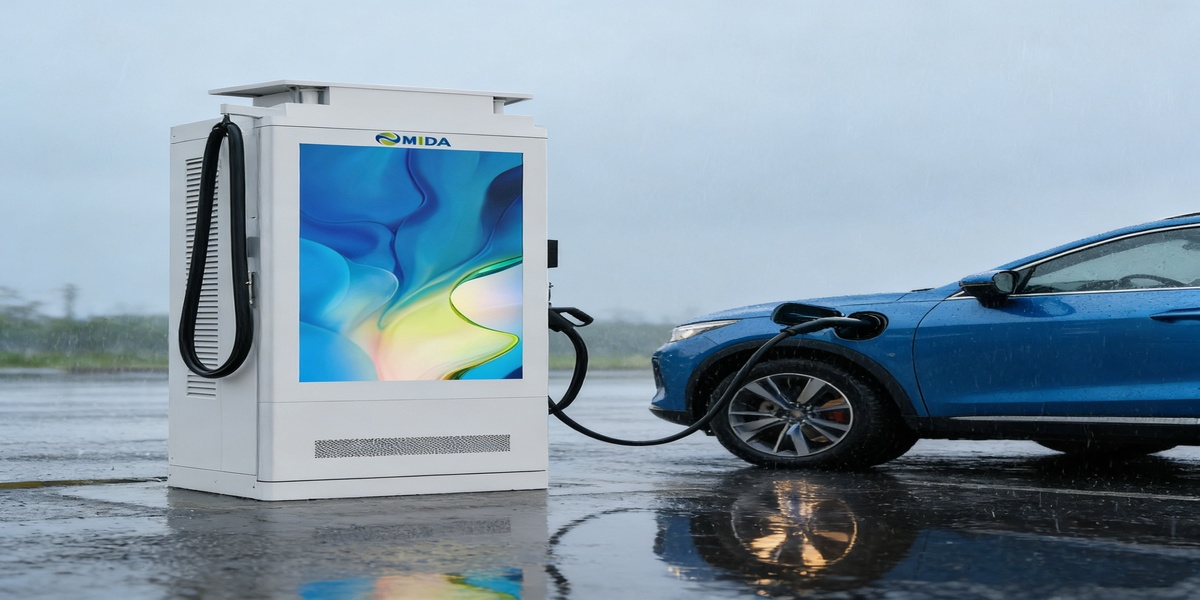
This makes ad-integrated chargers the “Smart Money” choice for infrastructure investors and private site owners who want to hedge their risk against fluctuating electricity prices.
FAQ
Q: What is the typical ROI for an ad-integrated charger?
A: Many sites see a full return in 2.5 to 3.5 years, compared to 5+ years for standard units.
Q: How much more does an ad-integrated unit cost?
A: Expect to pay a premium for the screen, enclosure, and CMS-compatible controller.
Q: Is ad revenue guaranteed?
A: No, it depends on location and your ability to fill the ad inventory (programmatic helps).
Q: Can I lease the screen to a local agency?
A: Yes, many operators lease the ad rights to specialized DOOH media agencies.
Q: Does the screen increase maintenance costs?
A: Slightly, due to filter cleanings and occasional screen controller updates.
Q: How does ad revenue affect my taxes?
A: It is typically treated as “Digital Service Revenue” rather than utility income.
Q: Is it worth it in rural areas?
A: In low-traffic areas, the ROI benefit is lower; it is most effective in urban and retail hubs.
Post time: Aug-19-2026