

Key Takeaways
- Urban Efficiency: One physical footprint for multiple public services.
- Subsidized Charging: Use ad revenue to lower energy costs for the community.
- Emergency Connectivity: Use the screens for amber alerts and public safety warnings.
Smart cities require “Connected Assets.” A MIDA DC charger with a 4K screen is more than a charger; it’s a data node. These units can be equipped with 5G small cells to improve local connectivity and sensors to track air quality and traffic patterns. The digital display becomes a “Public Bulletin Board.” During emergencies, the city can override the ads to display critical evacuation routes or safety alerts.
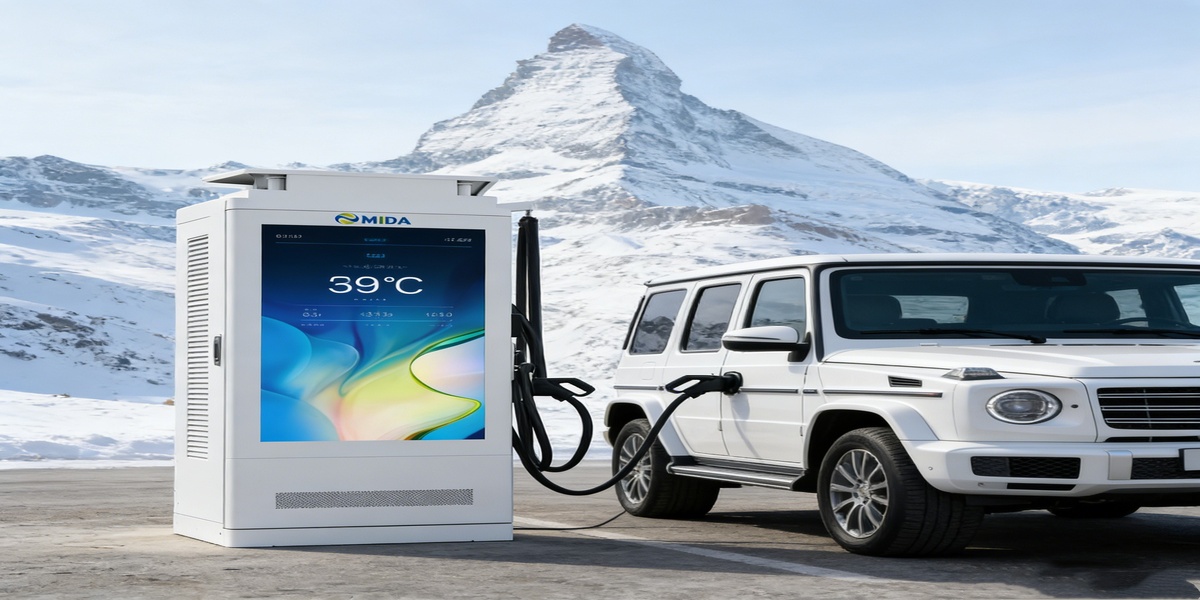
This multi-purpose utility ensures that the infrastructure remains valuable and supported by local government, even as the energy and transportation markets evolve over the next decade.
FAQ
Q: How do chargers fit into Smart Cities?
A: They provide essential EV services while acting as digital communication nodes.
Q: Can the screen show city announcements?
A: Yes, city planners can have a dedicated “slot” for public service messages.
Q: Can these units provide public Wi-Fi?
A: Yes, the high-speed data connection for the ads can easily support a public hotspot.
Q: Do they have environmental sensors?
A: Many professional units can be customized with PM2.5, noise, and temperature sensors.
Q: Is it possible to integrate a 5G small cell?
A: Yes, the interior space and power supply are ideal for housing 5G infrastructure.
Q: How do they help the local economy?
A: By promoting local businesses and events on the digital display.
Q: Are they sustainable?
A: Yes, especially when powered by green energy and used to promote sustainable habits.
Post time: Aug-19-2026