


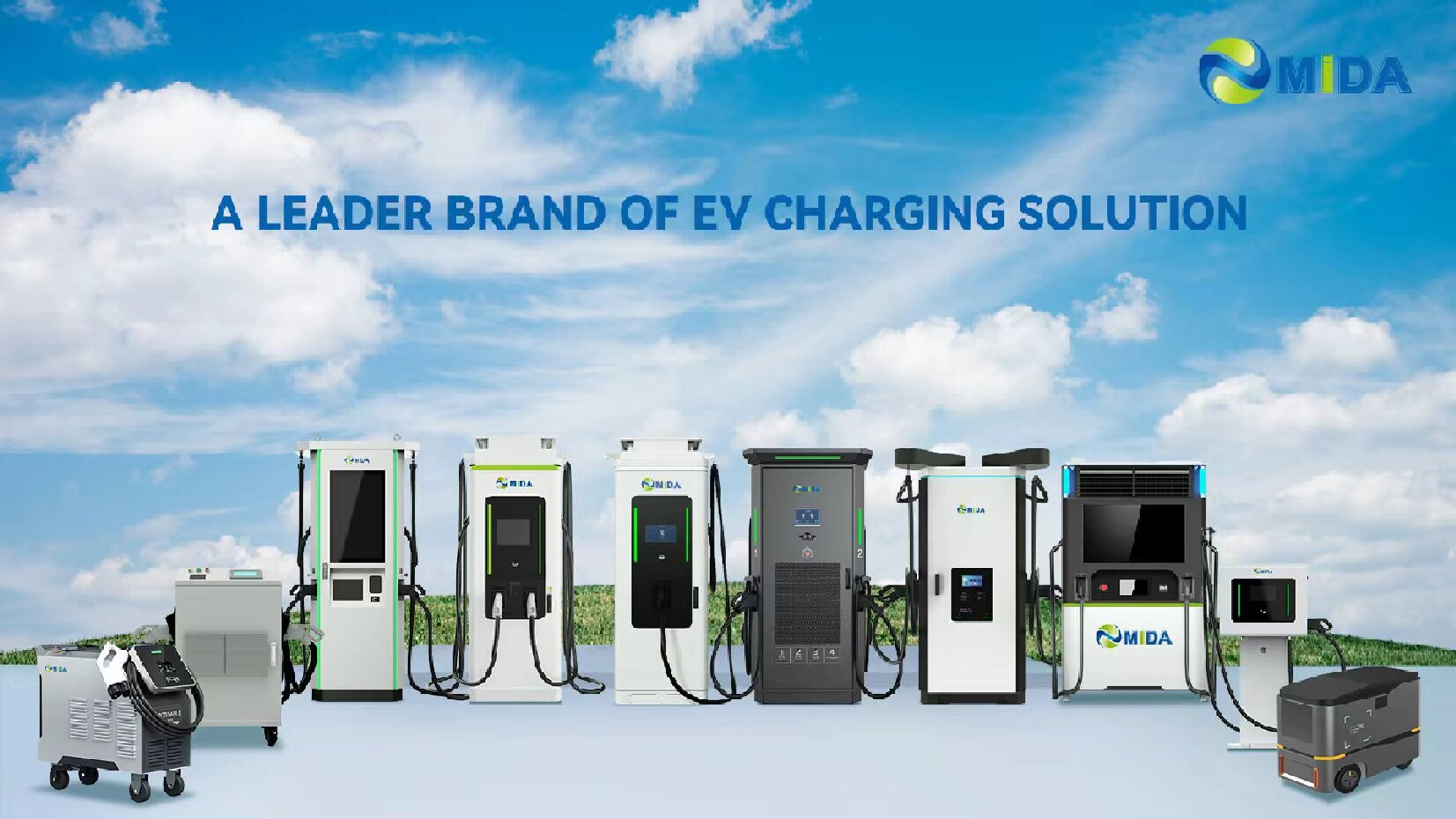
Quick Answer
Commercial property owners preparing for the electric vehicle (EV) transition should prioritize wall-mounted DC fast chargers in the 20kW–40kW power band rather than relying on slow AC destination units or oversized high-power hubs. These mid-power DC wallbox systems deliver a meaningful charge in 1–3 hours, support universal CCS2 and CHAdeMO compatibility, and integrate with OCPP 1.6 network management — making them ideal for retail centers, office campuses, hotels, and fleet depots where dwell time ranges from one to four hours. A 40kW DC charger, for example, adds roughly 200–250 km of range per hour of parking, which covers most daily commercial duty cycles. This article explains the engineering rationale, total cost of ownership (TCO), and deployment strategy for future-proofing commercial properties with 20kW, 30kW, and 40kW DC wallbox charging technology.
Key Takeaways
- Speed matched to dwell time: 20kW–40kW DC wallboxes charge 2–4x faster than 7–22kW AC units, delivering a useful 80% state of charge within typical 1–3 hour commercial parking sessions.
- Interoperability by design: Dual-standard CCS2 + CHAdeMO support and OCPP 1.6 compliance ensure compatibility with today’s vehicle fleet and smooth integration with back-office billing and load management platforms.
- CapEx-friendly form factors: Wall-mounted and pillar configurations cut civil works, trenching, and equipment costs by 30–50% compared with floor-standing DC cabinets.
- Right-sizing drives ROI: A deliberate mix of 20kW, 30kW, and 40kW units maximizes utilization, avoids transformer upgrades, and aligns energy draw with tariff structures.
- Architecture is the moat: Modular, network-ready, and standards-forward hardware future-proofs the site against rising adoption, Plug & Charge, and V2G-era requirements.
The Commercial Charging Bottleneck: Why Dwell-Time Economics Decide Everything
Picture a mid-sized office campus in 2026. The property manager has just received two board-level directives: electrify the parking estate and do it without a major grid connection upgrade. The parking structure serves 400 spaces, employees stay eight hours, visitors stay two, and three delivery vans rotate through the loading bay every morning. This is the reality of commercial EV charging — and it is precisely why the 20kW–40kW DC wallbox category has become the fastest-growing segment in commercial charging infrastructure.
The core problem is a mismatch between charging speed and dwell time. Most properties still default to AC chargers because they are cheap to buy. But an 11kW AC unit adds roughly 55–60 km of range per hour. A visitor who stays for two hours leaves with barely 120 km of range — enough for a short trip, but not enough to change driving behavior or satisfy a fleet operator’s turnaround schedule. When utilization rises and tenants begin complaining about “dead chargers,” the AC-first strategy collapses under its own economics.
The Mismatch Between AC Charging Speed and Commercial Dwell Time
Commercial dwell times cluster into three bands: quick stops (30–60 minutes, e.g., retail and convenience), standard visits (1–3 hours, e.g., restaurants, gyms, medical centers, hotels), and long stays (4+ hours, e.g., offices, airports, residential). For the 1–3 hour band — the highest-traffic segment for most commercial properties — a DC wallbox in the 20–40kW range delivers a state of charge jump of roughly 40–80% in a single visit. That single fact changes the revenue model: the charger becomes a service tenants and customers pay for, not an amenity they tolerate.
Consider the arithmetic. A 30kW DC charger at 90% efficiency delivers roughly 27 kWh per hour. The average EV consumes 15–18 kWh per 100 km. One hour at a 30kW unit therefore adds about 150–180 km of range. Two hours at 40kW exceeds 300 km — more than most drivers cover in a week. AC charging cannot approach these numbers without a 22kW three-phase connection, which most parking structures lack, and even then, three-phase 22kW AC tops out near a single 40kW DC unit’s throughput.
Why Not 60kW+ High-Power DC?
High-power DC (120–350kW) is the wrong tool for most commercial properties. It demands dedicated high-voltage connections, substantial transformer capacity, expensive liquid-cooled or heavily derated cables, and capital costs that can exceed $20,000–$40,000 per stall. Utilization at most commercial sites — typically 10–25% — can never amortize that investment. The 20–40kW wallbox, by contrast, runs on standard 400V three-phase supplies, costs a fraction of high-power cabinets, and still exceeds the needs of 90% of commercial sessions. It is the power class where utilization, grid constraints, and revenue actually align.
The 20kW–40kW DC Wallbox: The Sweet Spot of Speed, Cost, and Flexibility
A wall-mounted DC charger in the 20–40kW band occupies a deliberately engineered middle ground. It retains the fast-charging physics of DC (battery-direct power, no onboard charger bottleneck) while adopting the compact, wall-hung form factor that makes installation cheap and scalable. For property developers, this means the difference between a multi-month grid project and a two-week deployment.
Anatomy of a Modern DC Wallbox
Modern units such as the DC Wallbox CCS2 integrate the AC/DC power conversion, control electronics, metering, and network connectivity into a single enclosure that mounts directly to a wall or pillar. Key subsystems include:
- Power modules: Silicon-carbide (SiC) or IGBT-based modules delivering 20kW, 30kW, or 40kW output with peak efficiency above 94–96%.
- Connector interface: CCS2 (Type 2 combo) as the European standard connector, with optional CHAdeMO for legacy Japanese vehicles, or dual-gun configurations for simultaneous sessions.
- Smart metering: MID-certified meters for accurate energy billing where the charger operates as a public or semi-public point.
- Communication stack: Ethernet, 4G, and Wi-Fi connectivity with OCPP 1.6 for remote monitoring, billing, and over-the-air firmware updates.
- Safety and durability: IP54–IP55 ingress protection, IK10 impact resistance, and Type A/B RCD with DC leakage detection integrated into the enclosure.
AC vs. DC: The Decision Table Every Property Manager Needs
tr>tr>tr>tr>tr>tr>tr>
| Parameter | AC Level 2 (7–22kW) | DC Wallbox (20kW) | DC Wallbox (30kW) | DC Wallbox (40kW) | ||
| Typical range added per hour | 35–110 km | 90–120 km | 150–180 km | 200–250 km | ||
| Charging 60 kWh battery (10–80%) | 4–8 hours | ~2.5 hours | ~1.7 hours | ~1.3 hours | ||
| Power supply requirement | Single/three-phase, 230–400V | Three-phase 400V, 32A | Three-phase 400V, 63A | Three-phase 400V, 63–80A | ||
| Installation cost per stall | Low | Moderate | Moderate | Moderate–High | ||
| Best-fit dwell time | 4+ hours | 1.5–3 hours | 1–2.5 hours | 0.75–2 hours | ||
| Typical use case | Overnight, employee fleets | Hotels, offices, retail | Mixed commercial, fleet backfills | Quick-turn retail, urban depots |
The table makes the trade-off explicit: 20kW suits properties where sessions run 2–3 hours; 40kW suits high-turnover locations where every additional session per day is revenue. Most well-designed estates deploy all three classes in a ratio that matches their tenant mix.
Engineering Deep Dive: What to Look for Inside a Commercial DC Wallbox
Facility managers evaluating hardware should look beyond the nameplate power rating. Four engineering dimensions determine whether a charger performs reliably for 10+ years in a parking environment: connector standards, network protocol, enclosure durability, and form factor.
CCS2 and CHAdeMO: Universal Compatibility Matters
Europe’s charging landscape is converging on CCS2 as the dominant DC standard — every new BEV sold in the EU from 2025 onward must support it. However, the installed vehicle base still includes CHAdeMO-capable models, and dual-standard flexibility future-proofs the asset for resale and secondary markets. A dual-gun DC wallbox that serves one CCS2 vehicle and one CHAdeMO vehicle simultaneously, or offers both connectors on a single gun, converts otherwise-idle capacity into billable throughput. Interoperability is not a feature; it is a utilization lever. The DC Wallbox CCS2 product line demonstrates this dual-standard approach in a compact wall-mount chassis, including 50kW variants for properties that anticipate heavier future traffic.
OCPP 1.6: The Nervous System of a Charging Network
Open Charge Point Protocol (OCPP) 1.6 is the de facto standard that lets a charging station talk to any compatible back-office platform — roaming networks such as Hubject, energy management systems, and billing providers. Without OCPP compliance, a charger is an island: no remote diagnostics, no dynamic pricing, no load management, no usage analytics. With it, property owners gain:
- Smart charging and load management: the back office can cap aggregate power draw across the estate, protecting the transformer and cutting demand charges.
- Dynamic pricing: time-of-use tariffs, occupancy-based pricing, and roaming fee settlement are configured centrally.
- Remote lifecycle management: firmware updates, fault diagnostics, and restart commands eliminate most site visits.
A Wall Mounted DC Charging Station with native OCPP 1.6 and optional 4G connectivity is the difference between a “dumb” asset and a revenue-generating network node. When evaluating vendors, verify OCPP certification documentation and ask for a live demo of the back-office integration before purchase.
Enclosure Quality: The Unseen Cost Driver
A parking structure is a hostile environment: temperature swings from -25°C to +50°C, humidity, salt spray near coastal sites, dust, and occasional impacts from carts and vehicles. Enclosure ratings are therefore a procurement specification, not a marketing footnote. Look for IP54 or higher ingress protection, IK10 impact resistance, wide operating temperature windows (-30°C to +55°C), and built-in over-temperature derating logic. A cheap unit that fails twice a year will erase its purchase-price advantage within 24 months through service calls and downtime revenue loss.
Wall-Mounted vs. Pillar: Form Factor Economics
Wall-mounted chargers attach to existing structural walls — the cheapest possible deployment. Pillar-mounted variants integrate the same electronics into a freestanding column, which is ideal for open parking lots, curbside bays, and locations where wall real estate is unavailable. The 20kw 30kw 40kw DC Charger family offers both mounting modes from a single hardware platform, which simplifies spares inventory and maintenance training across a multi-site portfolio.
Deployment Strategy: Right-Sizing Your Property’s Charging Architecture
Future-proofing is an architecture decision, not a hardware shopping list. The most common failure mode is oversizing the power connection and undersizing the number of ports, or vice versa. A disciplined deployment follows four steps.
Step 1: Map Demand by Session Profile
Audit the property’s vehicle mix and dwell times. Employee fleets and overnight guests skew toward 20–30kW units with longer sessions; retail, food & beverage, and urban delivery skew toward 30–40kW with shorter, higher-turnover sessions. If a fleet operates daytime shifts, DC fast charging in the 40kW class becomes the critical path for fleet turnaround.
Step 2: Right-Size the Grid Connection
Each DC wallbox draws a continuous three-phase load: roughly 32A at 20kW, 48A at 30kW, and 63A at 40kW. Sum the worst-case draw, then apply load management to cap aggregate demand at the existing transformer’s capacity. In many cases, smart load management lets a property install 6–10 DC wallboxes on a connection sized for 4, because the back office staggers and prioritizes sessions in real time.
Step 3: Choose Port Count, Not Just kW
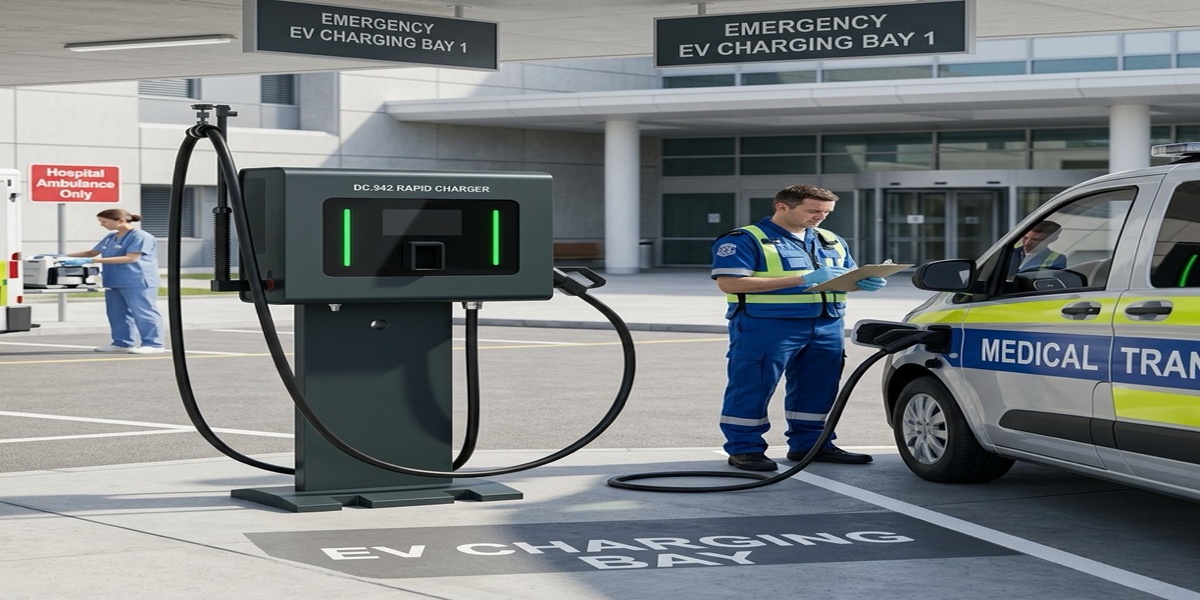
A common planning rule: install ports to serve the *expected* 2028 demand, not today’s 3% EV share, because retrofitting conduits and panels later costs 3–5x more than oversizing them at build time. Budget-conscious estates deploy a phased plan — e.g., 4 ports now, 12 by 2028 — with conduit, panel space, and network infrastructure oversized from day one.
Step 4: Design the Power Class Mix
tr>tr>tr>tr>tr>
| Selection criterion | Choose 20kW | Choose 30kW | Choose 40kW | |||||||||||||||||||||||||
| Primary dwell time | 2–3 hours | 1.5–2.5 hours | tr> | Driver profile | Employees, overnight | Mixed tenants, visitors | Fleets, high-turnover retail | Grid headroom available | Limited | Moderate | Ample or load-managed | Revenue priority | Convenience amenity | Balanced | Maximize sessions/day | Recommended form factor | Wall | Wall or pillar | Pillar or dual-gun wall |
Properties that serve mixed audiences typically standardize on one hardware platform across power classes, so that load management, OCPP back office, and spare parts are unified. This is exactly why the Wall Mounted DC Charging Station family ships 20kW, 30kW, and 40kW variants from the same chassis — one training curve, one spares kit, one software stack.
Total Cost of Ownership and Revenue Modelling
TCO analysis is where the 20–40kW DC wallbox category wins decisively over both AC and high-power DC alternatives.
Capital Expenditure
Hardware for a 30kW wallbox typically ranges $3,000–$6,000; wall-mounted installation runs $1,500–$3,500 per stall when conduit and panel work are modest. High-power DC stalls routinely cost 4–8x more before civil works. The wall/pillar mounting modes eliminate pedestal foundations and trenching in many cases, cutting installation cost by 30–50% versus floor-standing cabinets.
Operating Expenditure
Ongoing costs include energy, back-office subscription fees, maintenance, and occasional connector or cable replacement. DC wallboxes with modular power supplies allow “swap a module, not the unit” repairs — a major advantage over monolithic chargers. Remote OCPP diagnostics further reduce site visits. Realistic OpEx runs $150–$400 per stall per year excluding energy.
Revenue and Payback Scenarios
- Public/semi-public tariff at €0.45–0.65/kWh: a 30kW unit at 15% utilization generates roughly 3,900 kWh/year per stall — €1,800–2,500 gross margin before energy cost.
- Fleet service agreements: dedicated 40kW bays with contracted turnarounds command premium rates and near-guaranteed utilization.
- Tenant amenity model: free employee charging is often bundled into leases, shifting CapEx to the landlord while improving tenant retention — a measurable impact on vacancy rates and NOI.
Under most European tariff structures, a well-utilized 30–40kW DC wallbox pays back its hardware cost within 2–4 years — faster than any AC installation at comparable utilization, because it converts the same parking asset into 3–4x more delivered energy per hour.
Future-Proofing: Standards Roadmap, Scalability, and Compliance
The Standards Roadmap
The charging industry is migrating from OCPP 1.6 to OCPP 2.0.1, which adds security hardening (TLS, certificates) and improved transaction management. Hardware that is OCPP 1.6-compliant today can typically be field-upgraded to 2.0.1, but buyers should confirm the vendor’s upgrade path in writing. Simultaneously, ISO 15118 enables Plug & Charge — the vehicle authenticates itself and initiates billing automatically, removing app and RFID friction. Selecting hardware from vendors that publish a standards roadmap, rather than a static data sheet, is the single cheapest insurance policy against obsolescence.
Scalability from One Port to Fifty
Future-proof architecture means the first charger is not an endpoint but a seed. Look for hardware and back offices that support:
- Mixed power classes on one OCPP account;
- Group load management across multiple buildings;
- Roaming-network onboarding (Hubject, Gireve, etc.) for public visibility;
- Expansion without re-engineering the network layer.
Compliance and Certification
For European deployments, verify CE marking (including LVD and EMC directives), and for international portfolios, confirm the certifications relevant to each market — UKCA in the UK, UL/ETL in North America, and local grid codes for meter placement and RCD protection. Vendors should provide a compliance documentation pack on request; its absence is a red flag.
Selection Checklist for Facility and Property Managers
- [ ] Confirm CCS2 (and CHAdeMO where needed) connector coverage for your vehicle mix.
- [ ] Verify OCPP 1.6 (and upgrade path to 2.0.1) with your chosen back-office platform.
- [ ] Validate IP54+/IK10 enclosure ratings against your site’s climate and abuse risk.
- [ ] Check operating temperature range against seasonal extremes at your location.
- [ ] Confirm three-phase power availability and available transformer headroom before ordering.
- [ ] Compare wall-mounted vs. pillar mounting costs for each planned location.
- [ ] Request a modular power architecture for serviceability beyond year five.
- [ ] Confirm the vendor’s certification pack (CE, UKCA, or UL as applicable) in writing.
- [ ] Evaluate total cost of ownership, not unit price, using the session profiles above.
- [ ] Choose one hardware platform family across 20kW/30kW/40kW to unify spares, training, and load management.
Frequently Asked Questions
1. How fast will a 20kW, 30kW, or 40kW DC wallbox charge an EV?
A 20kW unit adds roughly 90–120 km of range per hour, 30kW adds 150–180 km, and 40kW adds 200–250 km. For a typical 60kWh battery charging from 10–80%, expect approximately 2.5, 1.7, and 1.3 hours respectively — well within a standard 1–3 hour commercial visit.
2. Can these wallboxes charge both CCS2 and CHAdeMO vehicles?
Yes. Dual-standard wallboxes such as the DC Wallbox CCS2 family support CCS2 as the primary European standard and offer CHAdeMO compatibility — including dual-gun configurations that can serve two vehicles simultaneously, which improves utilization.
3. What is OCPP 1.6 and why does it matter for commercial charging?
OCPP (Open Charge Point Protocol) 1.6 is the communication standard between the charger and a back-office platform. It enables remote monitoring, dynamic pricing, load management, billing, roaming-network participation, and over-the-air firmware updates. Without OCPP compliance, a commercial charger cannot be managed as part of a profitable network.
4. Can I expand capacity later as EV adoption grows?
Yes, if you plan for it. Oversize conduits, panel space, and network infrastructure at build time, and choose modular hardware with a scalable back office. Many estates install a small initial port count and expand within the same architecture without re-civil-works, because wall-mounted DC units are quick to add.
5. What is the difference between a wall-mounted DC charger and a pillar charger?
The electronics are essentially identical; the difference is mounting. Wall-mounted units attach to existing structural walls, minimizing installation cost, while pillar-mounted units are freestanding columns for open lots and curbside bays. Choosing a platform that offers both mounting modes simplifies multi-site standardization.
6. What are the installation requirements for a commercial DC wallbox?
You need a three-phase 400V supply (32A at 20kW, 48A at 30kW, 63A at 40kW per unit), appropriate circuit protection and RCDs, network connectivity (Ethernet, 4G, or Wi-Fi), and local permitting. Load management can reduce aggregate grid demand, often avoiding transformer upgrades.
7. How do I monetize commercial charging and handle billing?
An OCPP-compliant back office handles tariffs, RFID/app payments, roaming settlement, and energy metering. Typical models include public per-kWh tariffs (€0.45–0.65/kWh), fleet service contracts with fixed turnaround fees, or free employee charging bundled into lease agreements — with payback typically achieved in 2–4 years at moderate utilization.
—
*Need to size the right mix for your estate? Compare the 20kW, 30kW, and 40kW wall and pillar mounting options within a single hardware platform family before finalizing your charging architecture.*
Post time: Aug-21-2026