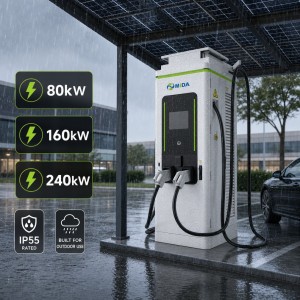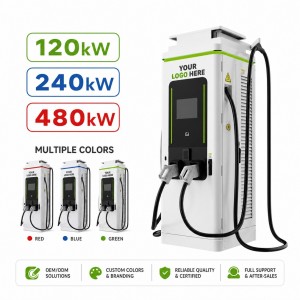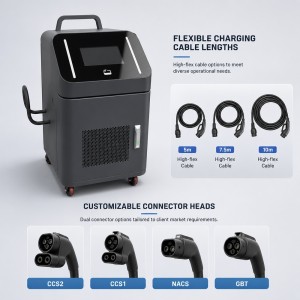
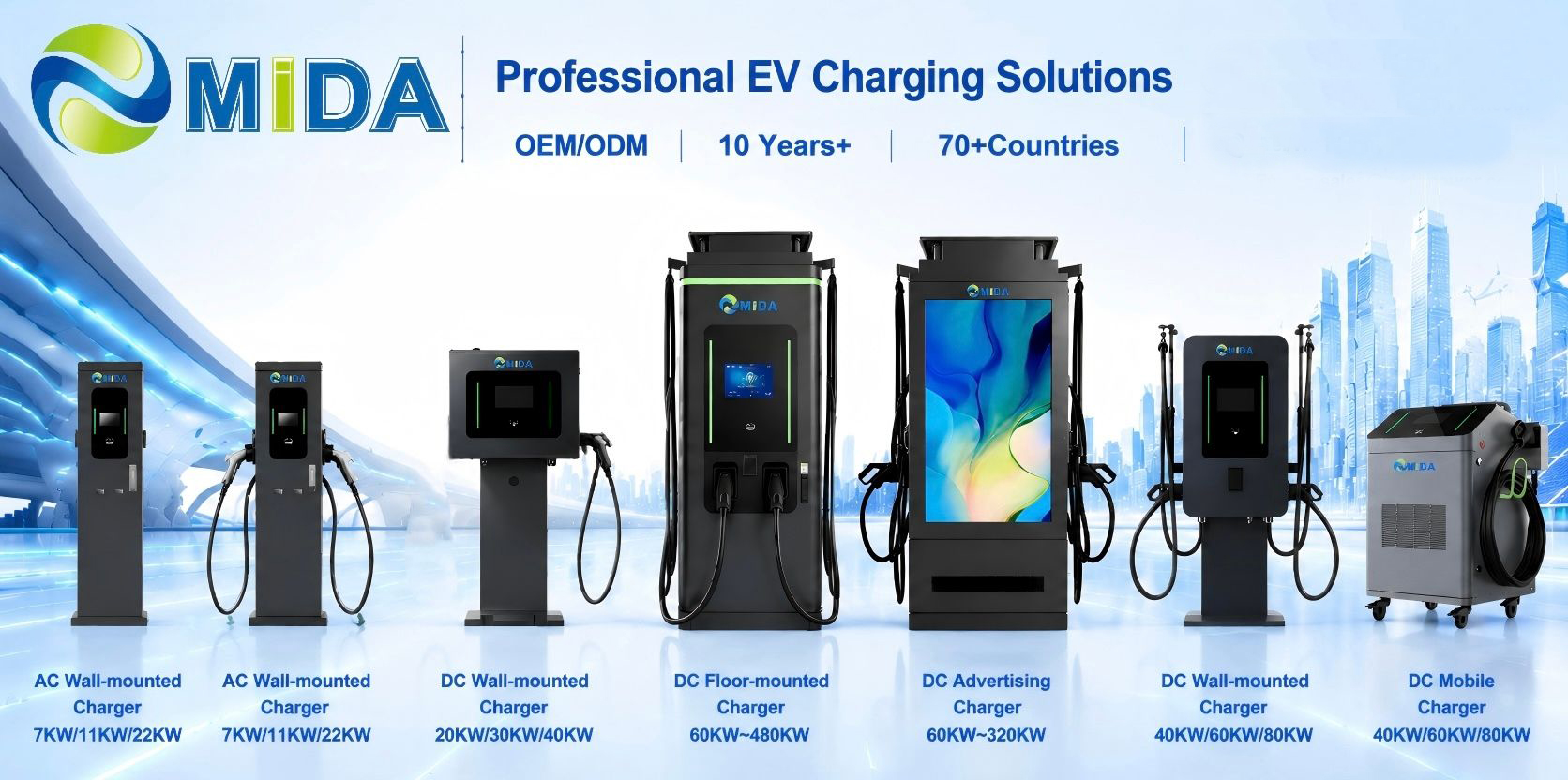
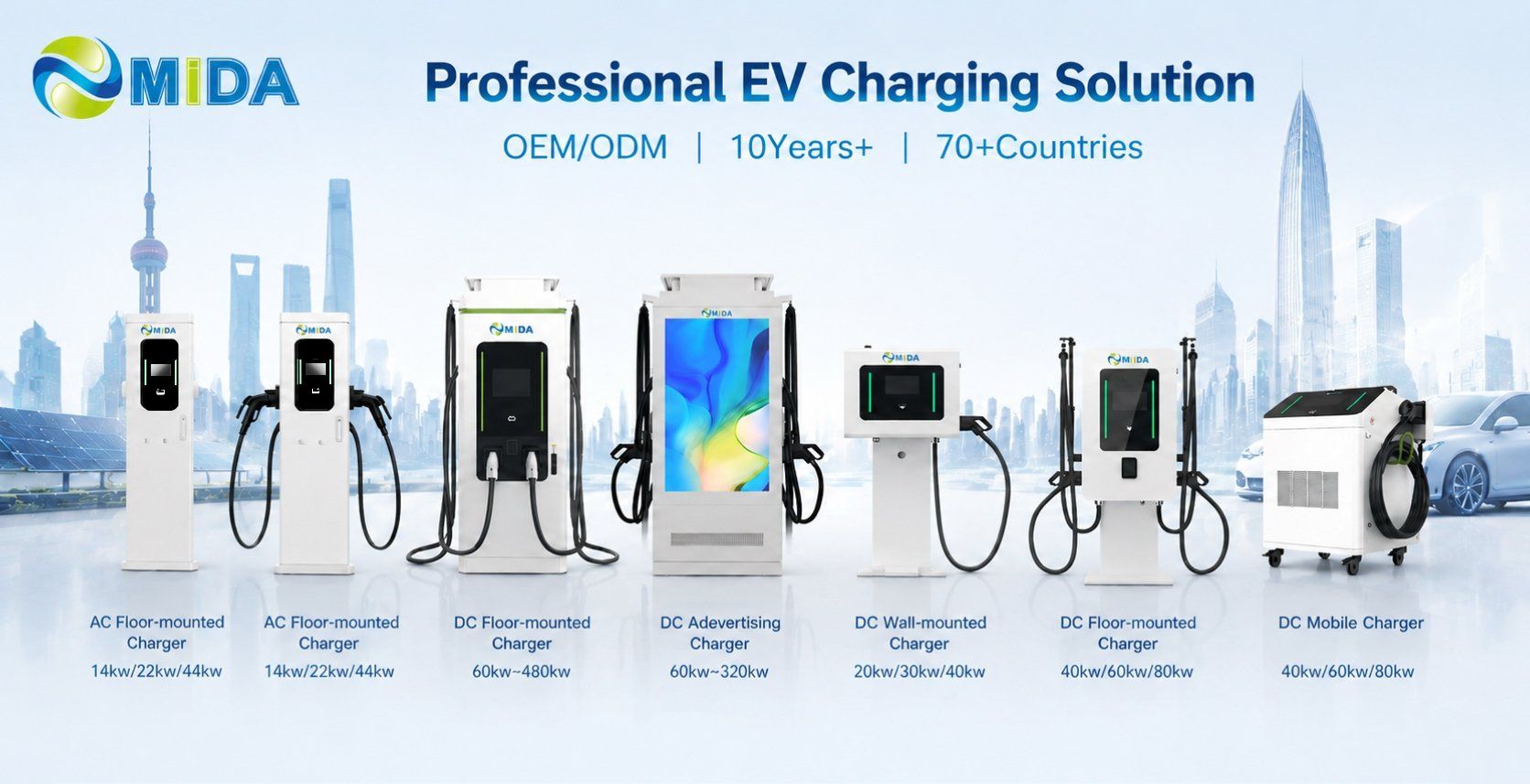
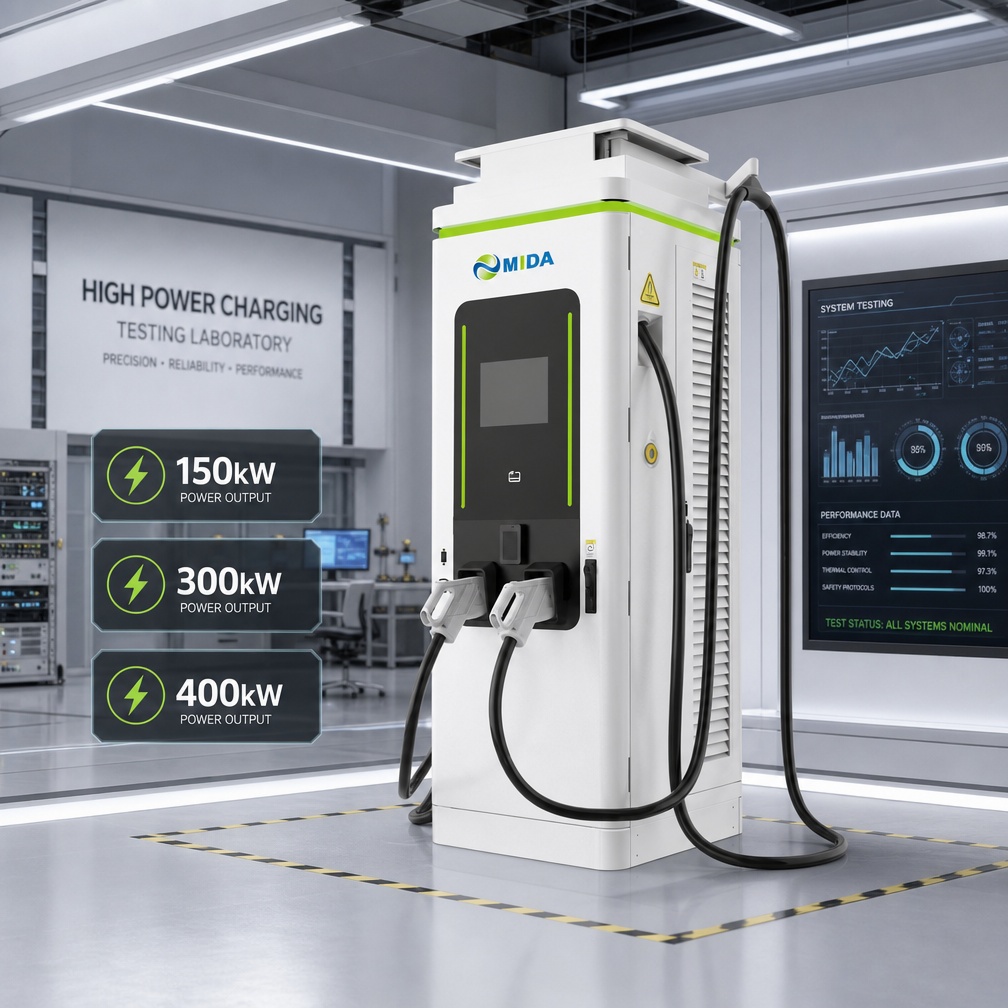
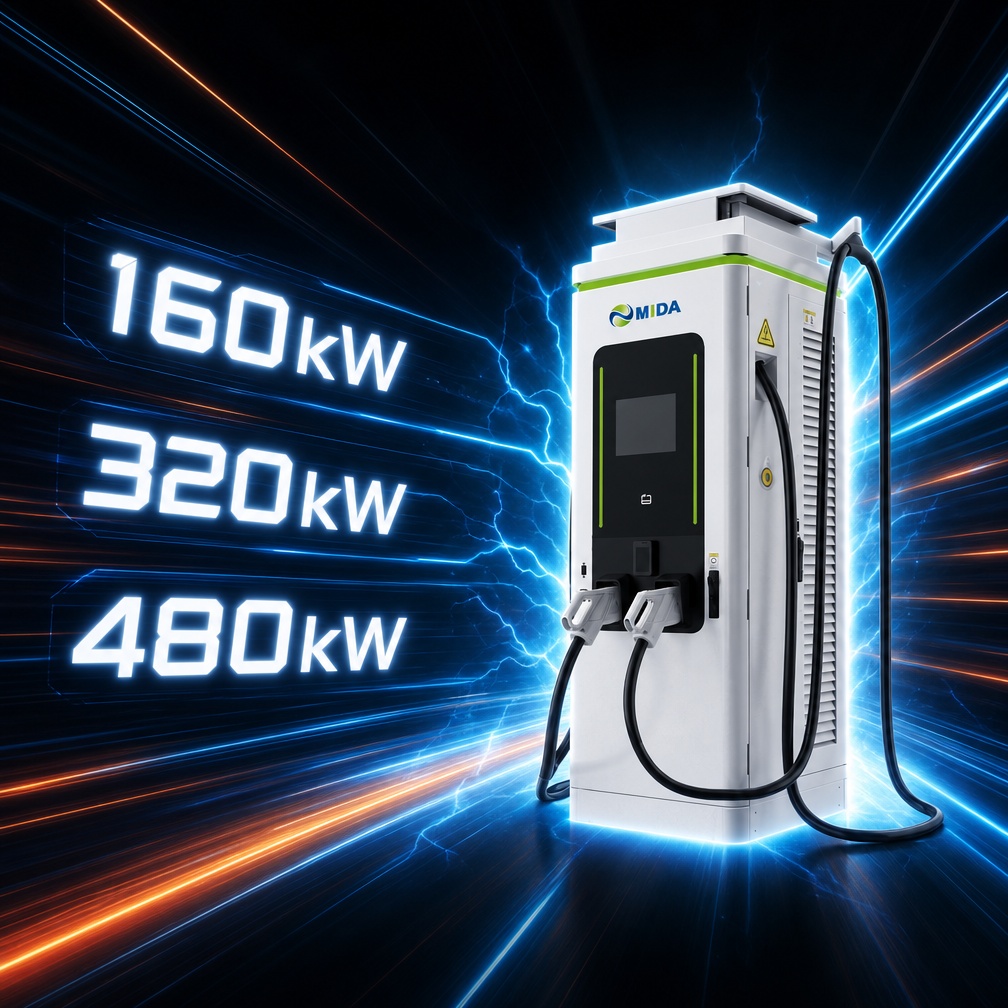
The 320kW dual-gun modular AC-DC fast charger targets highway service corridors, where uptime and quick service access decide revenue. With CCS2 outlets, a 200V-1000V DC window and OCPP 1.6J connectivity, it delivers predictable high-power charging while keeping installation and commissioning simple. This DC fast charging station pairs high utilisation with low maintenance overhead.
|
1. Modular AC-DC Power Topology and Conversion ChainAn active front end feeds isolated DC/DC stages inside each cabinet, so grid harmonics stay low while output voltage follows whatever the battery management system requests. The 320kW dual-gun unit is built around a modular AC-DC topology that rectifies three-phase AC input onto a regulated DC bus before power reaches the vehicle inlet. Bidirectional-ready bus design lets the same platform accept solar or battery energy storage input without a second conversion stage. Input power factor stays above 0.99 and the wide input window keeps operation stable on weak rural feeders and long industrial spurs. Commissioning takes under an hour with the guided setup wizard. Matching power modules are documented in the datasheet. |
2. 200V-1000V Wide Voltage Output With Constant PowerPre-charge sequencing limits inrush current, shielding vehicle contactors and DC link capacitors from stress during every plug-in. Continuous insulation monitoring isolates the outlet whenever leakage approaches the configured threshold, protecting technicians and vehicles alike. Constant power operation holds the full 320kW from roughly 500V upward, so an 800V pack charges at rated rate instead of tapering early. Output spans 200V to 1000V DC, covering 400V and 800V vehicle architectures from compact city cars to heavy-duty tractors. A 1000V ceiling future-proofs the investment, because the same DC fast charging station serves today’s 400V fleets and tomorrow’s 800V platforms. |
 |
 |
3. 40kW Hot-Swap Power Modules and N+1 RedundancyModules slide out from the front, so service engineers never need rear clearance in tight parking layouts or wall-adjacent installations. Replacement modules ship pre-calibrated, and the controller recognises a new unit automatically once it is fully seated. Power is delivered by 40kW hot-swappable modules, so a failed unit is exchanged in minutes without isolating the whole cabinet. A shared DC bus lets any module feed any outlet, removing the fixed pairing that limits conventional charging piles. Speed-controlled fans and intelligent airflow keep acoustic noise near 65 dB, which suits residential, hospital and retail locations. Module-level diagnostics flag degrading fans and capacitors long before they cause a stoppage, enabling condition-based maintenance. Compatible EV charging connectors are listed separately. |
4. Dynamic Power Allocation Across Dual OutletsPriority rules can reserve one outlet for emergency fleets while the other follows a normal queue, all configured remotely. Scheduling profiles prioritise buses in the morning and light vehicles in the evening without manual intervention. Operators set allocation rules per site, per connector or per tariff window through the cloud portal, with no on-site reprogramming. Dynamic power allocation distributes available capacity across outlets in real time, letting a single vehicle draw the full 320kW. When a second connector activates, the controller splits output according to state of charge rather than a fixed schedule. Session logs record delivered energy per outlet, which simplifies billing, reconciliation and fleet cost allocation. Site rules are tuned from the operator portal. |
 |
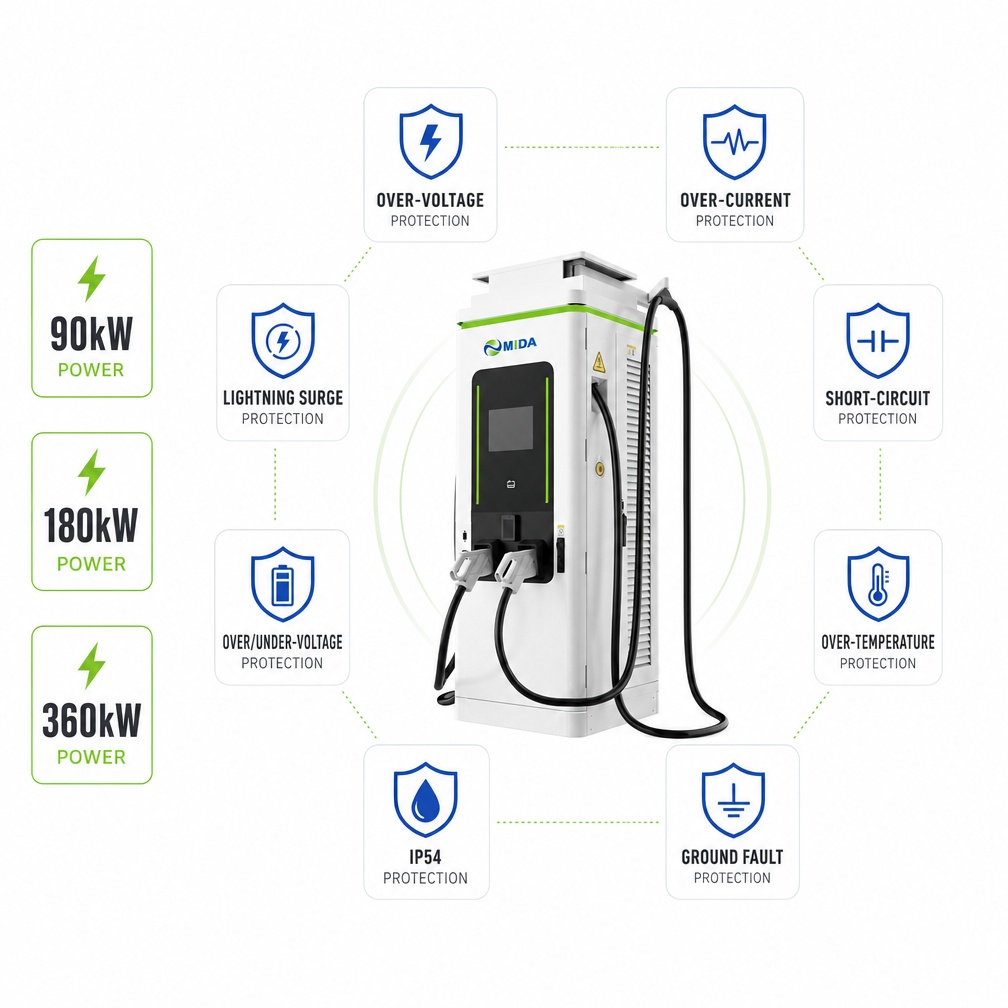 |
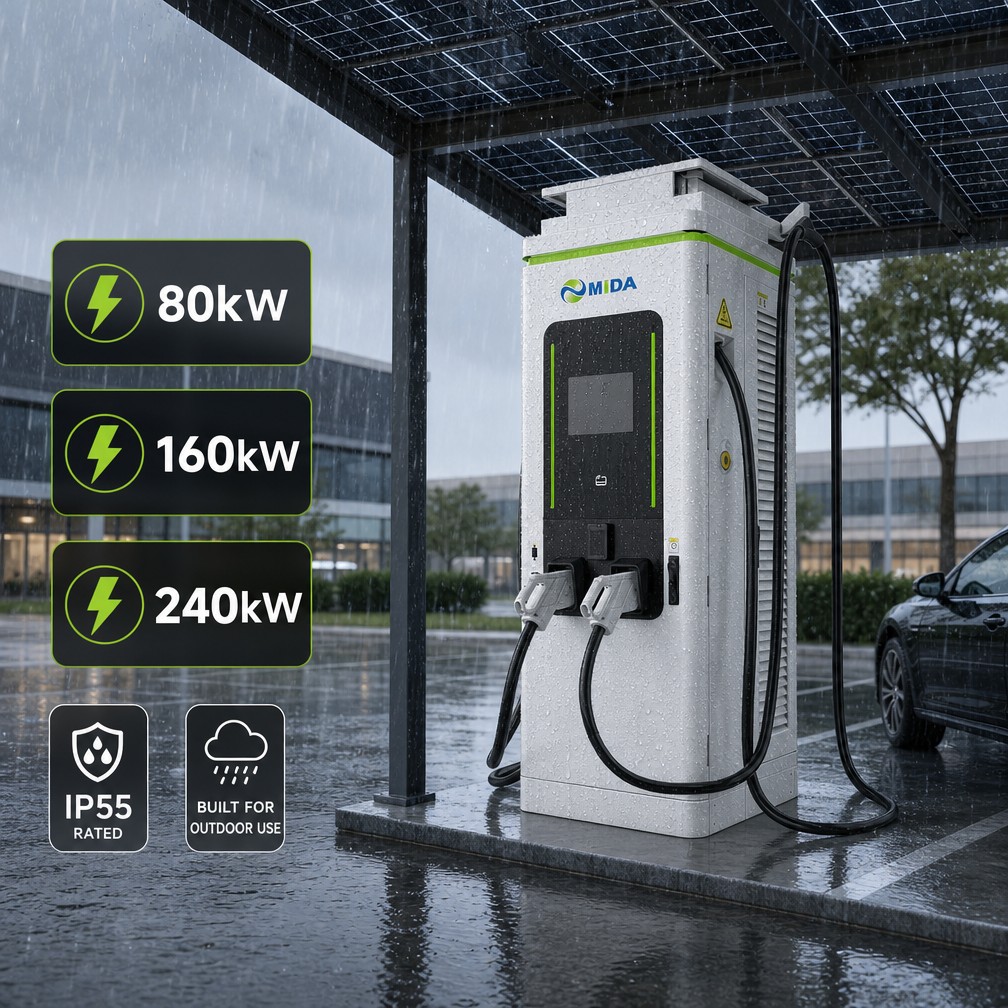
5. Outdoor IP55 Enclosure Built for Public SitesA powder-coated steel body with anti-corrosion treatment suits coastal, industrial and roadside installations. Cable management hooks keep CCS2 leads off the ground, extending connector life in busy public car parks. Each unit is ingress tested at the factory and ships with CE documentation covering insulation and earth continuity checks. Ambient range runs from minus 30 to plus 55 degrees Celsius, with internal heaters protecting the 7-inch display in freezing conditions. The enclosure is rated IP55, with filtered intake louvres and a sealed electronics compartment that shrugs off rain, dust and washdown. Optional heating, ventilation and lighting kits extend operation to cold storage yards and dusty mining roads. Installation drawings cover plinth and cable routing. |
6. Smart Payment, OCPP Management and Energy IntegrationCommunication runs over OCPP 1.6J, so the station integrates with almost any back office without custom middleware. OCPP 1.6J adds certificate handling and stronger message security for public networks that must satisfy national roaming rules. The controller exposes smart charging profiles, so a central system can cap site load during peak tariff periods. Every session produces a metered record covering start, stop and energy delivered, mapping directly to the operator’s billing engine. Drivers authenticate by RFID card, mobile app, QR code or ISO 15118 plug and charge, with an optional POS terminal for bank card payment. Backend integration follows the OCPP specification. |
 |
Deployment Support and Accessories
Projects usually pair the cabinet with Type 2 to Type 2 cables and a OCPP protocol controllers, all supplied from one factory. Engineering teams can review the company profile before order, while commercial questions go through the contact our team page. Standard builds ship in four to six weeks, and documentation covers wiring, grounding and network setup.
Frequently Asked Questions
Can the two guns charge at the same time at full power?
Yes, with dynamic allocation. Total capacity is shared, so one vehicle can take the full 320kW, or two vehicles can split it according to state of charge. Matrix switching means any module can serve either outlet, and rules are configured remotely.
Which OCPP version should an operator choose?
OCPP 1.6J covers the widest installed base of back offices today. OCPP 1.6J is specified here for certificate handling, plug and charge support and stronger message security. Both profiles work with standard roaming hubs, and the protocol controller datasheet explains the mapping.
What protection level is needed for roadside installation?
IP55 is the baseline for outdoor public sites, combined with surge arrestors, residual current detection and an emergency stop. Coastal or dusty locations should add the anti-corrosion coating and filter service kit.
How is maintenance handled when a power module fails?
Modules are hot-swappable from the front. A technician isolates the affected unit, slides it out and seats a pre-calibrated replacement while the second outlet keeps serving traffic. N plus one redundancy keeps rated output available throughout.
Does the station support solar and battery storage integration?
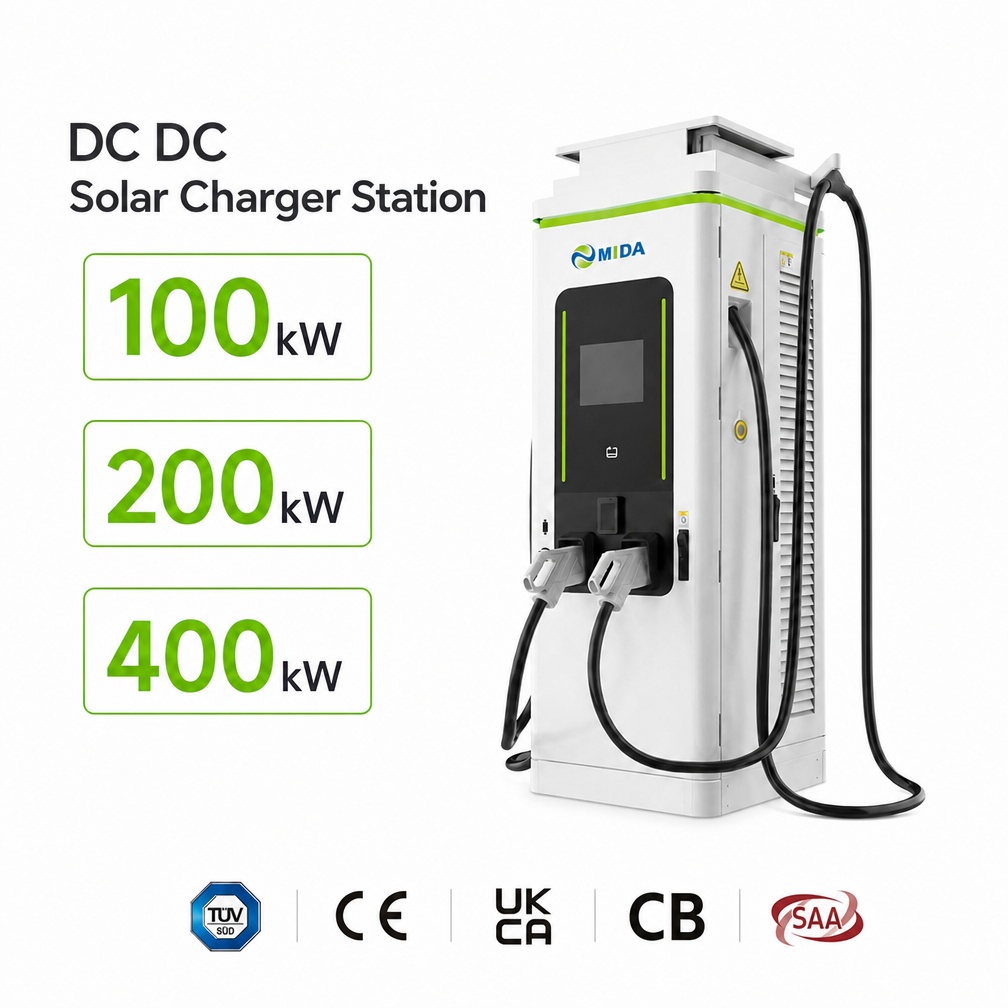
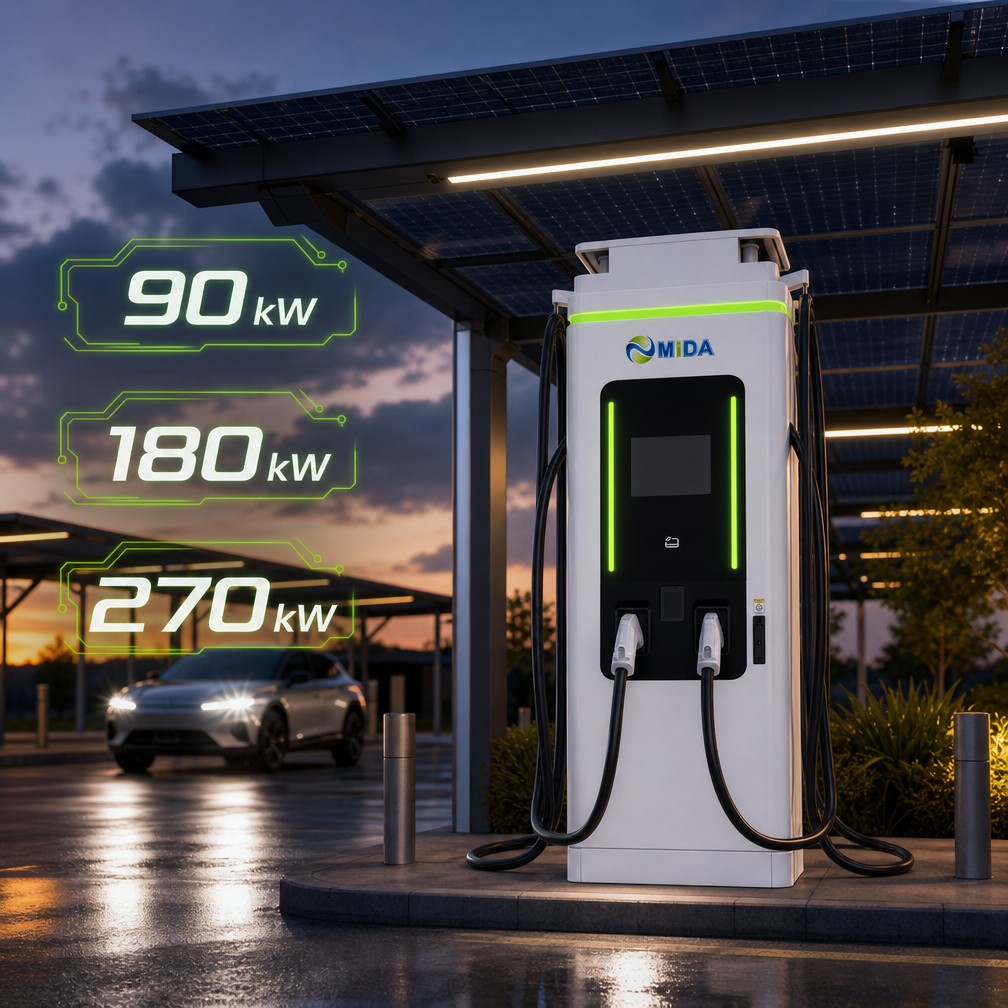
The DC bus is storage-ready. Solar MPPT or a BESS cabinet can feed the link directly, and the controller can cap grid import during peak tariffs. This suits microgrid and carport projects where demand charges dominate operating cost.
What payment options are available for public drivers?
RFID card, mobile app, QR code, ISO 15118 plug and charge and an optional POS terminal for contactless bank cards. All methods write to the same metered session record, so reconciliation stays simple. Connector options are listed on our EV charging connector page.
What output voltage range does the 320kW unit support?
The charger delivers 200V to 1000V DC at up to 400A, so it serves 400V passenger cars and 800V heavy vehicles from the same outlet. Constant power holds 320kW from about 500V upward, which shortens charging time on modern high-voltage packs.
How does DCDC architecture differ from a conventional AC-DC charger?
A DCDC stage accepts a DC bus from solar or battery storage and converts it directly, skipping one rectification step. That raises round-trip efficiency and lets the modular AC-DC platform operate during grid outages when paired with a BESS cabinet.
As a commercial DC fast charger, the platform is specified for operators who need predictable uptime from a DC fast charging station.
Fleet managers comparing a DC fast charging station against split systems value the single-cabinet service model of this DC fast charger.
The DC fast charging station ships with commissioning support, and every DC fast charger is backed by regional spares.
Choosing a DC fast charger with documented test reports keeps procurement audits simple for any commercial EV charger project.
As a commercial DC fast charger, the platform is specified for operators who need predictable uptime from a DC fast charging station.