



1. Introduction
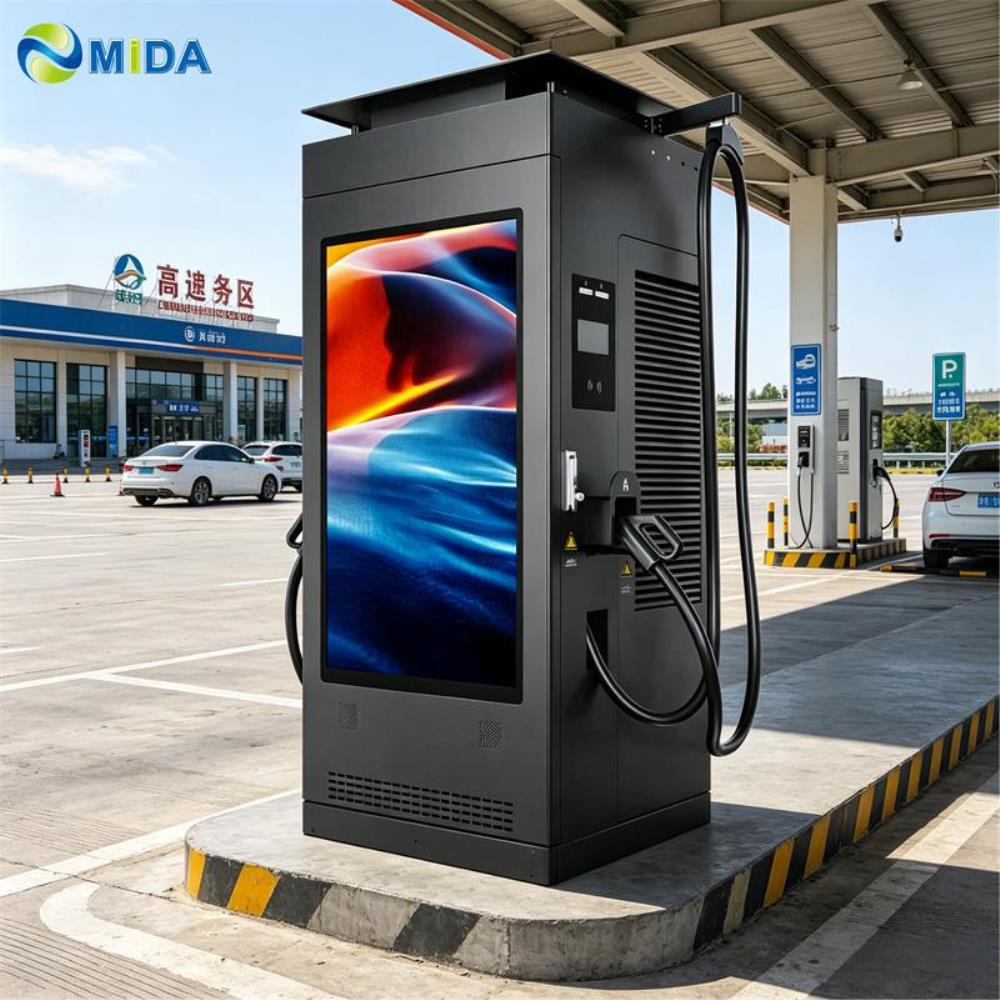
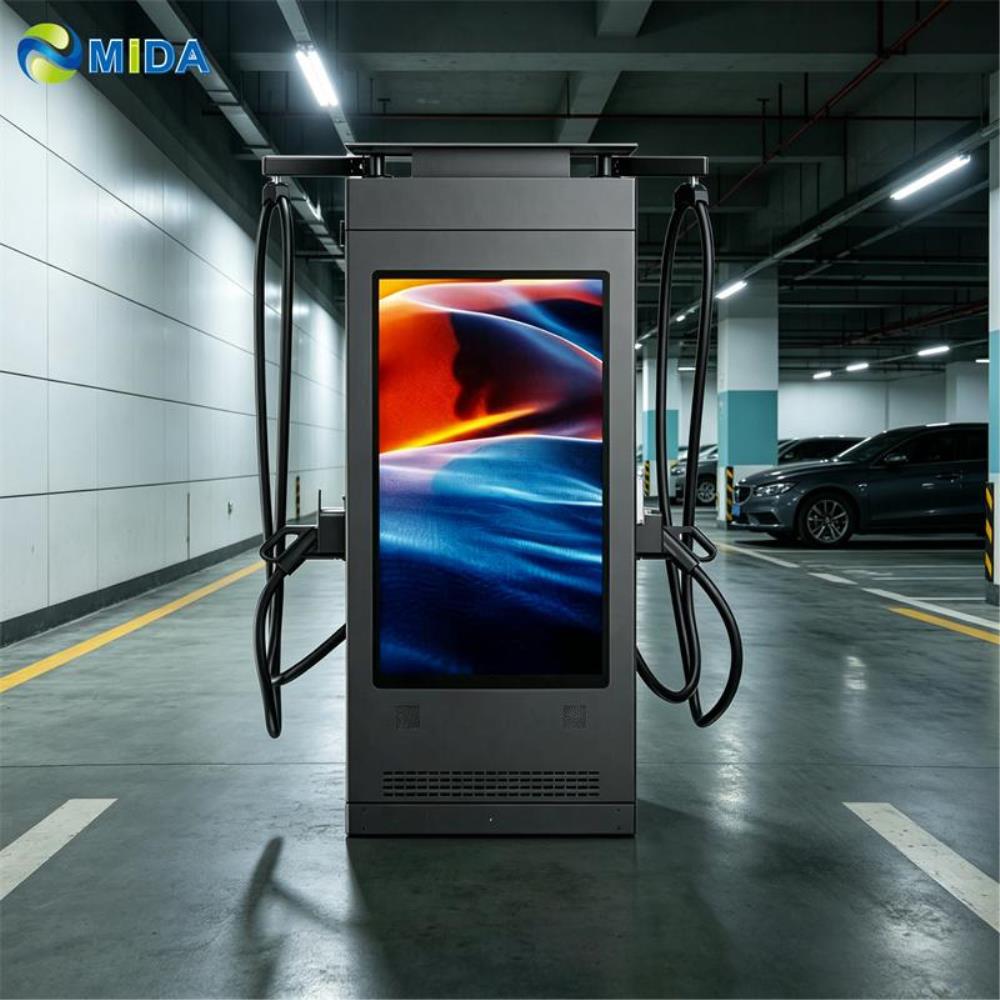
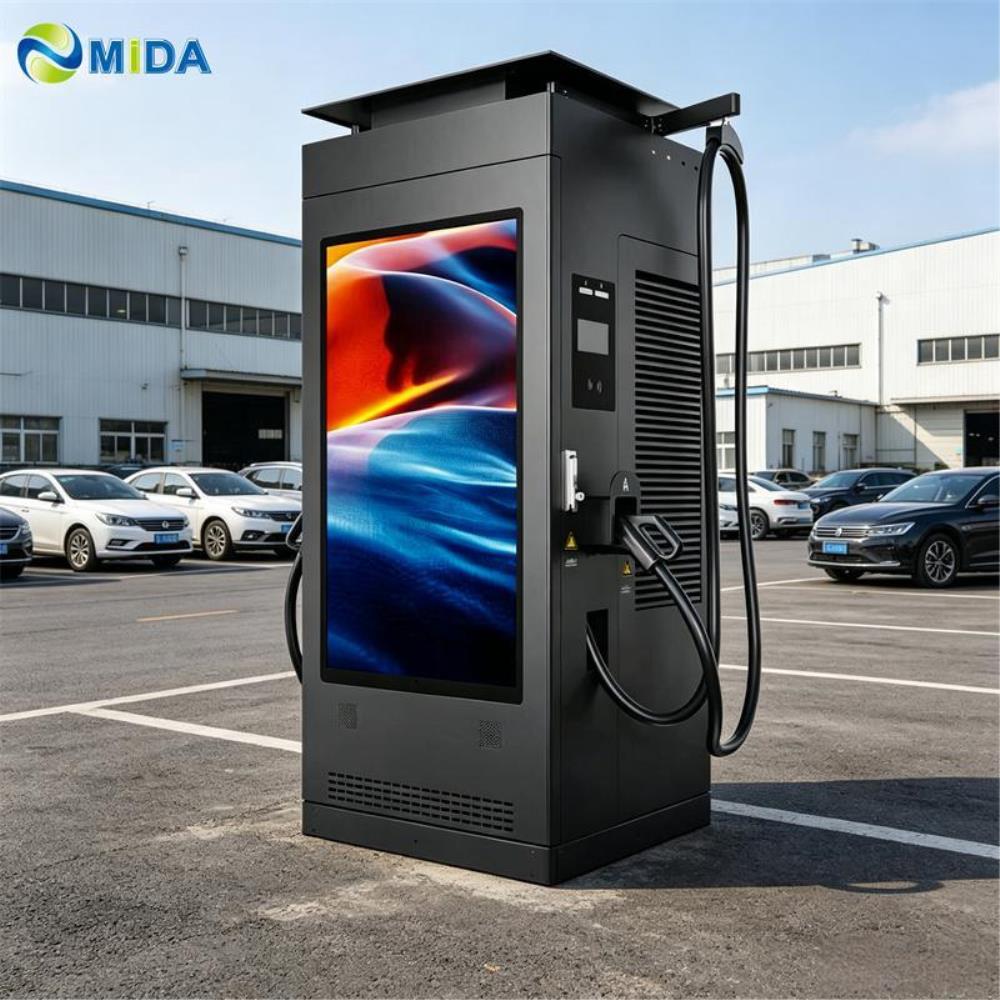
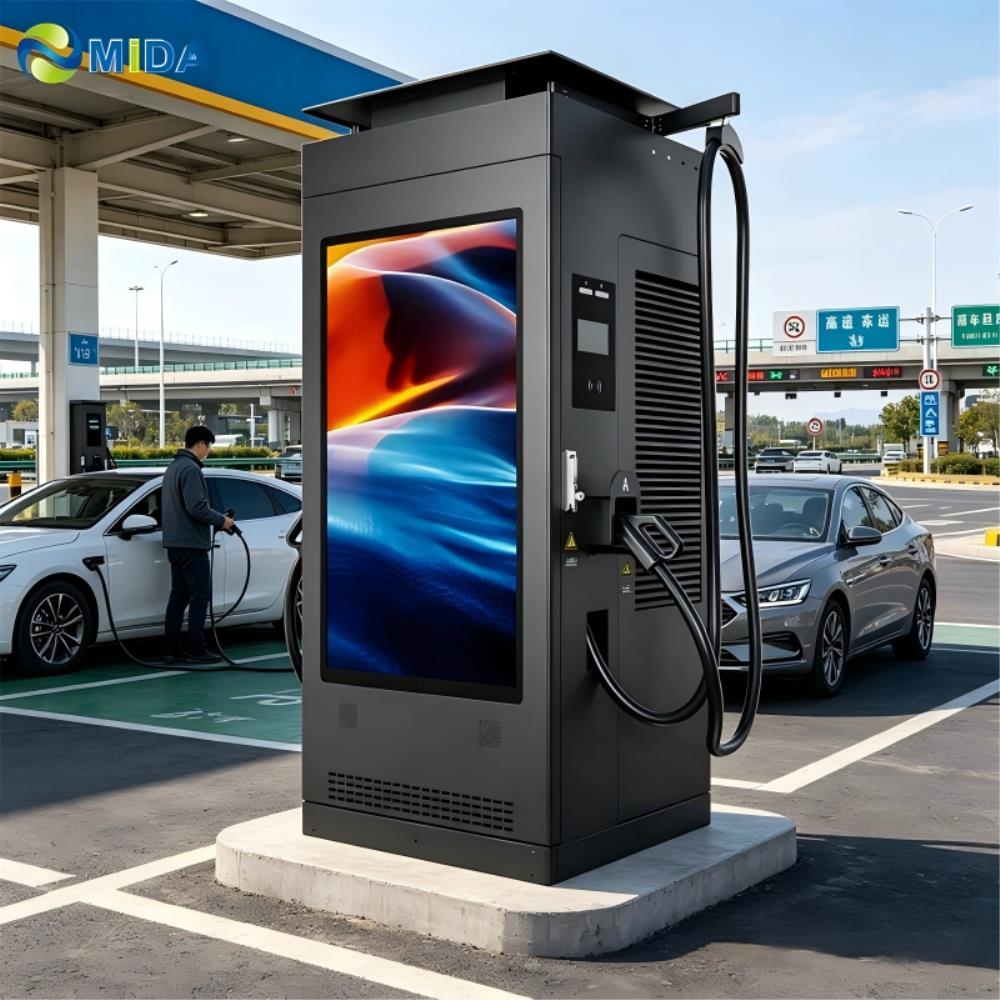
Public infrastructure is the foundation of the EV transition — the street-side chargers, municipal lots, transit hubs, and community facilities that make electric mobility possible for citizens without home charging. But public infrastructure is also the hardest segment to fund: budgets are tight, procurement is regulated, and every installed unit must serve the public interest while justifying its capital cost to elected officials and taxpayers. The MIDA 180kW DC Fast Charging Solution with 43-inch Digital Signage Display is engineered for this context — a robust, certified, publicly accountable charging asset that also generates revenue through digital signage, easing the burden on public budgets.
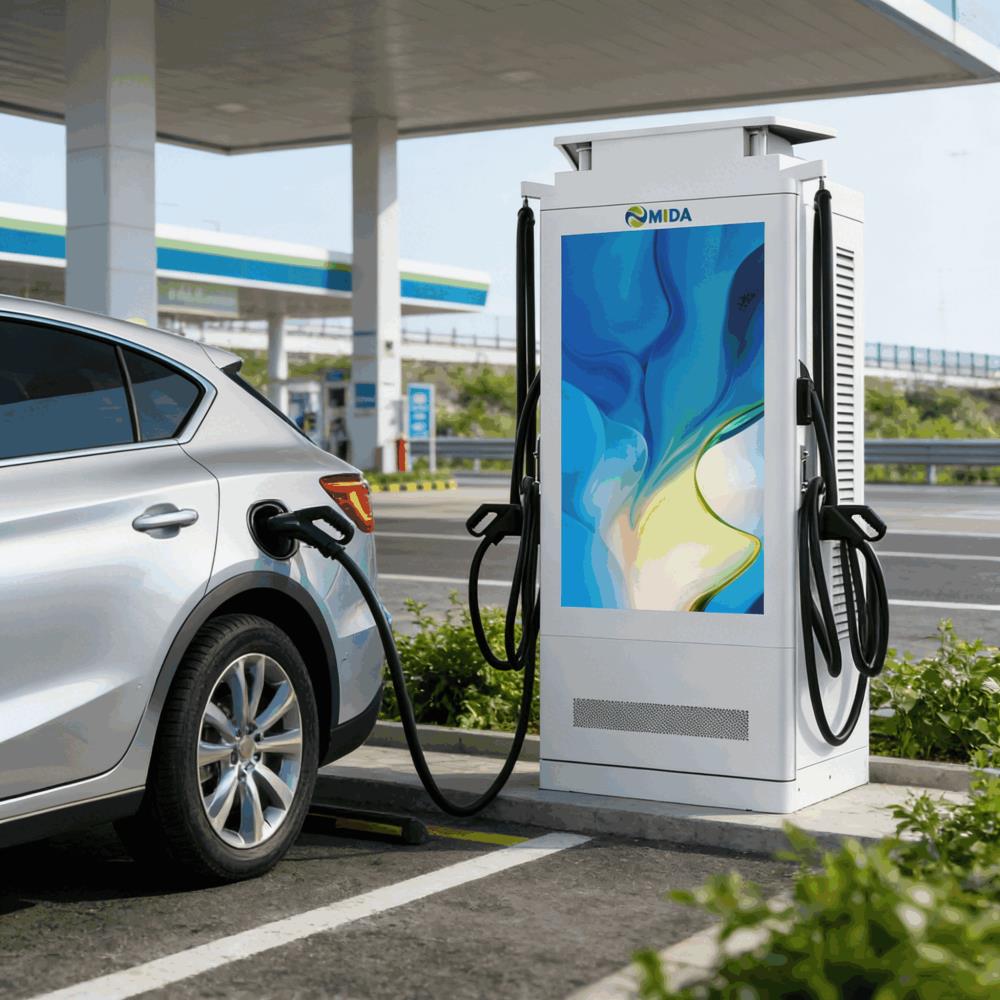
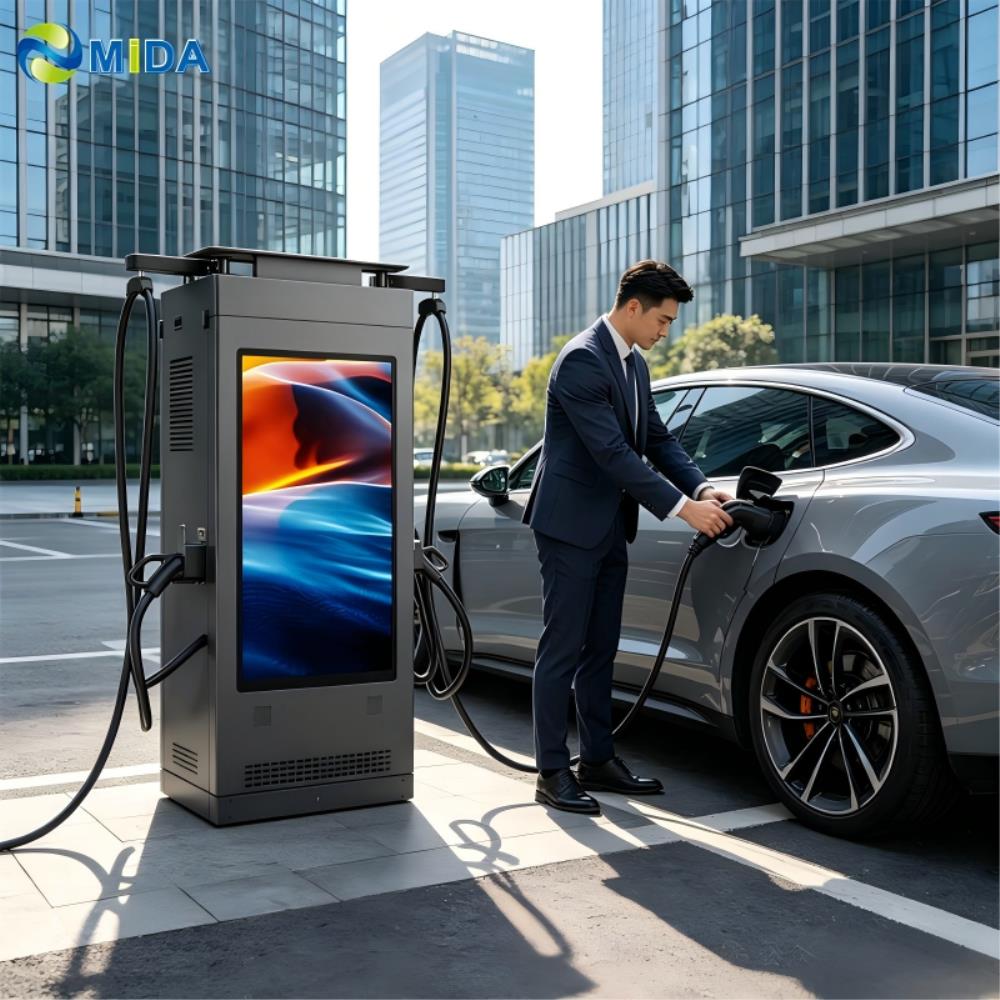
The 180kW power level positions the solution at the heart of the public fast-charging standard: fast enough to deliver 200–250km in 20–30 minutes — meeting the “reasonable public service” expectation of modern EV drivers — while remaining compatible with the medium-voltage connections typical of municipal sites. The 43-inch digital signage display is the solution’s distinctive feature: it serves as a public information channel (transit schedules, municipal notices, emergency alerts, community events) while generating advertising income for the operating authority or its CPO partner, creating a sustainable funding model that private operators and public agencies both value.
Positioning summary: this is the “public servant” of the MIDA family — the charger a municipality procures for its transit hubs, the unit a public-private partnership selects for street-side networks, the equipment a utility deploys in community charging programs. It combines the full MIDA engineering platform — modular power, dual guns, wide voltage, OCPP connectivity — with a signage display sized and specified for public information and sponsorship. The sections below examine the signage economics in the public context, charging technology, safety and compliance for public procurement, the management platform, the specification, and the public deployment playbook.
2. Digital Signage Display: The 43-Inch Public Information and Revenue Channel
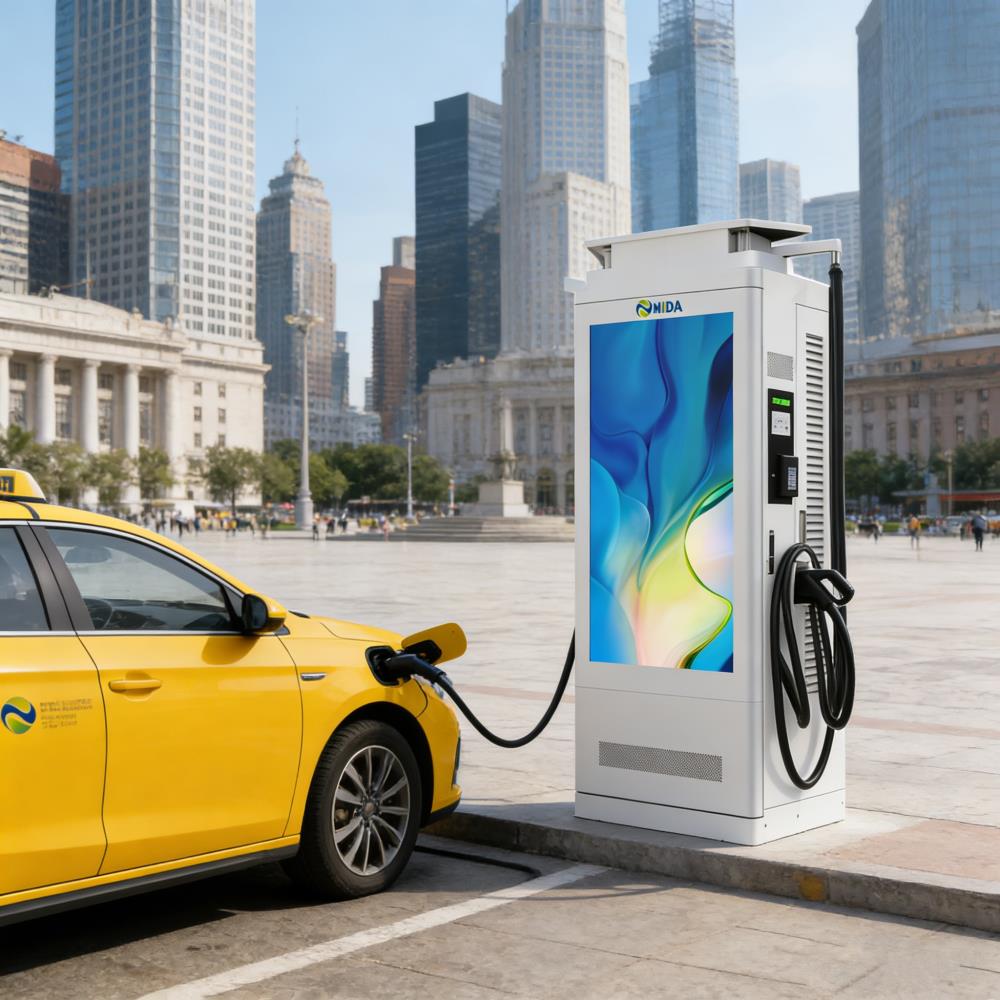
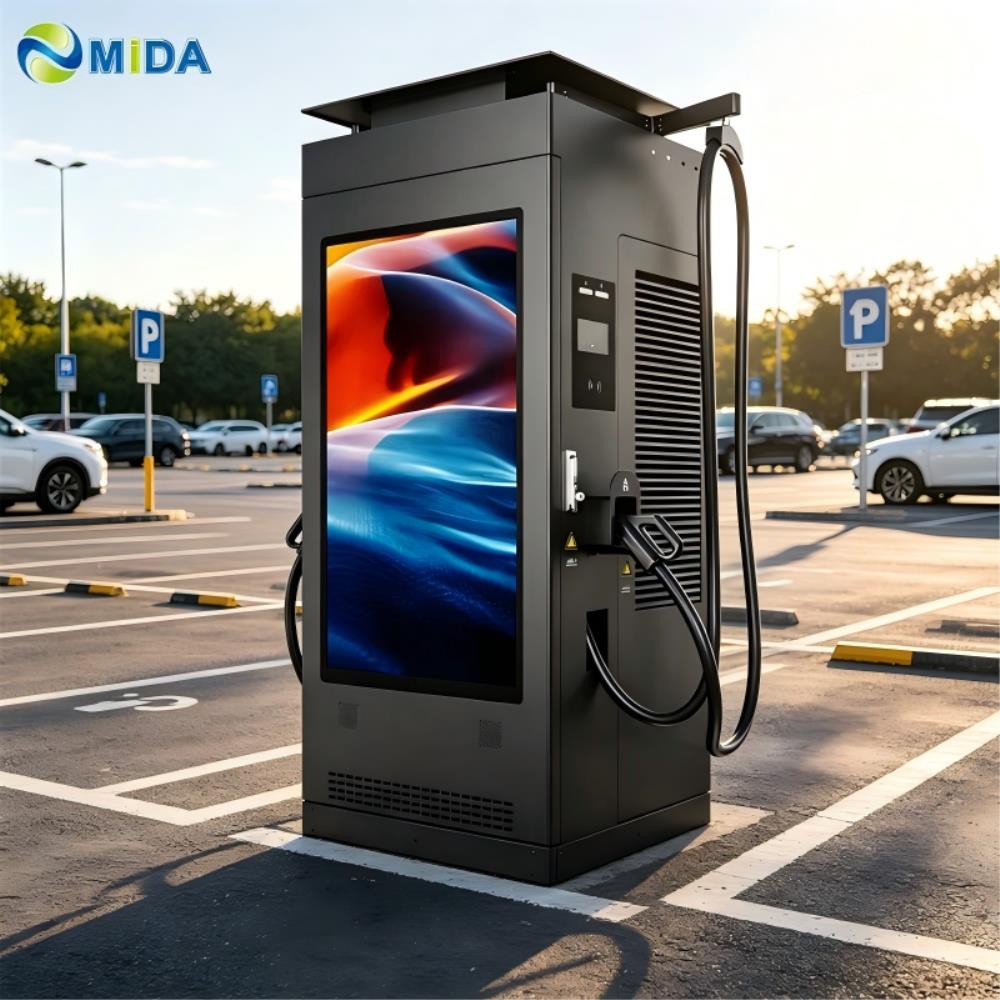
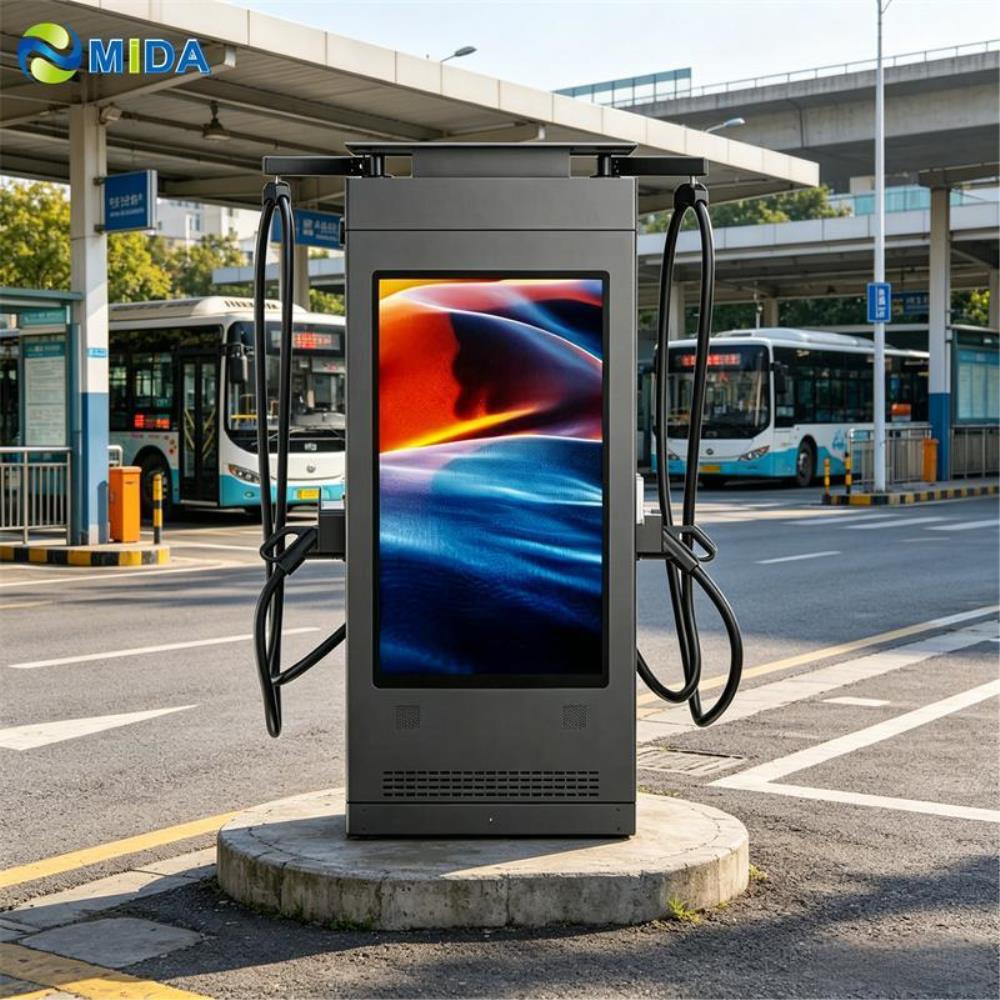
The 43-inch digital signage display on this solution performs a dual public function: information and revenue. As an information channel, it elevates the charger from a single-purpose utility to a community asset. Municipalities can display transit schedules, public notices, emergency alerts, local event calendars, air-quality information, and wayfinding — content that serves the public even when no vehicle is charging. This civic value is often the decisive argument in public procurement: the charger becomes a multifunctional element of the urban furniture, not merely an electrical installation.
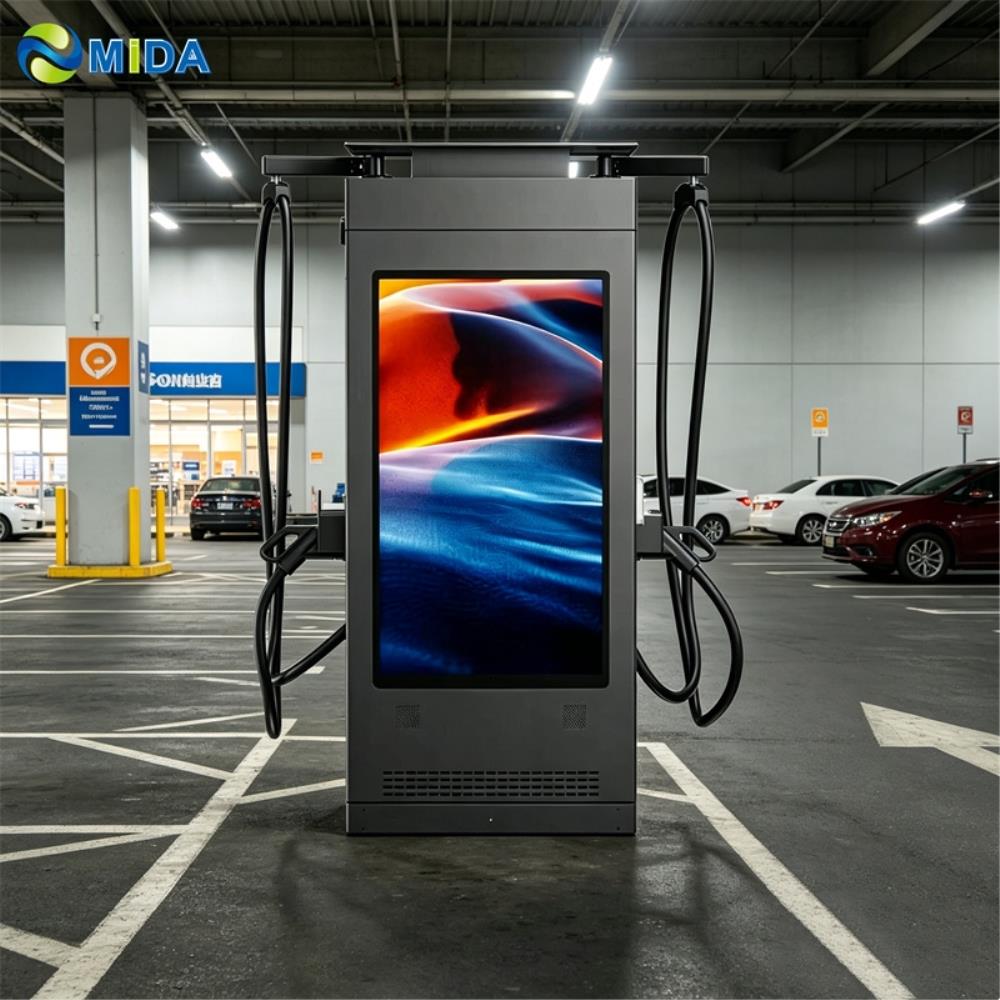
As a revenue channel, the display monetizes the dwell time of charging sessions and the footfall of the surrounding public space. The hardware — 1920×1080 Full-HD, 2000 nits, auto-brightness, IK10 glass, IP65 housing, heat-pipe cooling — is engineered for 24/7 public operation, and the CMS allows the operating authority to define priorities: public information content is never displaced by advertising; advertising fills only the slots the authority releases. Revenue models include sponsorship packages (local businesses, utilities, regional brands), programmatic fill of released inventory, and advertising concessions managed by a media partner — with revenue shared between the municipality and the CPO under the concession agreement.
The numbers are meaningful at public scale. A well-positioned municipal charger at a transit hub or community center can log 8,000–20,000 daily impressions, supporting sponsorship income of €100–€600 per month per screen after public-content reservations. Across a network of 30 municipal units, that is €3,000–€18,000 per month of signage revenue — a material contribution to the network’s operating cost, and a figure that procurement officers can present as an offsetting revenue stream in funding proposals.
The CMS supports the full toolkit: multi-tenant scheduling with public-content priority, day-parting, emergency-alert override (critical for public safety messaging), split-screen charging status, and engagement analytics for sponsor reporting. The signage and charging systems are electrically and logically isolated, so public-information availability never depends on charging availability, and vice versa.
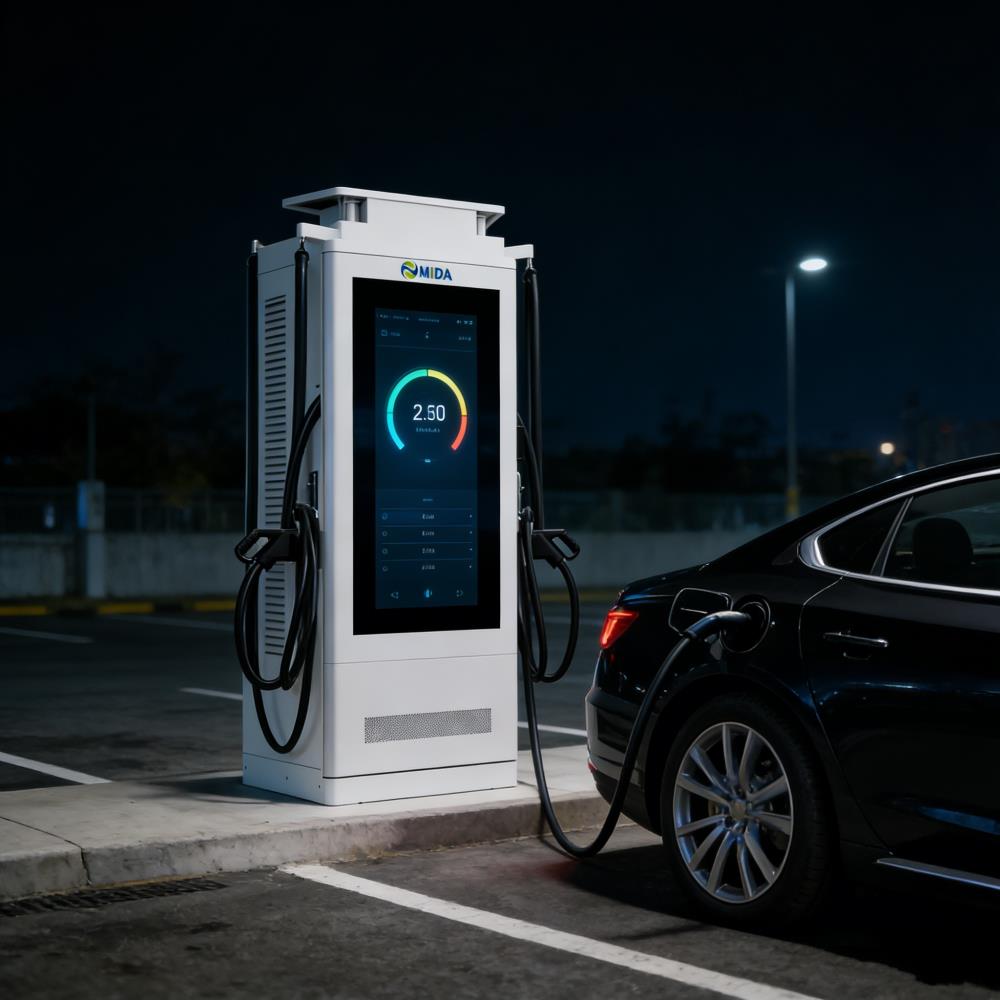
3. High-Performance Charging Technology: 180kW Modular with Dual Guns
The power stage delivers 180kW from the proven MIDA modular platform, with configuration options down to 120kW for constrained municipal sites. Dual guns with dynamic power sharing (90kW+90kW, 120kW+60kW, or 180kW to one vehicle) maximize throughput per bay — a public-service priority where queues at charging stations are a visible political issue. The 150–1000V DC output range serves 400V and 800V architectures, and per-gun current reaches 250A, covering passenger cars through light commercial vehicles.
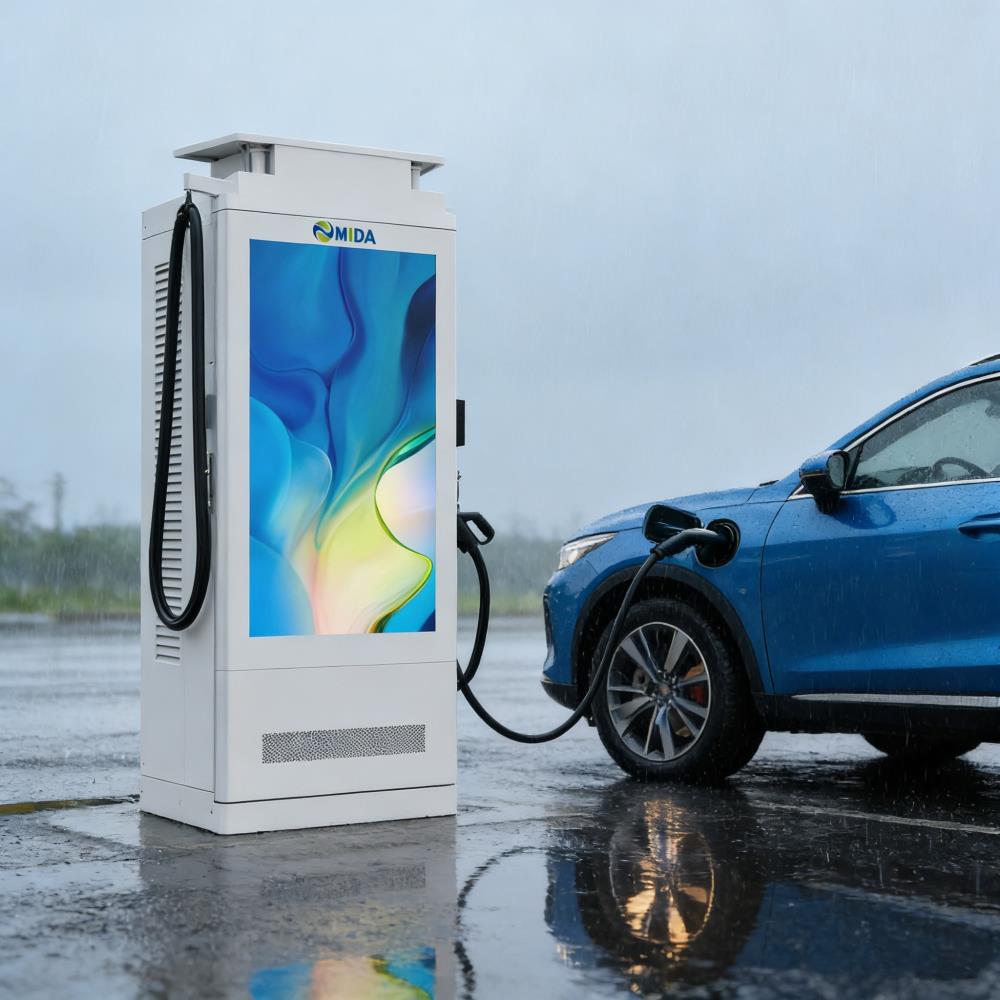
Input is 400V AC three-phase, 50/60Hz, ±15%, with a 480V variant for North American municipalities. Peak efficiency of 95–96% minimizes energy loss — significant when the operating authority pays the utility bill — and smart-charging features (time-of-use tariffs, load management, demand response, scheduled windows) let the authority optimize energy cost and grid interaction. Connector configuration is set at order: dual CCS2, dual CCS1, or NACS-native for the target market, with GBT adapter readiness.
OCPP 1.6J (2.0.1 optional), DIN 70121, and ISO 15118 Plug & Charge are supported, enabling integration with municipal backends, regional roaming platforms, and future automated billing. The charging process includes pre-session safety checks, insulation monitoring, emergency stop, and graceful thermal derating from -25°C to +55°C — the operational envelope required for public equipment in exposed locations.
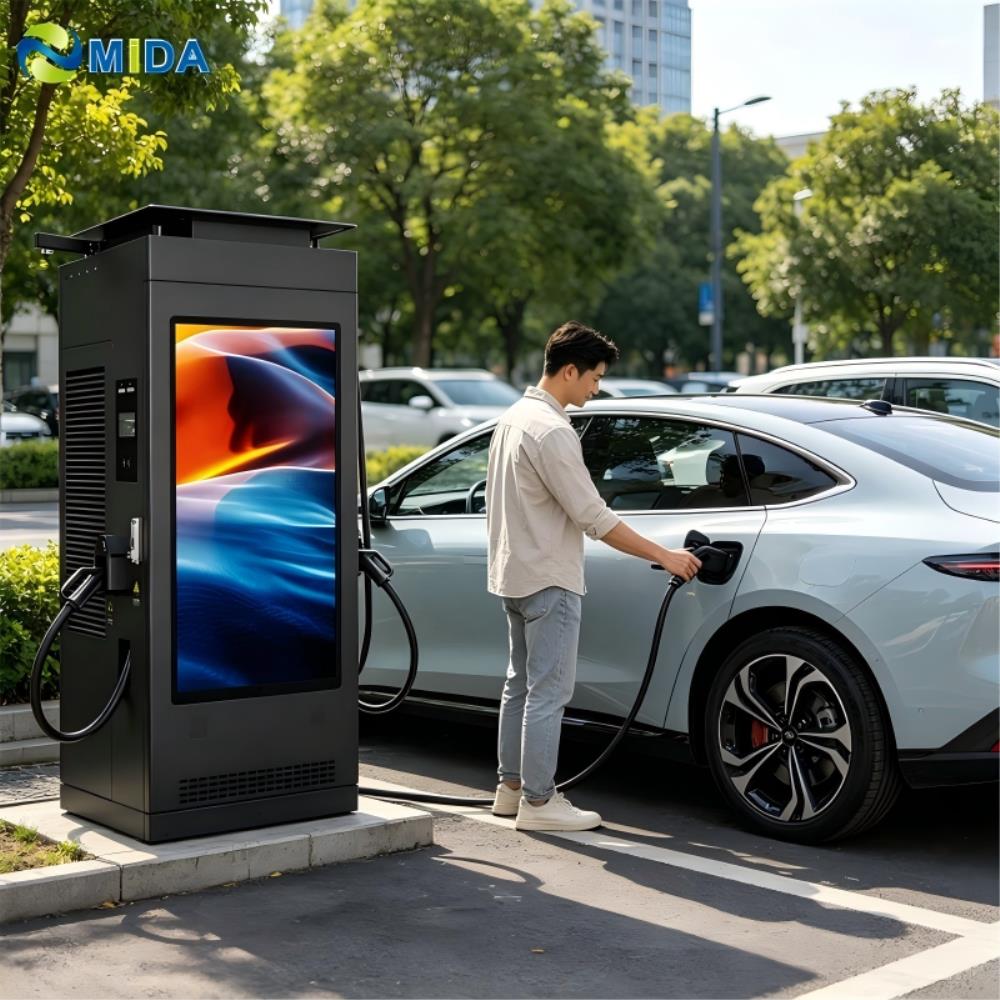
4. Safety and Reliability: Compliance for Public Procurement
Public procurement demands documentary certainty: certifications, standards compliance, and audit trails that survive tender evaluation and regulatory review. The MIDA solution is CE certified (LVD, EMC, RED), UKCA marked, with cUL/UL pathways for North America, and compliant with IEC 61851-1/23, IEC 62196, and ISO 13849. Complete technical files, risk assessments, and declarations of conformity are provided — the paperwork that shortens procurement timelines and simplifies insurance.
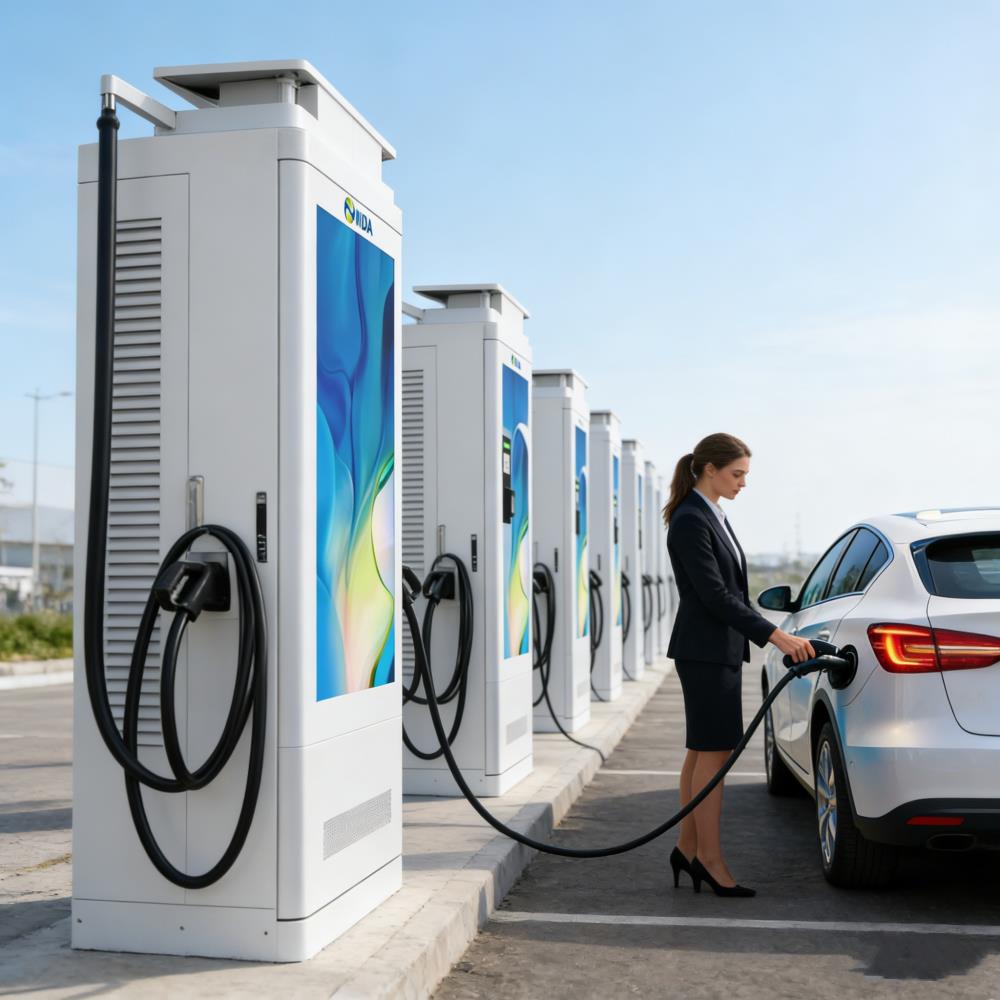
The protection architecture is layered and certified: AC-side Type II surge protection, Type A RCDs with 6mA DC fault detection, DC-side insulation monitoring before and during every session, per-gun contactor weld detection, emergency stop, and remote de-energization. The IP55 cabinet and IP65 signage housing, with IK10 impact ratings on both, resist weather, cleaning, and vandalism — with the enclosure specified for the fully exposed, unattended conditions of street-side and transit-hub installations.
Reliability is engineered for the public duty cycle: 24/7 operation, back-to-back sessions, and minimal on-site maintenance budgets. Intelligent forced-air cooling, conformal-coated electronics, conservative derating, and a 10+ year design life keep lifecycle cost low; modular, hot-swappable components and remote diagnostics (fault alerts, over-the-air firmware) keep mean time to repair short. For the operating authority, the result is an asset that delivers the uptime the public expects — and that procurement committees can verify from the documentation.
5. Smart Management and Connectivity
Public networks are operated under scrutiny: energy accounting, revenue transparency, and service-level reporting are non-negotiable. The MIDA platform delivers them through OCPP 1.6J (2.0.1 optional) connectivity to any compliant backend — municipal systems, CPO platforms, or regional roaming hubs — with redundant communications (4G LTE/5G-ready, Wi-Fi, Ethernet, RS485) and offline session handling.

The backend provides network-wide reporting: sessions, energy, revenue, utilization, availability, and faults, with exportable data for public accountability and grant reporting. Tariff configuration (including free-session programs for public service), power limits, load management, and over-the-air updates are managed remotely. Authentication supports RFID, QR, app, and Plug & Charge — enabling municipal card programs, roaming apps, and future automated billing.
The signage CMS operates on the same connectivity, with public-content priority, emergency-alert override, and sponsor reporting — giving the authority full control of the information channel while the media partner manages released inventory. Role-based access separates municipal administration, operations, and media functions, maintaining the governance structure public entities require.
6. Detailed Technical Specifications
| Parameter | Specification |
|---|---|
| Model | MIDA 180kW DC Fast Charging Solution with 43″ Digital Signage Display |
| Output Power | 180kW (120kW derate option; modular upgrades) |
| Input | 400V AC ±15% (480V variant for North America), 3-phase, 50/60Hz |
| Output Voltage | 150–1000V DC |
| Output Current | Up to 250A per gun |
| Charging Connectors | Dual CCS2 / Dual CCS1 / NACS-native; GBT adapter ready |
| Charging Protocols | OCPP 1.6J (2.0.1 optional), DIN 70121, ISO 15118 Plug & Charge ready |
| Display | 43-inch TFT-LCD, 1920×1080 FHD, 2000 nits, auto-brightness |
| Display Protection | 4–6mm tempered glass, IK10, IP65 housing |
| Enclosure Rating | IP55 cabinet, IK10 vandal resistance |
| Cooling | Intelligent forced-air + heat-pipe (display) |
| Communication | 4G LTE / 5G-ready, Wi-Fi, Ethernet, RS485; RFID/QR/App/Plug & Charge |
| Efficiency | ≥95% peak module efficiency |
| Smart Charging | Time-of-use, load management, demand response, scheduled windows |
| Operating Temperature | -25°C to +55°C (graceful derating) |
| Certifications | CE (LVD/EMC/RED), UKCA, cUL/UL pathways, IEC 61851-1/23, IEC 62196, ISO 13849 |
| Dimensions (W×H×D) | ~800×2100×450mm, floor-mounted |
| Warranty | 2-year standard; 5-year extended option |
This specification defines a public-infrastructure-grade charging solution: certified, documented, robust, and equipped with a digital signage channel that serves civic information and generates funding — the combination public procurement requires and the public deserves.
7. Use Cases & Installation
The 180kW signage solution serves the public infrastructure ecosystem:
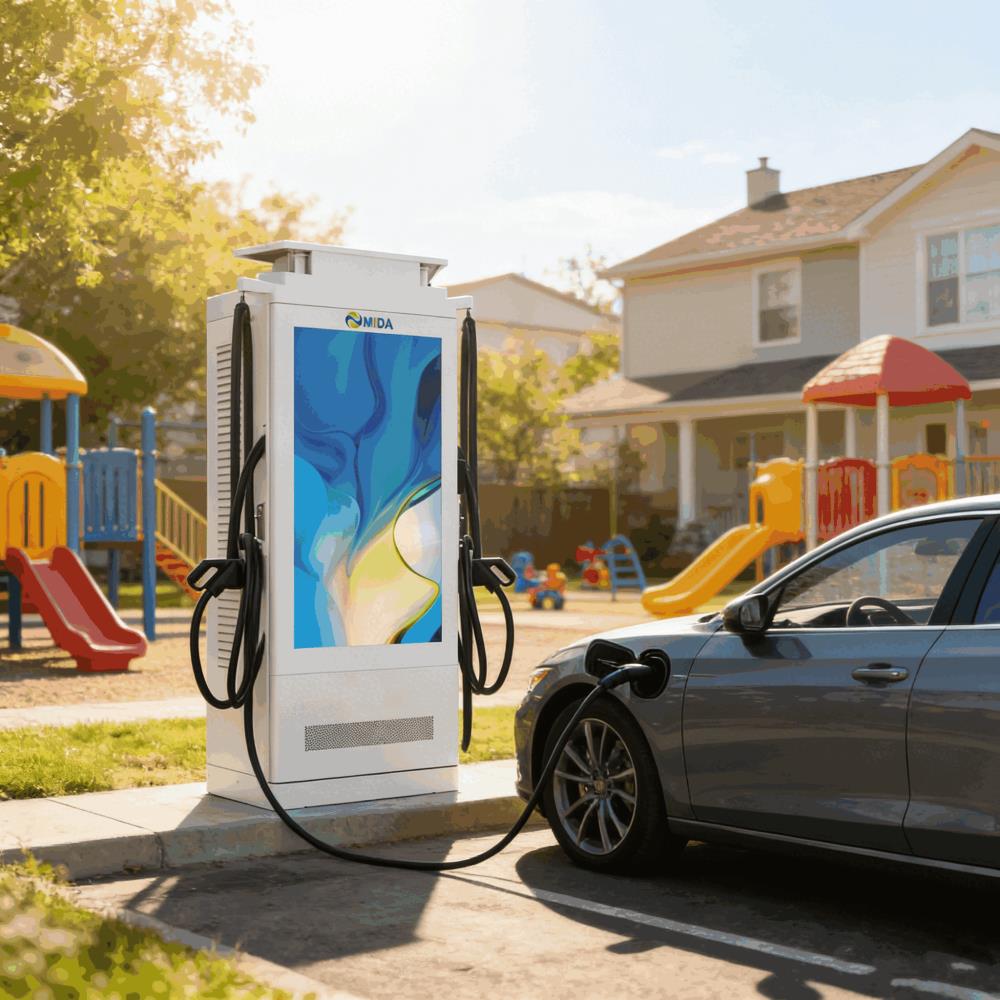
- Transit Hubs & Park-and-Ride Facilities — 180kW units at transit nodes serve commuters; the signage displays transit schedules, delay alerts, and community information; sponsorship funds operations.
- Municipal Parking Lots & Street-side Networks — Units in high-visibility public lots; the signage shows municipal notices and local business sponsorship; dual guns reduce queues during peak hours.
- Community Centers & Public Facilities — Chargers at libraries, sports centers, and civic buildings; the signage becomes a community information terminal; the facility demonstrates its sustainability commitment.
- Public-Private Partnership (PPP) Corridors — Charging corridors procured through PPPs; signage revenue offsets concession fees; the operator and municipality share the media income per the agreement.
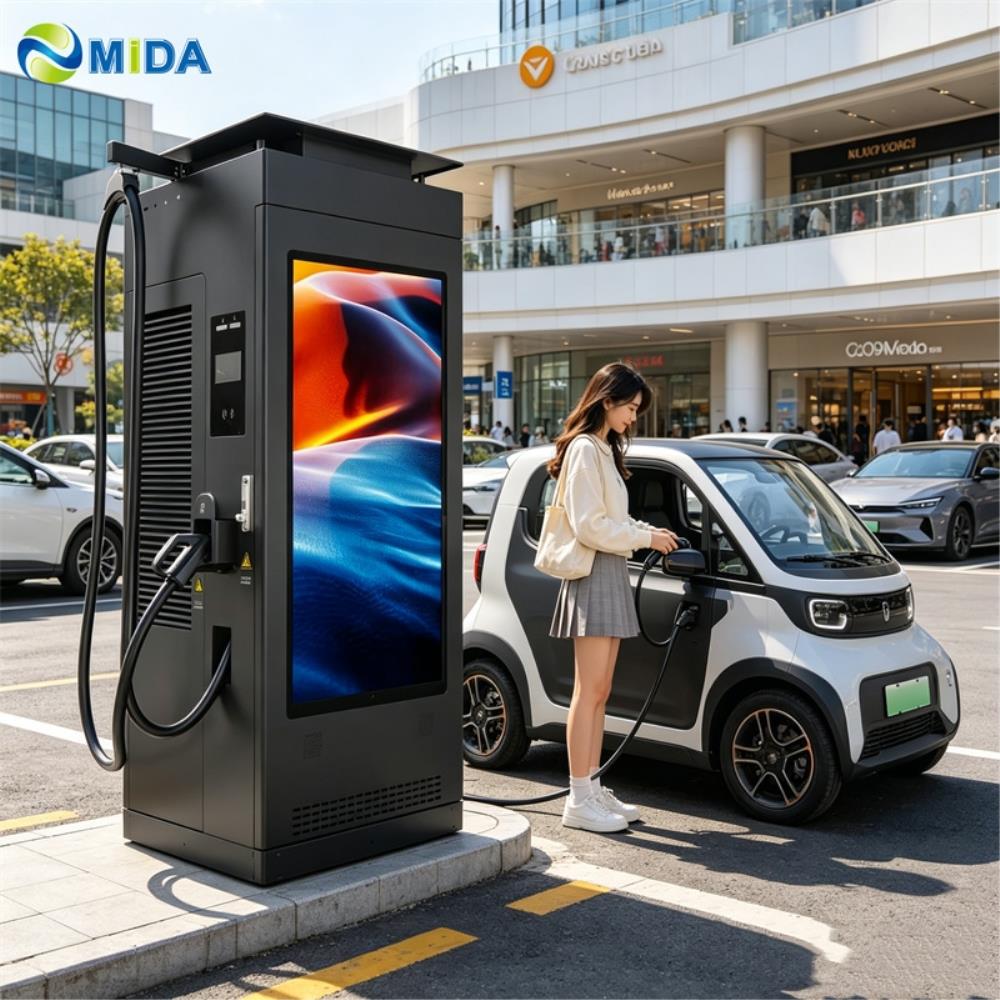
Installation follows public procurement and construction standards: grid connection studies, civil works on public land, accessibility compliance, signage and marking per local codes, and commissioning with the municipal backend. The integrated cabinet minimizes site assembly; typical install time is 1–3 days per unit, with transformer sizing per site plan and load management coordinating multiple units.
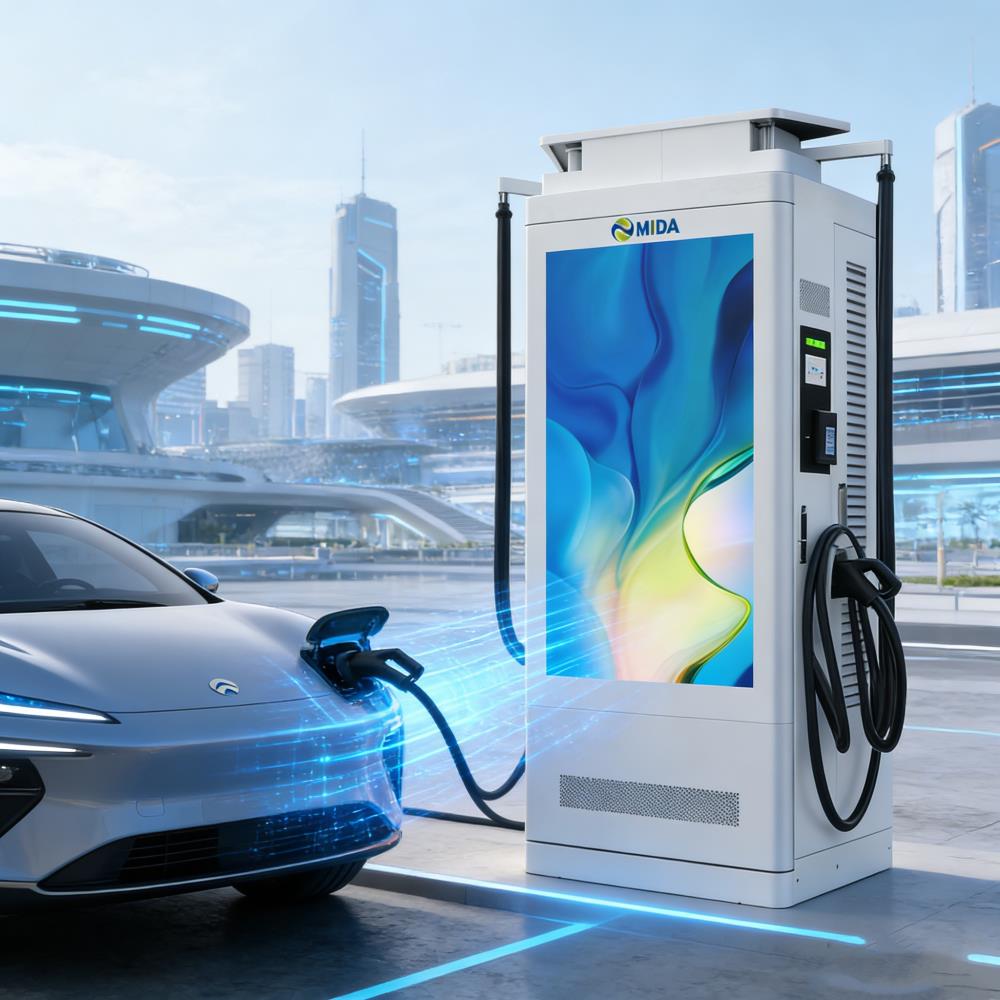
Operationally, public units typically see 6–15 sessions per day in year one, growing with EV adoption in the community. Maintenance is quarterly inspection with annual service; firmware and content updates are remote. For the operating authority, the solution delivers the three things public charging must provide: reliable public service, transparent reporting, and a funding stream that reduces the burden on taxpayers.
8. FAQ
Q1: How does public procurement benefit from the digital signage? The signage serves a dual public function — civic information (transit, alerts, events) and sponsorship revenue that offsets operating costs. Procurement officers can present both the service value and the revenue offset in funding proposals.
Q2: Can the display be used for emergency alerts? Yes. The CMS includes an emergency-alert override that instantly replaces scheduled content with official public-safety messaging — a capability that elevates the charger to a civic communications asset.
Q3: What documentation supports public procurement? CE certification, UKCA marking, cUL/UL pathways, and IEC 61851-1/23, IEC 62196, and ISO 13849 compliance, with complete technical files, risk assessments, and declarations of conformity for tender evaluation.
Q4: How fast is 180kW for public users? 180kW adds roughly 200–250km of range in 20–30 minutes for typical passenger EVs, and the dual-gun design keeps queues moving by serving two vehicles simultaneously with dynamic power sharing.
Q5: Can the signage show charging information? Yes — split-screen mode permanently displays live session data (power, state of charge, cost, time remaining) alongside signage content, and public information always takes priority over advertising.
Q6: Which connectors and standards are supported? Dual CCS2 (Europe/Gulf), dual CCS1 or NACS-native (North America), GBT adapter readiness; OCPP 1.6J (2.0.1 optional), DIN 70121, and ISO 15118 Plug & Charge are supported.
Q7: Who controls the advertising content on public property? The operating authority. The CMS enforces public-content priority, and advertising only fills slots the authority explicitly releases — with revenue shared per the concession or PPP agreement.
Products categories
-
180kw 240kW DC Ultra Fast EV Charger Station OC...
-
Level 3 EV DC Charger Electric Car Charging Sta...
-
240kw 300kw 360kw 420kW Fast Charging Station F...
-
120KW 160KW 180kW 200kw Fast EV Charger Station...
-
420KW CCS2 New energy electric vehicle Charging...
-
360KW New energy electric vehicle Charging station